A hardy citrus becomes truly interesting when its fruit earns a place at the table. A mandarin peeled in the garden, a lemony juice to season fish, a fragrant zest in a pastry: cold tolerance opens up possibilities, but flavor and uses are what make you want to plant.
This ranking brings together 15 entries ordered by temperature, from 1°F (−17°C) to 7°F (−14°C), chosen for their food interest as well. Yuzu N3 takes first place. The rest of the selection makes room for aromatic citrus, hybrids that work in the kitchen and two eating mandarins: Shangsa and the Owari Francis Soules satsuma.
A single entry represents the citrumelos. The other yuzus reported at 5°F (−15°C) are grouped together to keep diversity in the fruits and uses. The temperatures are reference points attributed to the profiles and to horticultural listings, with the growing conditions to keep in mind.
How should you read this ranking?
The ranking excludes citrus whose fruit is not really edible or has no workable food interest, fresh or prepared. This is notably the case of pure Poncirus, the trifoliate orange: very hardy, it bears strongly bitter, resinous fruit of little use for everyday eating. Poncirus nevertheless remains an important rootstock for growing many citrus in cold climates. Conversely, a sour fruit meant for juice, zest or marmalade can fully deserve its place here.
Tree hardiness ≠ fruit hardiness. The temperatures given refer to a well-established mature tree. They guarantee neither undamaged fruit after a freeze nor a harvest every year. Fruit, young shoots and the roots of a potted plant may be damaged well before the threshold stated for the tree.
A hardiness figure is not a guarantee. Freeze duration, tree age, hardening, wind, humidity, drainage and rootstock all change the result. A nursery listing and a comparative trial under controlled conditions are not the same level of evidence. The values below should be read as selection reference points, with appropriate protection during the first winters.
At identical temperatures, the order of presentation does not separate varieties on flavor. USDA zones give a climate context; they are not enough to guarantee success with a citrus in a specific garden.
Which citrus are reported between 5°F (−15°C) and 1°F (−17°C)?
Ten entries make up this first tier: Yuzu N3 at 1°F (−17°C), then nine entries at 5°F (−15°C). Their fruits do not all have the same use: several are mainly interesting for their juice or zest, while others are eaten at maturity or after processing.
1. Yuzu N3: 1°F (−17°C)
Citrus junos ‘N3’ · Aromatic yuzu
Yuzu N3 stays in the lead with the 1°F (−17°C) reference point used for this ranking. The Pépinière du Bosc reports a tolerance that can approach 3 to 0°F (−16 to −18°C) for an established adult during brief freezes in good conditions. This listing does not describe the tolerance of a young plant or of the fruit.
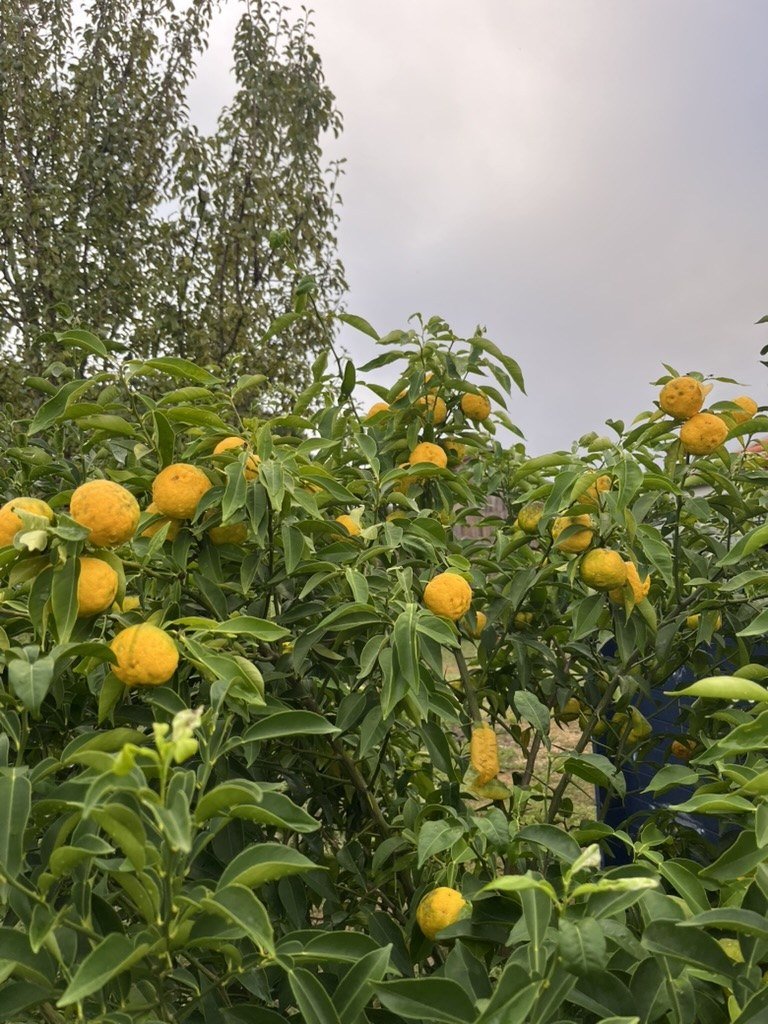
Its main interest is its fragrance: an expressive zest, a lively juice and many seeds. It is used both green and at maturity. A little zest in a cream, a little juice in a sauce or a jam lets you enjoy its aromas without trying to eat it like an orange.
2. No. 1 Tri Voss: 5°F (−15°C)
Poncirus and papeda hybrid · Selection distributed by Bernhard Voss
No. 1 Tri Voss is above all a juice citrus. L’Arche du Livradois describes a very juicy fruit with a lemony profile and many seeds; the zest is less interesting. The 5°F (−15°C) reference point places it among the candidates for cold gardens, even though listings vary with conditions.
Use it like a lemon: juice in a vinaigrette, a marinade or a dessert. Its food interest lies in this juice rather than in eating it in segments.
See the No. 1 Tri Voss profile →
3. Morton Citrange: 5°F (−15°C)
Sweet orange and Poncirus hybrid · American selection
Morton represents the citranges in this ranking. Its fruit keeps an acidity and a bitterness that set it apart from a sweet orange. The hardiness reported up to 5°F (−15°C) by Quissac applies to a spot sheltered from cold winds.
Worth trying in a blended juice or in marmalade, after tasting the harvest. It is an option for the gardener ready to process the fruit; its flavor should not be presented as that of a table orange.
See the Morton Citrange profile →
4. Five Star Citrumelo: 5°F (−15°C)
Citrumelo · Grapefruit and Poncirus relative
Five Star is the only citrumelo in the selection, with the 5°F (−15°C) reference point kept from its profile. Its fruit recalls a grapefruit, with variable acidity and bitterness. Ripeness and the heat received during the season strongly influence the pleasure of tasting.
Best used in juice, marmalade or tart preparations, depending on the flavor of the harvest. It remains a hardy hybrid fruit: better to taste it before making a big glass of pure juice.
See the Five Star Citrumelo profile →
5. Eremorange: 5°F (−15°C)
Hybrid related to the desert lime and the sweet orange
The Eremorange brings a different texture and aromatic profile. Its small fruits and fine foliage set it apart from classic citrus. The 5°F (−15°C) reference point is also listed in nursery catalogs, but hardiness must always be judged in the context of the garden.
Worth discovering in jam and in fragrant preparations, rather than comparing it with a big sweet orange. Its originality and modest size make it a fruit to work with in small quantities.
6. Shangjuan: 5°F (−15°C)
Citrus wilsonii · Chinese aromatic citrus
The Shangjuan bears large yellow fruits whose zest is particularly interesting. The juice remains sour, with a character that can recall lemon and grapefruit. Its place in this ranking rests mainly on the combination of a 5°F (−15°C) reference point and concrete culinary uses.
Use it for zest, jams and tart preparations. The names Shangjuan, Shangyuan and Ichang lemon overlap in catalogs: they designate citrus from the same botanical group. The Shangjuan and Ichanglemon entries point here to the two profiles on the site, without presenting them as two distinct species; the origin of the plant material remains to be checked when buying.
7. Prague Citsuma: 5°F (−15°C)
Satsuma and Poncirus chimera · Distributed in Europe by Bernhard Voss
The Prague Citsuma is kept for its mandarin-type fruit and its 5°F (−15°C) reference point. Nurseries describe a juicy flesh close to the satsuma, with more zing. Its sometimes twisted habit and its thorns also give it a singular presence in the garden.
Taste it at full ripeness, then use it fresh, in juice or in marmalade depending on the result. Late ripening can limit the harvest in gardens where the fruit meets frost before it is ready.
See the Prague Citsuma profile →
8. Taiwanica: 5°F (−15°C)
Citrus taiwanica, also called Nansho-daidai · Taiwan
Often sold as a “cold-hardy lemon,” the Taiwanica is not a classic lemon tree. Its sour juice and fragrant zest explain this use. Several nurseries report a hardiness of 5°F (−15°C) for the tree.
Squeeze it over fish or into a sauce, or turn it into marmalade and syrup. The zest can keep some bitterness: adding it gradually lets you enjoy the fragrance without weighing down the dish.
9. The other yuzus reported at 5°F (−15°C)
Classic yuzu, Tada Nishiki and Hana Yuzu · Japanese aromatic citrus
This entry groups the yuzus and relatives for which a 5°F (−15°C) listing is documented. The classic yuzu provides a sour juice and a very fragrant zest. Tada Nishiki, reported at 5°F (−15°C) by Asimine & Cie, is sought after for its nearly seedless fruit. Hana Yuzu, a related citrus sold under this name, is reported at 5°F (−15°C) by Vessières: its small fruits offer another aromatic balance and its flowers can also be used in cooking.
Choose them for sauces, pastries, marmalades and zests. The listings do not remove the need to check the rootstock and growing conditions of the plant you buy. Yuzu N3 keeps its separate entry at the top of the ranking.
Classic yuzu → · Tada Nishiki Yuzu → · Hana Yuzu →
10. Ichang lemon: 5°F (−15°C)
Citrus wilsonii · Ichanglemon
The Ichang lemon joins the 5°F (−15°C) tier. This reference point is reported notably by the Pépinière du Bosc and Pépins Perdus for a well-established adult. Listings can vary with the plant material and conditions, and the fruits remain more sensitive than the tree.
Its large yellow fruit has a zest recalling yuzu and a juice with a lemony profile. It is a candidate to replace lemon in the kitchen: tarts, sorbets, sauces, marinades and drinks. It shares its botanical group with the Shangjuan mentioned above; these commercial names do not guarantee two distinct varieties.
Which citrus are kept at 7°F (−14°C)?
Five entries make up the second tier: Shangsa Mandarin, Owari Francis Soules Satsuma, US 119, Jokan Grapefruit and Thomasville Citrangequat. They bring eating fruit, juices and processing uses. A one-degree difference in a catalog should not make you forget ripeness, exposure and freeze duration.
11. Shangsa Mandarin: 7°F (−14°C)
Mandarin related to the Changsha group · China
The Shangsa is kept with the 7°F (−14°C) reference point reported notably by Vessières and Anjou Citrus. Its sweet, juicy pulp and thin skin make it a mandarin to consider for fresh eating. It contains seeds.
Eat it in segments or squeeze it, once the fruit has reached maturity. Nurseries place the harvest in fall, with differences depending on the terroir. It is one of the most familiar entries in the selection for its flavor and use.
See the Shangsa Mandarin profile →
12. Owari Francis Soules Satsuma: 7°F (−14°C)
Citrus unshiu ‘Owari Francis Soules’ · Satsuma
Owari Francis Soules is the only classic satsuma included. Vessières reports 7°F (−14°C) for this selection. This figure remains a horticultural reference point for an established tree, with the usual reservations about freeze duration and garden conditions.
Its asset is simple: an eating mandarin, easy to peel and generally seedless, with juicy, sweet flesh at maturity. It is enjoyed fresh, in fruit salad or as juice. Its late-season ripening must be taken into account when the first frosts threaten the fruit.
See the Owari Francis Soules Satsuma profile →
13. US 119: 7°F (−14°C)
Complex hybrid combining sweet orange, grapefruit and Poncirus · American selection
US 119 is kept with the 7°F (−14°C) reference point from its profile. It produces an orange-type fruit with an original aromatic profile. Eating quality depends on ripeness and the conditions of the season; this is not a promise of getting exactly a supermarket orange.
Taste it fresh and as juice, then use it in a dessert if the fragrance of the harvest lends itself to it. It keeps an orange-type entry in a ranking dominated by sour and seasoning citrus.
14. Jokan Grapefruit: 7°F (−14°C)
Japanese citrus of the Citrus obovoidea group
The Jokan brings a large, juicy fruit to this selection. The Pépinière du Bosc reports it at 7°F (−14°C) and describes a sweet flavor, halfway between grapefruit and mandarin, without marked bitterness.
Worth trying fresh, as juice or in fruit salad. Its ripening period may differ from that of citrus harvested in fall: it should be checked with the grower for the plant material you buy and the climate of your garden. The tree’s survival does not guarantee that all its fruit will be kept through the winter.
See the Jokan Grapefruit profile →
15. Thomasville Citrangequat: 7°F (−14°C)
Kumquat and citrange hybrid · United States
Thomasville stays with the 7°F (−14°C) reference point from its profile. It is not a classic kumquat: the hybridization gives it a different behavior and a fruit whose flavor changes with ripeness. The small fruits offer a lively profile, useful in the kitchen.
Use them for their tart juice, in marmalade or candied. Tasting beforehand lets you choose the stage and preparation that suit best. Its compact size also appeals to small gardens and large-container growing, where root protection becomes essential.
See the Thomasville Citrangequat profile →
What determines real hardiness beyond the ranking?
The stated temperature is a starting point. Five factors influence the result in a garden.
The rootstock. It contributes to vigor, soil adaptation and the tree’s behavior in winter. It does not automatically pass all of its own hardiness on to the scion. Choosing it for the soil and climate remains essential: see the rootstocks.
Exposure and drainage. A spot sheltered from cold winds and a soil that drains water limit certain risks. A wall can create a favorable microclimate, but it does not subtract a fixed number of degrees from each stated threshold.
Freeze duration. A brief nighttime cold snap and several days of continuous freezing do not put the same stress on the tree. Humidity and wind also change the damage.
Age and hardening. A young, recently planted tree is more vulnerable than an adult rooted for several years. Growth still active when the cold arrives can also increase its sensitivity. Protecting the first winters remains relevant even for a hardy variety.
Ripeness and fruit freeze. A late harvest can be exposed before the tree reaches its own resistance threshold. The decision to harvest should take into account flavor, the desired stage and the forecast temperatures, rather than one date for all varieties.
To go further: climate and acclimatization of citrus.
How do you choose your hardy citrus in practice?
For fruit to eat fresh, start by looking at Shangsa, Owari Francis Soules and Jokan, then the eating hybrids depending on growing conditions. For a use close to lemon, compare Ichang lemon, Taiwanica and Tri Voss. For fragrant zest and pastry, the yuzus hold a special place.
The right choice combines a hardiness suited to the garden, a ripening time compatible with the local winter and a fruit you will enjoy using. A citrus reported as slightly less hardy, but harvested in time and grown in a favorable spot, can be more useful than a tree that survives without delivering a usable harvest.
Exploring the citrus inventory lets you compare profiles, uses and growing reference points before choosing.
Sources and scope of the temperatures
The reference points come from the encyclopedia’s profiles and from attributed horticultural listings. They are not a comparative trial of the fifteen entries in the same garden. Among the references used for this revision:
- Pépinière du Bosc: Yuzu N°3 and cold-hardiness conditions.
- L’Arche du Livradois: No. 1 Tri Voss, juice quality and hardiness.
- Quissac: Morton Citrange.
- Pépinière du Bosc: Taiwanica.
- Vessières: Hana Yuzu and classic yuzu.
- Asimine & Cie: Tada Nishiki.
- Pépinière du Bosc: Ichang Lemon and Pépins Perdus: Ichang Lemon.
- Pépins Perdus: Citsuma de Prague.
- Vessières: Mandarine Shangsa and Anjou Citrus: Mandarine Shangsa.
- Vessières: Satsuma Owari Francis Soules.
- Pépinière du Bosc: Pomelo Jokan.
Selection and uses revised October 8, 2026.
Cover image: AI-generated illustration.