What are you looking for?
A Botanical Odyssey
Forget the postcard image of a lemon tree basking in the Mediterranean sun. The real history of citrus begins in the icy mists of the Himalayas, 8 million years ago.
Begin the journey through time
Eight million years ago, the Indian subcontinent completed its collision with Asia. This titanic encounter raised the Himalayas at a breathtaking geological pace: 2 inches (5 centimeters) a year.
The mountains reached heights that had never existed on Earth, creating a climate barrier that would literally reshape the weather of the entire planet. Monsoon winds, blocked by this wall of rock, released their moisture on the southern slopes.
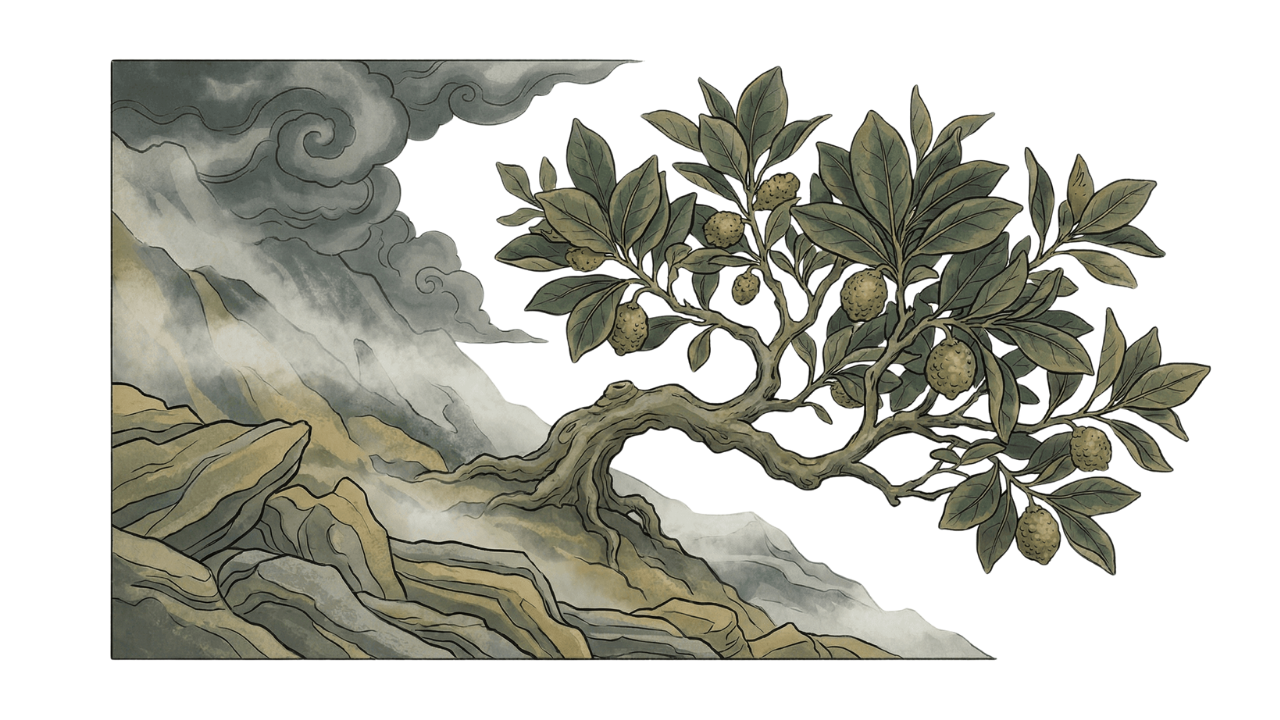
It was in this extreme climate, between Yunnan, Assam and northern Burma, that the first citrus appeared. Unlike tropical plants that grow all year round, these proto-citrus developed a strict seasonal cycle : explosive growth during the monsoon, complete dormancy in winter.
The leaves became leathery and loaded with antimicrobial essential oils. The bark thickened. The roots reached deep to escape surface frost in the soil. Cold hardiness would not be an evolutionary accident: it was a survival necessity written into the DNA.
The global climate cooled. Ice caps formed at the poles. Sea levels fell by 390 feet (120 meters), creating land bridges between the islands of Southeast Asia.
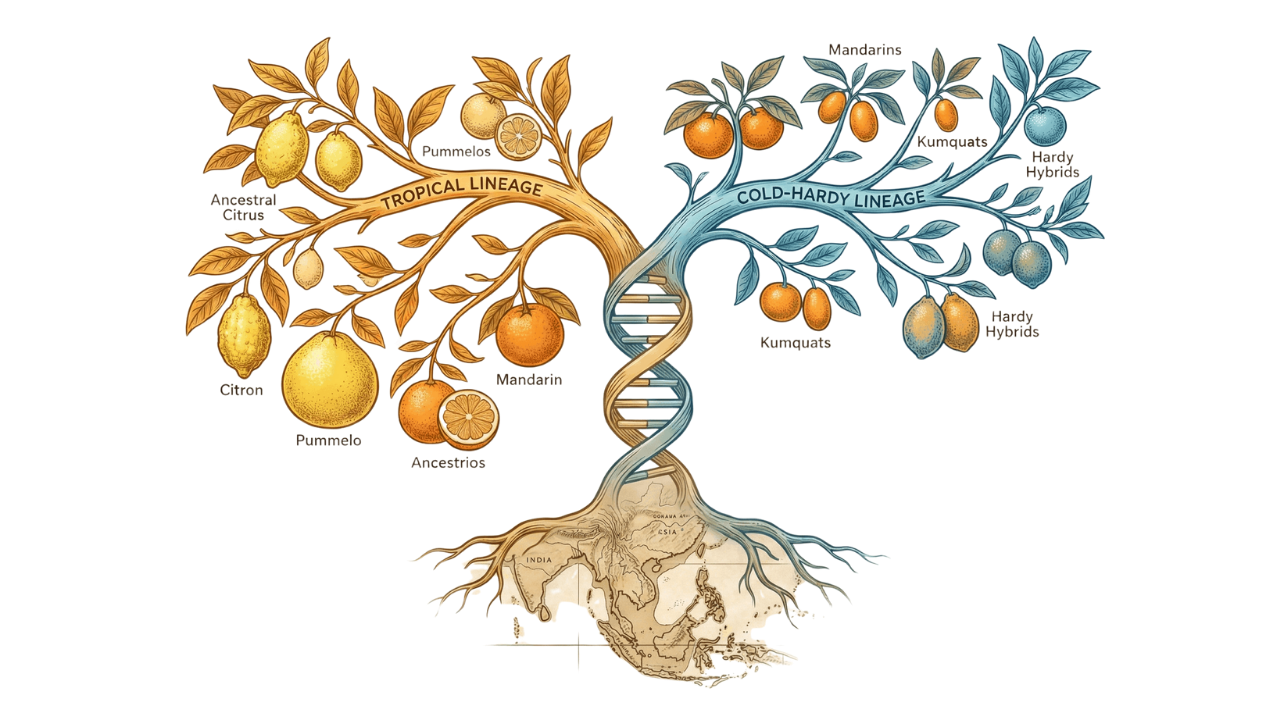
This is when the citrus family split into several distinct lineages, each adapted to a radically different environment. The tropical branch moved south: limes, pummelos and grapefruits thrived in hot, humid equatorial forests.
In this unchanging Eden, cold hardiness became useless. Those genes gradually withered. Within 2 million years, these citrus became unable to survive below 32°F (0°C). The pummelo (Citrus maxima) has lost 23% of the cold-hardiness genes present in its Himalayan ancestors.
The northern branch, by contrast, stayed on the mainland and even moved northeast, following the river valleys of China and reaching Korea and Japan. These populations faced relentless selection pressure.
These citrus developed sophisticated strategies: accumulating sugars in their cells to lower the freezing point, producing antifreeze proteins, thickening their bark and, above all, a precise biological clock that triggers dormancy as soon as the days grow shorter.
The first written mentions of citrus appear in the Shū Jīng (Book of Documents), compiled under the Xia dynasty. The text describes the “tribute of Yu”: each province had to offer the emperor its most precious products.
But it was under the Han (206 BC to AD 220) that citrus growing became a science. The treatise Nan Fang Cao Mu Zhuang by Ji Han, in AD 304, classifies 27 citrus varieties. It describes precisely their differences in flavor, hardiness and medicinal use.
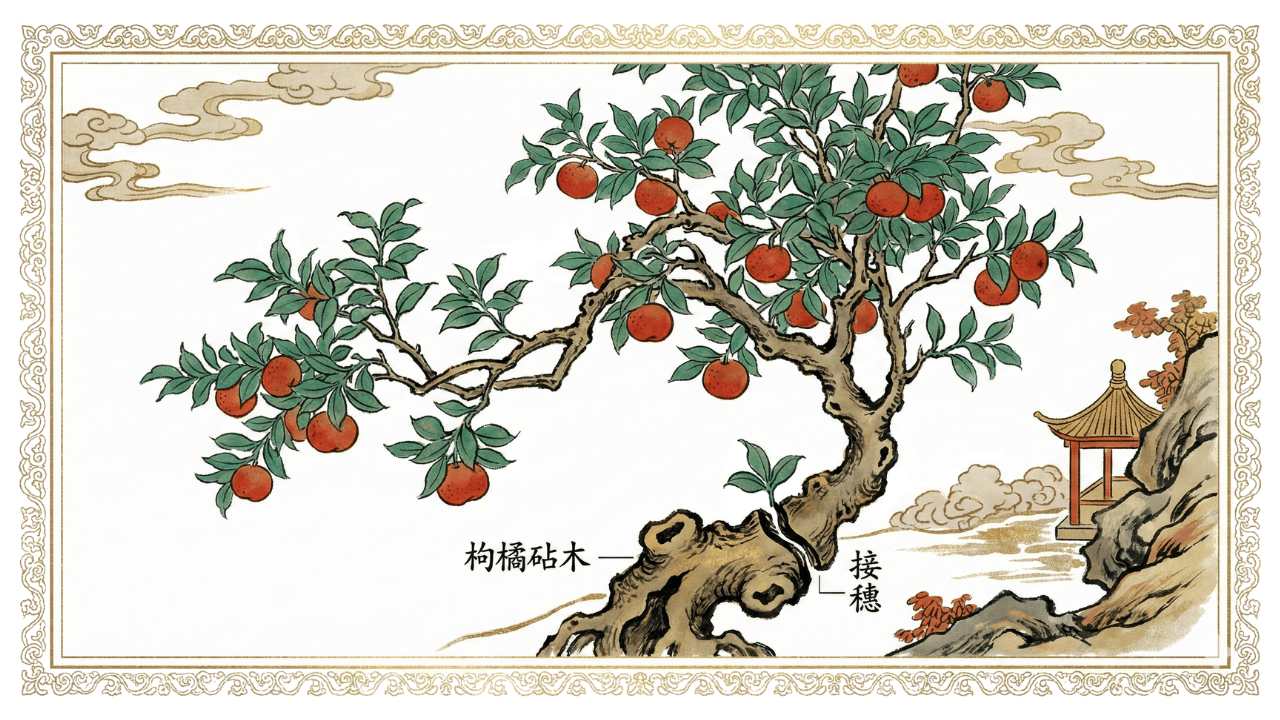
It was during this period that the Chinese made a revolutionary discovery: grafting onto Poncirus trifoliata. This wild tree, found in the mountains of Hubei and Shanxi, is the only deciduous citrus (it loses its leaves). Its fruit is inedible, but its hardiness is legendary: it survives −4°F (−20°C).
By grafting a delicate mandarin onto a Poncirus rootstock, the Chinese created a hybrid tree: the trunk and roots instruct the whole tree to go dormant in the fall, protecting the scion from frost. Without knowing it, they had just invented cold-climate citrus growing, 2,000 years before modern science.
Between AD 700 and 1200, Islamic expansion was not limited to territorial conquest. The Abbasid caliphs launched what historians call the “Arab Agricultural Revolution”. Botanical missions were sent to India, Persia and as far as China.
This is how sour orange (Citrus aurantium) crossed Persia and reached Iraq around AD 850. Ibn al-Awwam, a 12th-century agronomist from Seville, describes in his Kitāb al-Filāḥa 19 citrus varieties grown in Al-Andalus.
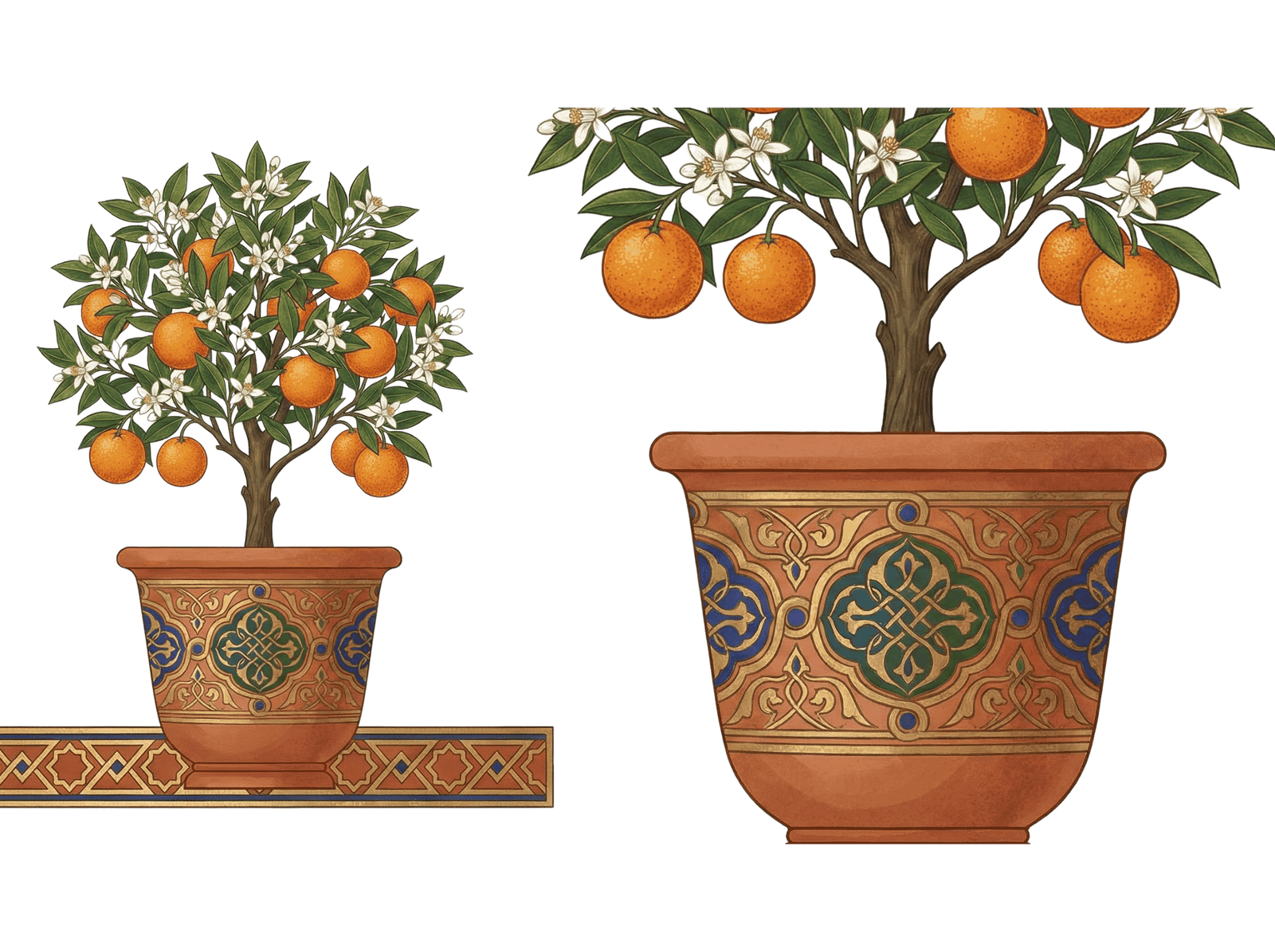
Sour orange withstands 14°F (−10°C), about 9°F (5°C) more than the citron known to the Romans. That difference changed everything: citrus could now be grown in the patios of Córdoba, Granada and Seville, despite occasional winter frosts.
Even more crucial for the future: sour orange became the standard Mediterranean rootstock. Robust, tolerant of limestone and resistant to disease, it allowed sweet oranges to be grafted in climates where they would never survive on their own roots.
When the Reconquista drove the Arabs out of Spain, the Christians carefully kept their orange trees. In 1248, Ferdinand III of Castile ordered the orchards of Seville to be protected. These centuries-old trees still exist in the city's streets today.
Between 1550 and 1850, Europe plunged into the “Little Ice Age”. The Thames froze every winter. The Seine became a playground for skaters. Average temperatures fell by 2.7°F (1.5°C), making it impossible to grow citrus outdoors, even in Provence.
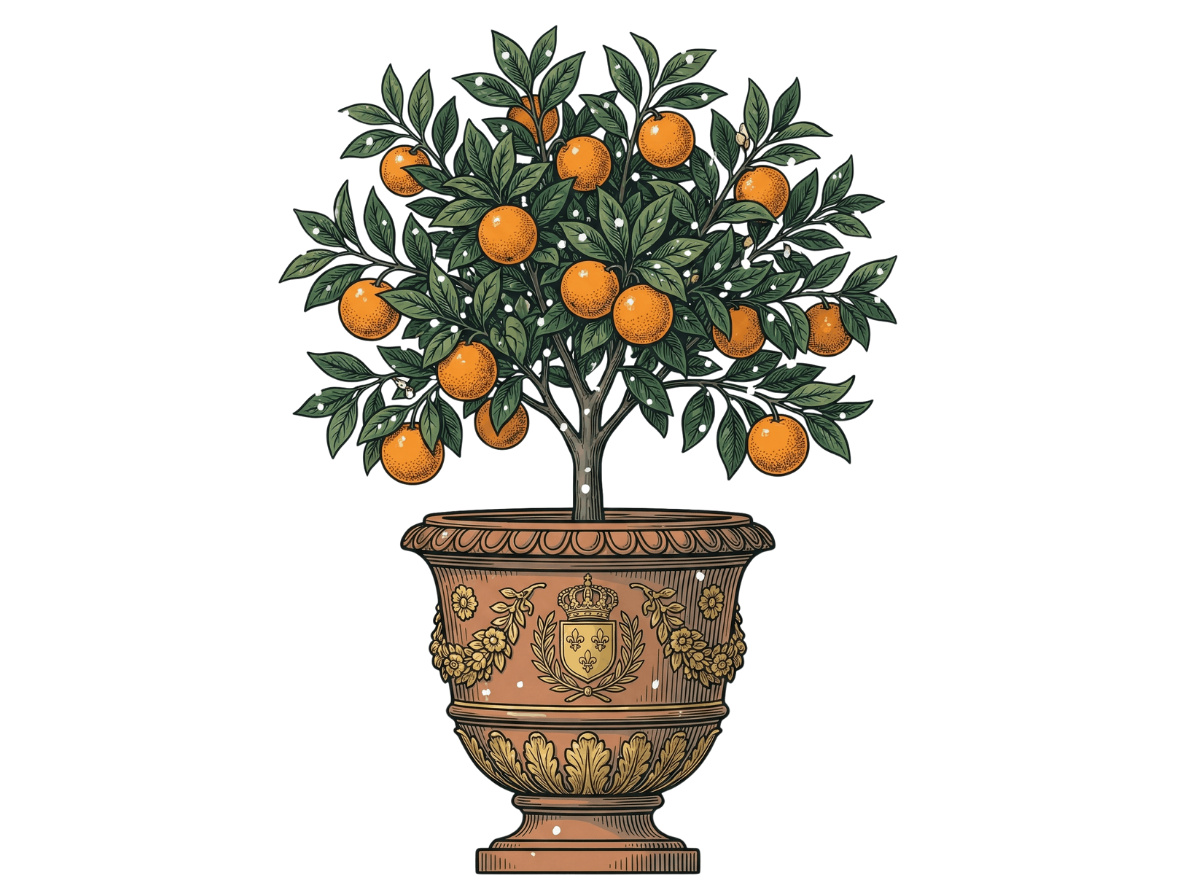
Meanwhile, the orange had become a symbol of power. The Medici of Florence, the Bourbons of Versailles, the Habsburgs of Vienna: every court competed with its citrus collection. Owning a hundred-year-old orange tree was worth a fortune.
Since the trees could not survive outdoors, people invented the orangery : palaces of stone and glass, heated with coal all winter. The one at Versailles, built by Jules Hardouin-Mansart between 1684 and 1686, is 509 feet (155 meters) long. Its walls are 10 feet (3 meters) thick.
Paradoxically, this architectural obsession stalled progress in cold hardiness. Why select hardier trees when you can protect them at any cost? Nurserymen focused on looks: monstrous fruit, exotic peels, odd shapes.
Meanwhile, Chinese and Japanese citrus, left to their own devices in their mountain valleys, kept facing winters at 5°F (−15°C), refining their survival genetics year after year.
December 1894, then February 1895. Two waves of polar cold swept over Florida. Orlando fell to 18°F (−8°C) on December 28, 1894, a record low that still stands, then to 19°F (−7°C) in February. By morning, the scene was apocalyptic: orange trees literally burst, their frozen sap splitting the wood.
Florida, which shipped up to six million boxes of fruit a year, harvested barely 100,000. Grove land lost almost all its value, and many growers left for the North or for California. Production did not pass one million boxes again until 1901.
The US government, under pressure from farm lobbies, launched an emergency mission. The botanist Walter Tennyson Swingle was sent to Asia with a clear mission: find citrus able to withstand freezing.
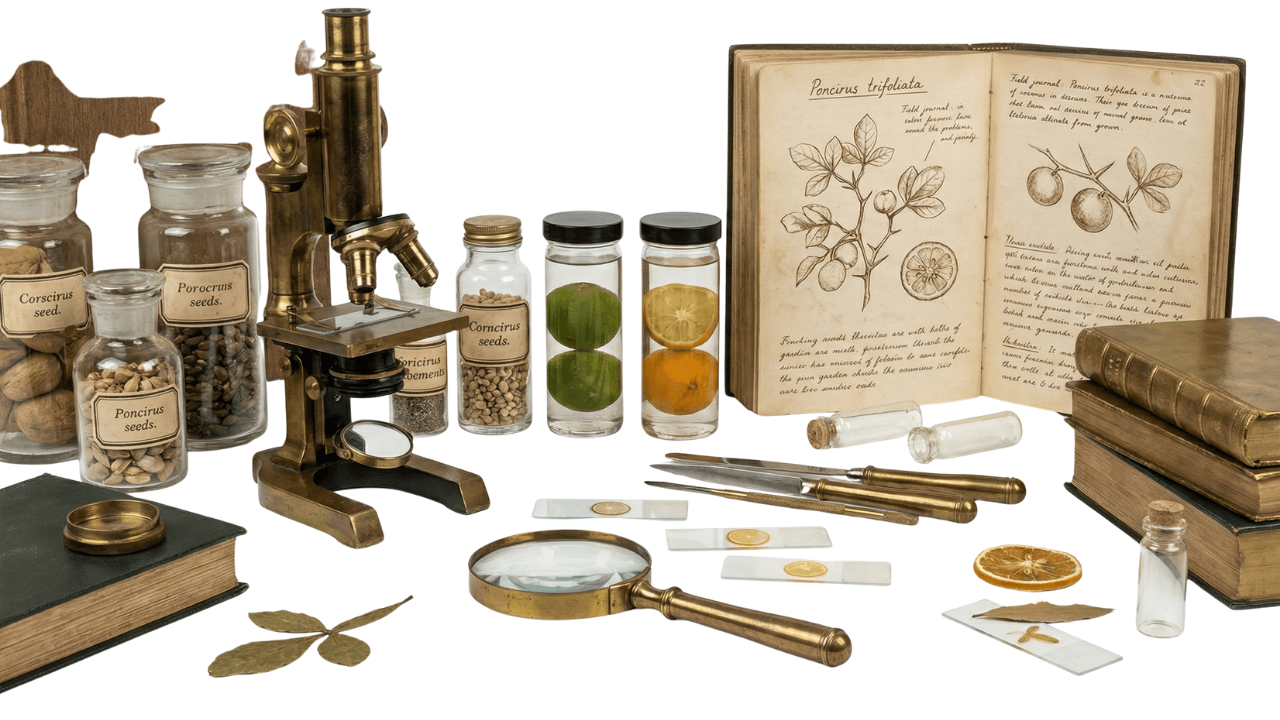
Between 1907 and 1913, he traveled through China, Korea and Japan. He brought back 2,583 samples, including seeds of Poncirus trifoliata, Ichang papeda and wild yuzu. His notebooks describe snow-covered trees in Sichuan still bearing ripe fruit in January.
Back in the United States, Swingle turned to hybridization. He crossed sweet orange (delicious but fragile) with wild Poncirus (inedible but indestructible). It was the beginning of modern scientific hybridization. He created the citranges (Rusk, Troyer, Carrizo), searching for the “Holy Grail”: an orange that grows under snow.
While the West toiled in the laboratory, Japan jealously preserved centuries of natural selection in its mountain valleys. Cut off from the rest of the world, unique varieties had flourished there.
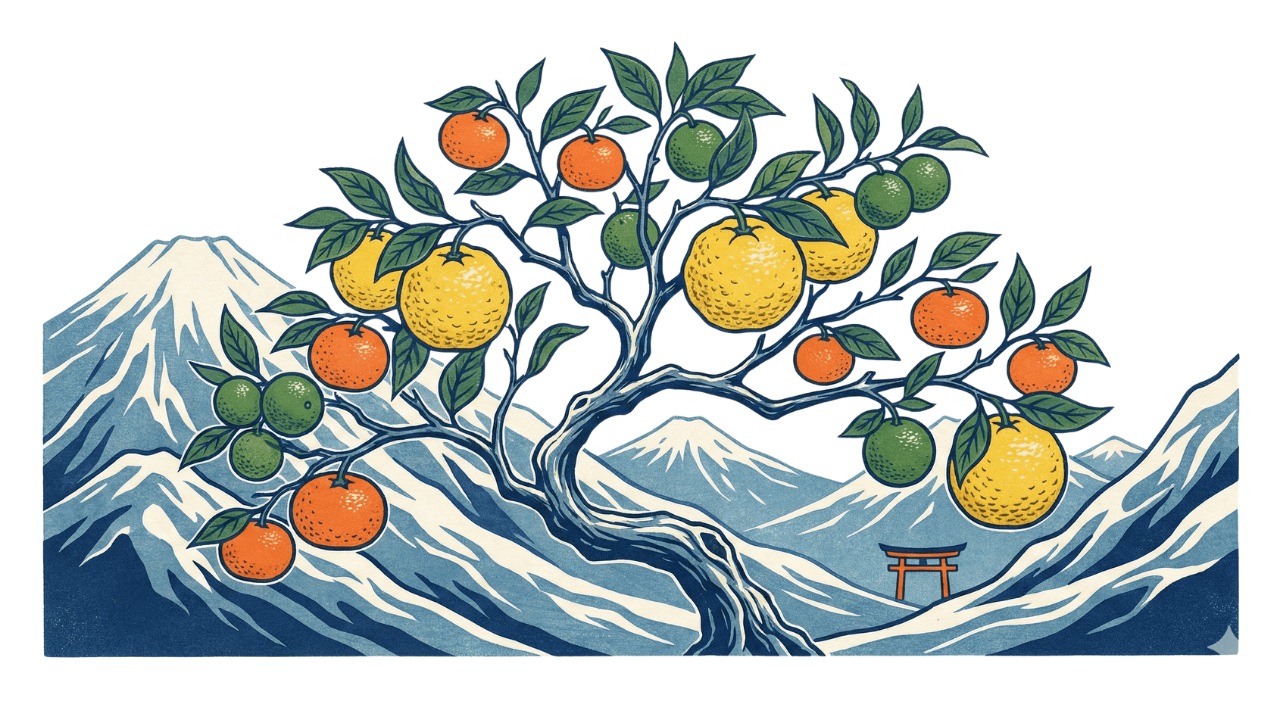
The Yuzu, the Sudachi, the Kabosu and the Satsuma mandarin are not laboratory inventions but survivors. Hardy to 10°F (−12°C), with a fragrance of extraordinary culinary complexity.
Yuzu, for its part, grows wild in the mountain forests of central Japan. Its unique fragrance — a blend of grapefruit, mandarin and pine — became the secret ingredient of Japanese haute cuisine.
Only from the 1970s did these treasures begin to filter to the West. Michelin-starred French chefs discovered yuzu and sudachi. A new market was born: that of hardy aromatic citrus.
We are living through a quiet revolution today. The frontier of citrus growing is moving 60 miles (100 km) north every ten years. Climate change, paradoxically, is opening up new territory.
In Brussels, yuzus bear fruit on balconies. In Bristol, satsumas produce 66 pounds (30 kg) of fruit per tree. In French-speaking Switzerland, citranges decorate city gardens. What was impossible 30 years ago is becoming commonplace.
Research programs are intensifying. INRAE in France, the University of California, Riverside, and CREA in Italy are all working on new varieties that combine hardiness, flavor and productivity.
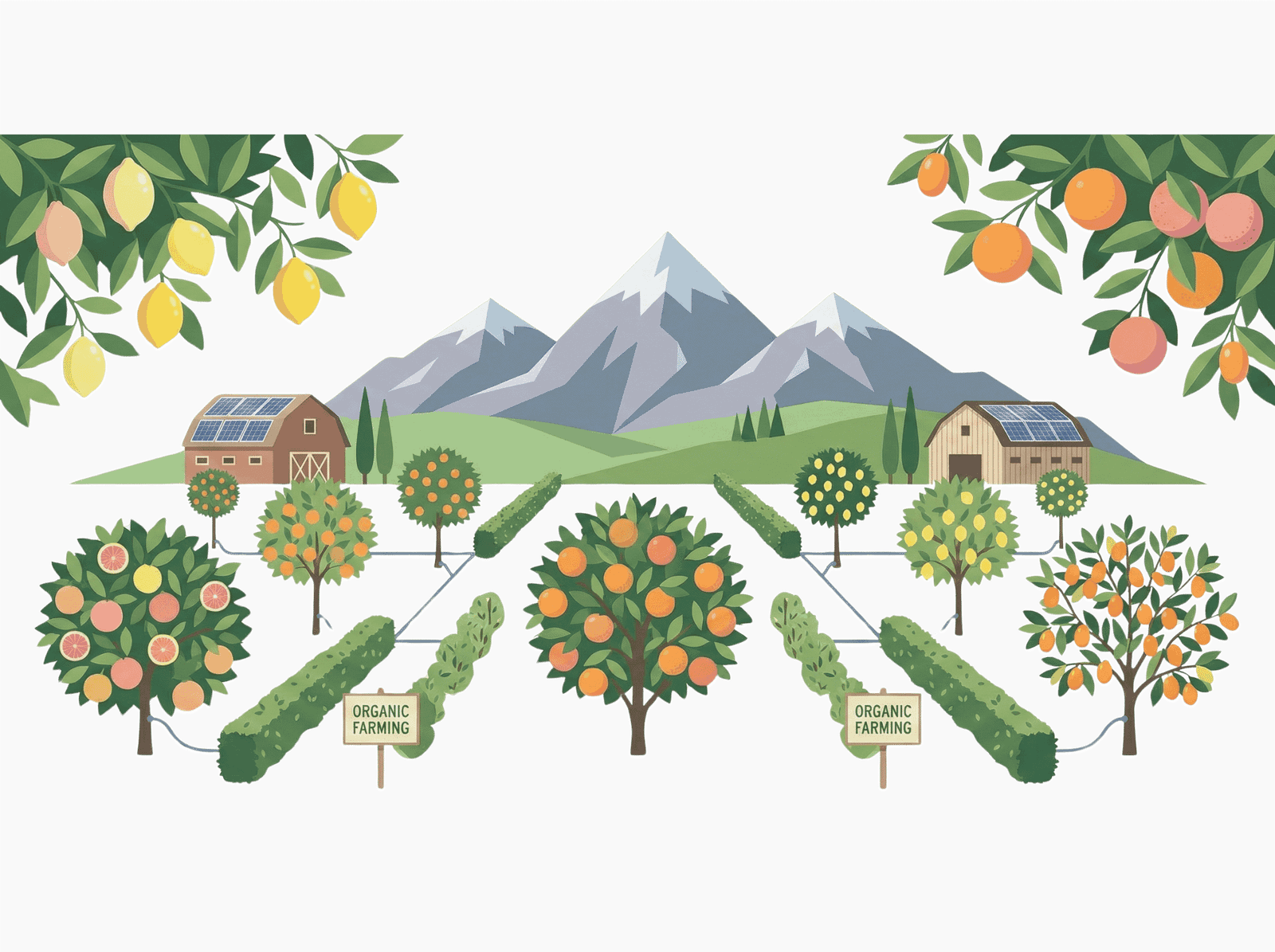
The real revolution is philosophical: citrus is ceasing to be an imported exotic fruit. It is becoming once again what it was 8 million years ago: a temperate-climate tree, able to face winter, take root in limestone soil and produce locally.
Amateur gardeners in Belgium, Switzerland and northern France now plant yuzus in the ground. Hardy citrus is no longer a botanical curiosity; it is a choice of food sovereignty.
The story continues in your garden.