What are you looking for?
The complete guide to choosing the right rootstock for cold, limestone and heavy soils. A citrus tree's success depends largely on its rootstock's ability to cope with soil conditions and cold
People often think a rootstock is just a root support. That's a mistake. It is what drives the tree's survival: cold hardiness, disease tolerance, nutrient uptake. In USDA zones 7-8, choosing the rootstock matters more than the variety itself: if the roots die, the tree dies.
Limestone (chlorosis), Clay (root asphyxiation), Salt (sodium toxicity). A single weak point can doom your orchard.
Poncirus shuts down sap flow early (maximum protection). Sour orange keeps it flowing late (risk of freeze damage to soft tissue).
The rootstock shapes size (Flying Dragon dwarfs, C35 is vigorous) and precocity (C35: fruit from 2 years, Poncirus: 4-5 years).
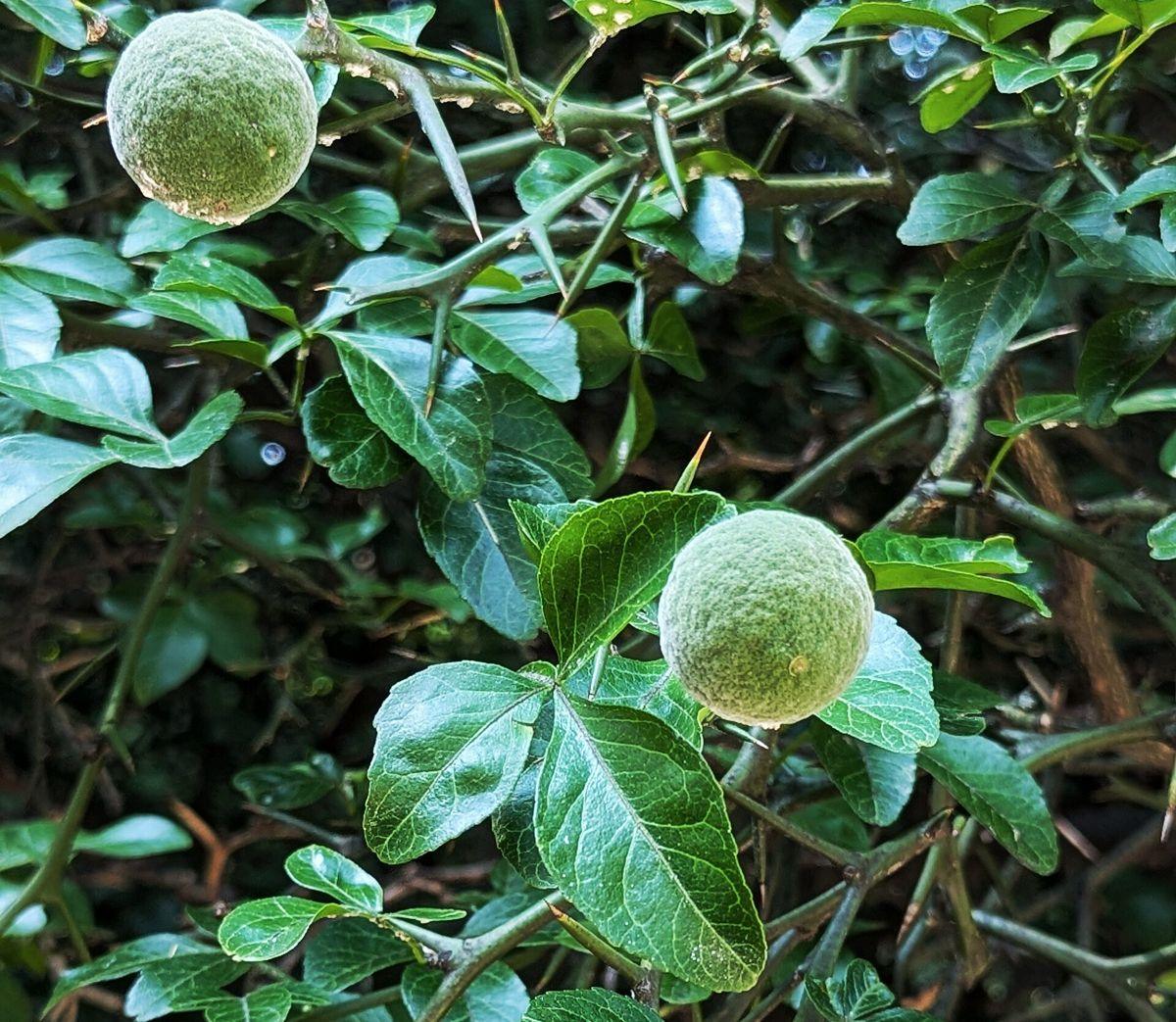
Browse the typical profiles suited to cold hardiness.
Complete rootstock comparison table
| Characteristics |
Poncirus
|
FA5
|
C35
|
Citrumelo
|
Sour orange
|
Carrizo
|
|---|---|---|---|---|---|---|
| A. Climate & Dormancy | ||||||
| Cold hardiness | −4°F (−20°C) | 3°F (−16°C) | 7°F (−14°C) | 5°F (−15°C) | 14°F (−10°C) | 10°F (−12°C) |
| Onset of dormancy | Early | Medium | Medium | Early | Late | Medium |
|
Spring growth start
Later = better (avoids late frosts)
|
✓ Late | ✓ Late | ~ Normal | ~ Normal | ✗ Early | ~ Normal |
| B. Soil constraints | ||||||
| Limestone (chlorosis) | ❌ | ✅ | ⚠️ | ❌ | ✅ | ⚠️ |
| Heavy clay soil | ✅ | ✅ | ❌ | ⚠️ | ✅ | ❌ |
| Salt tolerance | ❌ | ✅ | ❌ | ⚠️ | ✅ | ❌ |
| C. Agronomy & Fruit | ||||||
| Induced vigor | Semi-dwarfing | Medium | Medium | Strong | Strong | Strong |
| Time to fruiting | Slow | Fast | Very fast | Fast | Medium | Fast |
| Fruit quality | Excellent | Fair | Excellent | Fair | Good | Good |
| D. Health & Diseases | ||||||
| Tristeza (CTV) | ✅ | ✅ | ✅ | ✅ | ❌ | ✅ |
| Phytophthora | ✅ | ✅ | ⚠️ | ✅ | ⚠️ | ⚠️ |
| Nematodes | ✅ | ⚠️ | ⚠️ | ✅ | ❌ | ❌ |
Find the ideal rootstock in 4 criteria
Available candidates
Please select at least one criterion to refine your search
Select your criteria in the assistant above to get a personalized recommendation.
No rootstock matches these criteria
Try changing your selections in the assistant
Beyond climate, the genetic compatibility between rootstock and grafted variety determines the tree's vigor, longevity and productivity. Some combinations are naturally harmonious; others create weak points that undermine the tree over the long term.
| Citrus family |
Poncirus
trifoliata
|
FA5
Forner Alcaide
|
Sour orange
C. aurantium
|
Citrumelo
hybrid
|
Citrange
Carrizo/C35
|
|---|---|---|---|---|---|
|
🍊
Oranges
|
✓ Excellent
Moderate vigor, sweet fruit |
✓ Excellent
Semi-dwarfing, ideal for containers |
✓ Excellent
Commercial standard |
✓ Excellent
Strong vigor |
✓ Excellent
Early bearing |
|
🍊
Mandarins
|
✓ Excellent
Historic pairing |
✓ Excellent
Large, early fruit |
⚠ Fair
Delayed incompatibility possible |
✓ Good
High vigor |
✓ Good
Fast to bear fruit |
|
🍊
Clementines
|
✓ Good
Compact tree |
✓ Excellent
Abundant crops |
✓ Excellent
Professional standard |
✓ Good
Medium vigor |
✓ Excellent
Carrizo recommended |
|
🍋
Lemons
|
⚠ Fair
Strongly dwarfing, small fruit |
✓ Good
Compact, good for containers |
✓ Good
But susceptible to tristeza |
✓ Excellent
Large fruit, productive |
✓ Excellent
C35 = quality benchmark |
|
🍊
Grapefruits
|
✗ Poor
Genetic incompatibility |
⚠ Variable
Depends on variety |
✓ Excellent
Perfect affinity |
✓ Excellent
Optimal vigor |
✓ Good
High production |
|
🍋
Yuzu / Papedas
|
✓ Excellent
Natural symbiosis |
✓ Excellent
Cultivar suited to yuzu |
✗ Incompatible
Scion rejection |
⚠ Variable
Depends on cultivar |
✓ Good
Carrizo acceptable |
|
🟠
Kumquats
|
✓ Excellent
Dwarfs the tree (container) |
✓ Excellent
Ideal for container growing |
⚠ Fair
Excessive vigor |
✓ Good
Fast growth |
✓ Good
Steady production |
Why avoid Poncirus? Lemon trees are naturally vigorous. Grafted onto Poncirus, they are strongly dwarfed and produce small fruit. The graft union also becomes fragile with age.
The winning pair: Carrizo citrange (C35 or Troyer) offers the best compatibility. The tree develops good vigor, the fruit is large and juicy, and production starts in the third year.
💡 Exception: Meyer lemon, which is less vigorous, does better on Poncirus than standard lemons (Eureka, Lisbon).
Yuzu, sudachi, kabosu: These citrus from the papeda lineage (Citrus ichangensis) show complete genetic incompatibility with sour orange (Citrus aurantium).
The scion "takes" at first, but after 2-3 years the graft union becomes necrotic and the tree dies suddenly. This is linked to an enzymatic barrier that blocks the flow of processed sap.
Solution: Poncirus trifoliata (perfect symbiosis) or FA5 (a cultivar selected specifically for Japanese citrus).
Mechanical incompatibility: Grapefruits (Citrus × paradisi) develop a massive trunk and a very heavy crown. Poncirus, with its fine, shallow root system, cannot bear that load.
Result: the tree leans, the graft union cracks, and the tree can snap in a gust of wind.
Suitable rootstocks: sour orange (powerful root system), citrumelo (extreme vigor) or Carrizo citrange for well-drained soils.
The scion does not "take". The healing callus never forms. Death within a few weeks.
E.g. some triploid hybrids
The scion grows normally for 2-10 years, then the graft union gradually becomes necrotic.
E.g. yuzu / sour orange
Key point: an incompatibility can stay invisible for years. That is why it is crucial to follow professionals' proven recommendations.
Beyond the classics, other rootstocks are worth knowing for specific situations. Mainly used in Mediterranean and subtropical regions
Citrus reshni
Citrus volkameriana
Poncirus × grapefruit
Citrus jambhiri
Citrus macrophylla
Citrus × limonia
These rootstocks are mainly used in Mediterranean, subtropical or tropical regions. For growing in colder temperate climates (most of the United States outside zones 9-11), choose the hardy rootstocks presented in the main table above.