Cold hardiness
5°F (−15°C)
Identity
OriginJapan
Genetic originSpecies or variety close to Yuzu
USDA zone8a
Cold hardiness5°F (−15°C)
Fruit cold hardiness23°F (−5°C)
GrowthModerate
Height10 ft (3 m)
HarvestOctober, November
SeedsModerate
FlavorsSour, Highly aromatic
History & Description
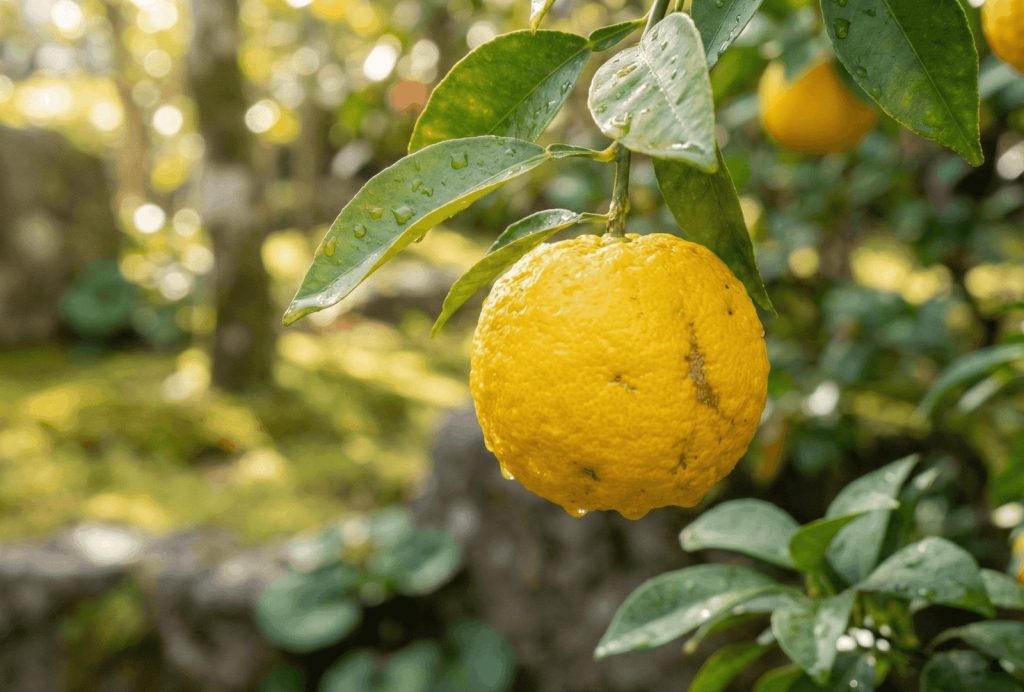
Hana yuzu (Citrus hanayu) is a variety distinct from the common yuzu, grown in Japan since the Edo period (1603-1868) and whose name literally means "flower yuzu." This name reveals its history: it was selected and perpetuated over the centuries not for mass consumption, but for the pleasure of Japanese ornamental gardens and the delicacy of its floral fragrance. Its hardiness is comparable to that of the other hardy yuzus, 10 to 5°F (−12 to −15°C), and its fruit, though more modest in size, retain the full yuzu aroma in use.
The tree is markedly more compact and manageable than the classic yuzu, reaching 7 to 10 ft (2 to 3 m) with moderate growth and a naturally bushy habit — qualities that make it one of the best choices for large-pot growing, on a balcony, or in small urban gardens. Its evergreen foliage, soft green and glossy, is less thorny than that of the standard yuzu. The spring bloom, particularly abundant and fragrant, gives off a heady scent of orange blossom and bergamot that can justify growing this cultivar on its own. The fruit, smaller than those of the common yuzu, 2.1 to 3.2 oz (60 to 90 g), have very thin skin and contain little juice but are extremely aromatic.
In the kitchen, Hana yuzu flowers are traditionally used in Japanese infusions and in artisanal perfumery. The zest is used as a condiment, with the same olfactory signature as the standard yuzu but a more floral note. Hana yuzu is viable in the ground throughout the southern half of France and the Atlantic coast (USDA zones 8a to 9b), grafted onto Poncirus trifoliata, ideally against a south-southwest-facing wall. Its natural compactness also makes it an excellent subject for a cold sunroom or temperate greenhouse as far as zone 7.
Back to the collection
Updated: