Identity
History & Description
Origin
Five Star citrumelo is a second-generation selection obtained from the Swingle 4475 citrumelo, the founding hybrid created in 1907 by Walter Tennyson Swingle at the USDA in Eustis (Florida) by crossing the Duncan grapefruit (Citrus paradisi) with Poncirus trifoliata. The Five Star generation is the result of a later selection carried out among specialist North American and European amateurs and nurserymen, with the precise aim of reducing the content of poncirin, the bitter glucoside of Poncirus that makes Swingle 4475 practically inedible, while keeping its extreme hardiness. Its name evokes the excellence of the result compared with its direct ancestor. The variety is now offered by a few specialist French nurseries, including the Pépinières Quissac, confirming its successful acclimatization in European zone 7.Tree description
Five Star citrumelo is a semi-evergreen to evergreen, vigorous tree, able to reach 10 to 13 ft (3 to 4 m) at maturity. Its trifoliate leaves, inherited from Poncirus trifoliata, give it a very distinctive decorative look, with dark green foliage and characteristic winged petioles. The tree produces an abundant, intensely fragrant bloom in May, slightly later than pure Poncirus, which protects it from late spring frosts. It is heavily thorny.Fruit quality
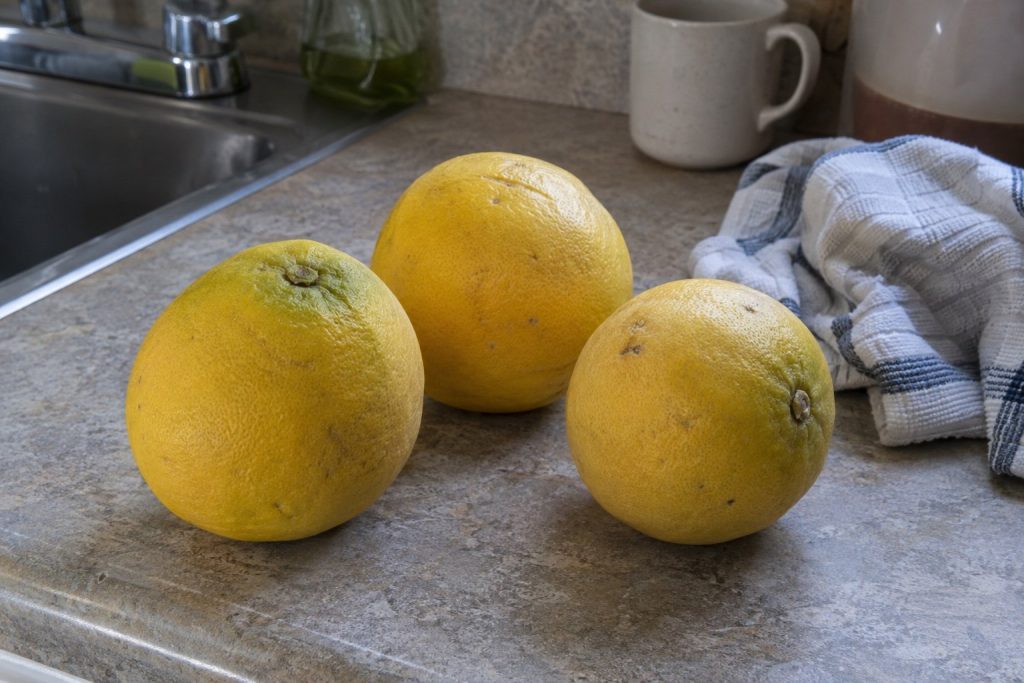
The fruit is medium to large, oval, with thick, strongly fragrant skin, turning an intense yellow at maturity in November-December. Unlike Swingle 4475, Five Star has a markedly reduced poncirin content, making it edible without elaborate preparation in good years. The juice is abundant and very aromatic, with notes of grapefruit and lemon that blend pleasantly. Seeds are numerous, a characteristic of Poncirus hybrids.Flavor and ornamental interest
Five Star citrumelo fills a unique niche in 7b zones: it is one of the few hybrids able to survive very harsh winters while producing fruit of real culinary interest. Its very fragrant zest is used in desserts, pastries, and marinades, and its abundant juice lends itself well to jellies, syrups, and drinks. Ornamentally, the tree is spectacular in fall and winter with its bright yellow fruit against a background of trifoliate foliage and its intensely fragrant spring bloom.Updated:
What matters when choosing
Key points about Five Star Citrumelo
Citrumelo Five Star is a hybrid of grapefruit and Poncirus intended for cold gardens where a conventional citrus would be too risky. Its yellow, tangy, sometimes bitter fruit is better suited to juice, marinades, or processing than to eating like an orange.
Why choose it
- Good cold tolerance for an evergreen citrus.
- Fruit usable for juice and cooking.
- Vigorous tree that can become an ornamental specimen.
Its limits
- Bitterness and Poncirus-like notes are possible.
- Late fruit, sometimes difficult to ripen where summers are short.
- Thorny branches and variable eating quality.
Practical notes
- Parentage
- Duncan grapefruit × Poncirus
- Harvest
- Late fall
- Uses
- Juice, marinades, marmalade
Cold-hardiness reference: about 5°F (−15°C)
Lower temperatures are sometimes reported for citrumelos, but fruit and young shoots remain more vulnerable than mature wood.
Sources and method
The temperatures given are reference points for a mature tree with hardened wood. The table and callout repeat the same value as the profile. They guarantee neither freedom from damage nor a harvest after a freezing event.
Data reviewed on September 21, 2026.
- Oklahoma Department of Agriculture — Parentage, uses, maturity, and cold tolerance of citrumelos
- GenDep19 — cultivar table — French horticultural reference points and rootstocks
- UCR — citrumelo collection — Varietal context and citrumelo collections