Cold hardiness
9°F (−13°C)
Identity
OriginGermany (selection by Bernhard Voss)
Genetic originHybrid of Poncirus trifoliata × Changsha mandarin (Citrus reticulata), individual selection 899K by Bernhard Voss, noted for the absence of poncirin
USDA zone7b
Cold hardiness9°F (−13°C)
Fruit cold hardiness23°F (−5°C)
GrowthVigorous
Height10 ft (3 m)
HarvestJanuary, February, November, December
SeedsFew
UsesFresh eating, Juice, Savory cooking
FlavorsSweet, Tart, Balanced
History & Description
Origin
The 899K Mandarin, also known as "Voss K", is a remarkable individual selection from the breeding program led by Bernhard Voss in Germany starting in the 1990s. A passionate amateur of extremely hardy citrus, Voss crossed Poncirus trifoliata, the most cold-hardy citrus known, able to survive −13°F (−25°C), with the Changsha mandarin (Citrus reticulata 'Changsha'), an old Chinese tangerine renowned for its hardiness inherited from the mountainous regions of Hunan. Among the hundreds of seedlings obtained, Voss noticed an exceptional specimen numbered 899, then selected its "K" line for a very rare trait among Poncirus hybrids: the absence of poncirin, the bitter, resinous compound that usually makes the fruits of citranges and citrumelos hard to eat. The 899K thus produces fruits that are truly pleasant in the mouth, with the hardiness of Poncirus and without its characteristic bitterness, a combination long considered impossible. This selection is now distributed discreetly in Europe by a few specialized nurseries, including Pépinières Quissac in France.Tree description
The 899K forms a tree of moderate size, 6.5 to 10 ft (2 to 3 m) at maturity, with an upright habit and semi-evergreen foliage, a trait inherited from the Poncirus parent that can cause partial leaf drop in winter depending on the intensity of the cold. The leaves, trifoliate in the lower part and simple in the upper part, show the Poncirus × Citrus hybridization. Growth is vigorous and fruiting is quick (from the third or fourth year). Its hardiness, documented between 10 and 5°F (−12 to −15°C), makes it one of the few Poncirus hybrids that truly bear fruit and can be grown in zone 7b with no winter protection at all.Fruit quality
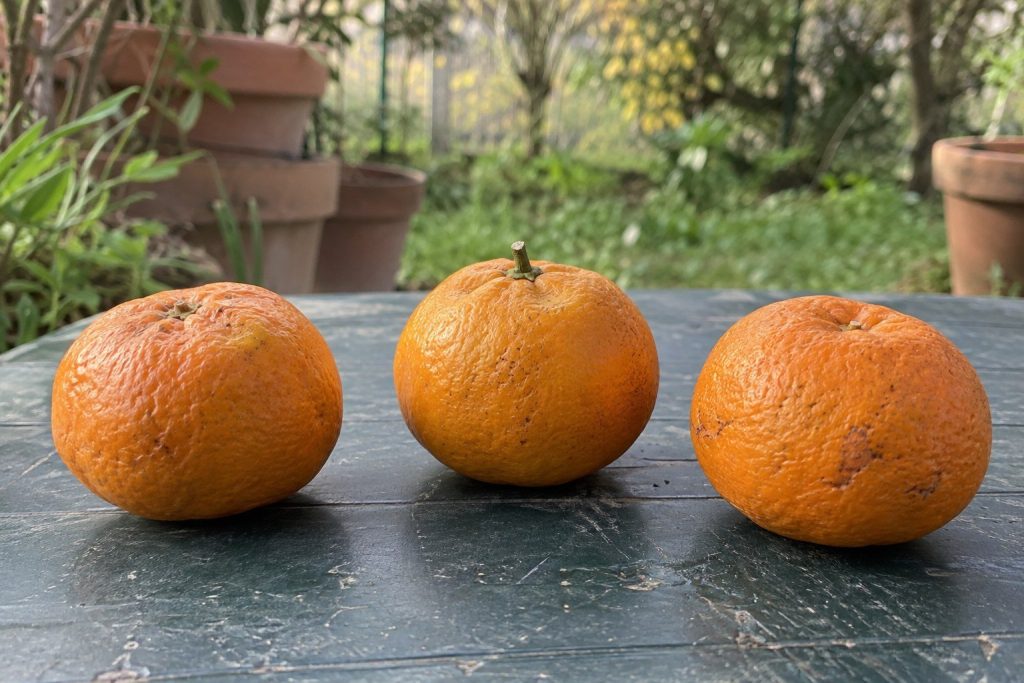
The fruits, medium-sized (3 to 4 oz, or 80 to 120 g), have smooth, glossy skin turning from green to yellow-orange at full maturity. The light orange flesh offers a flavor balanced between sugar and acidity, pleasant and straightforward, a quality that sets the 899K radically apart from other Poncirus hybrids, which are generally bitter or resinous. Seeds are few.Flavor and ornamental interest
Usable from November as a culinary aromatic (similar to lemon for fish and vinaigrettes), then edible fresh from February, the 899K is a versatile citrus, a true feat of amateur variety breeding. Its exceptional productivity and extreme hardiness make it one of the best choices for gardeners in continental zones wishing to grow a fruiting citrus without compromising on hardiness. As an ornamental, its semi-evergreen foliage, fragrant white spring blossom, and bright orange fruiting offer marked seasonal landscape interest, complementary to fully evergreen citrus.
Back to the collection
Updated: