Cold hardiness
10°F (−12°C)
Identity
OriginAustralian parent; documented European distribution, exact place of the cross not established
Genetic originCitrange (sweet orange × Poncirus trifoliata) × Eremocitrus glauca
USDA zone7b
Cold hardiness10°F (−12°C)
GrowthVigorous
Height16 ft (5 m)
HarvestSeptember, November, December
SeedsFew
UsesCandied fruit, Fresh eating, Juice, Preserves
FlavorsTart, Slight bitterness
History & Description
Origin
Citrangeremo belongs to the hybrids combining a citrange with Eremocitrus glauca, a citrus of the dry regions of Australia. The citrange itself brings the ancestry of the sweet orange and Poncirus trifoliata. This combination appears in a 1998 USDA bulletin, well before its present distribution in French catalogs. The collection of Petr Broža then mentions material received from Bernhard Voss in Germany, without making it possible to date the creation of the cross. Agrumes de Provence sells a selection attributed to Thierry Asselucio. These indications of circulation do not prove that all plants sold under this name are a single clone; nor do they allow it to be confused with Citrange Remo.Tree description
Its narrow, lance-shaped foliage, visible in nursery photographs, gives the branches a silhouette different from that of an ordinary orange tree. Kindsgass reports a growth of 10 to 16 ft (3 to 5 m) depending on pruning, while Feigenhof describes moderate to strong vigor and a size that can reach 16 ft (5 m). The reference of 10°F (−12°C) retained here is a cautious horticultural claim by Feigenhof, which explicitly places its material in zone 7b, and by Thomas Fruit Trees; other growers report more. Thomas Fruit Trees indicates zone 8, while Feigenhof indicates 7b: these diverging commercial classifications do not demonstrate growing without protection in zone 7b. The cold reference should be read for an established, acclimated tree, keeping suitable protection for young plants and potted plants, for which Feigenhof advises overwintering frost-free.Fruit quality
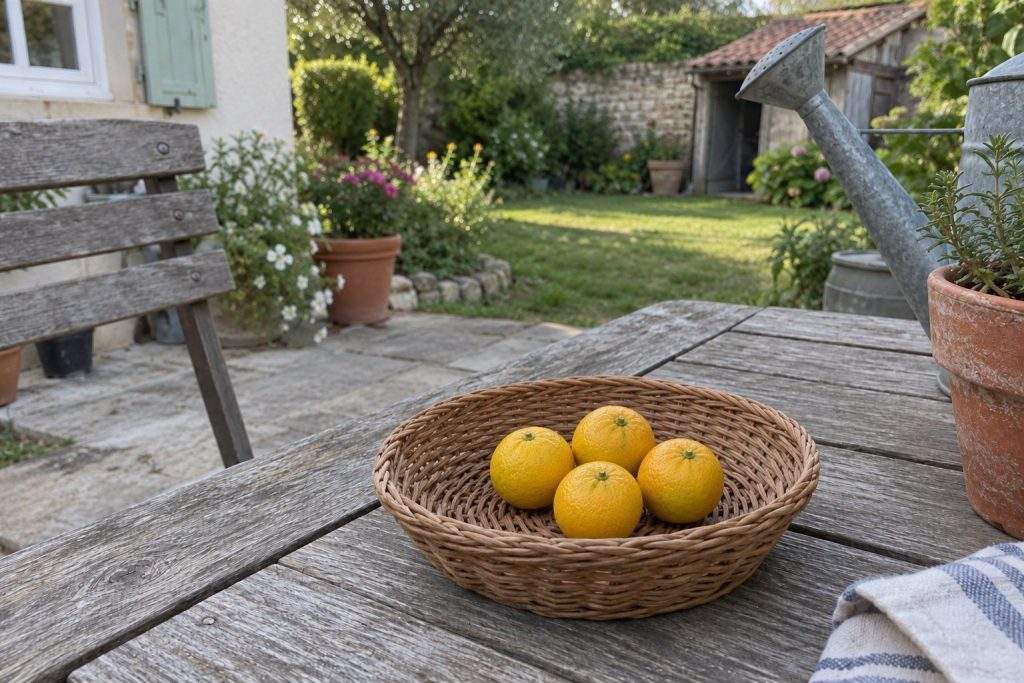
The fruits are small, round, yellow to orange, with thin skin and flesh whose vesicles can recall the pearls of a finger lime. Agrumes de Provence describes orange vesicles and few seeds for its selection, as well as possible red speckling when overripe. Kindsgass places the flavor profile on the side of orange and mandarin, with noticeable acidity and a bitterness to check when eating the skin. Color, size, and ripening date vary among the commercial descriptions; these traits therefore call for observation of the plant actually grown.Flavor and ornamental interest
Citrangeremo interests the collector of Australian citrus as much as the gardener drawn to an unusual harvest. Growers suggest fresh eating, jams, and candied fruit, while the zest and vesicles allow kitchen trials with small quantities. Kindsgass places its harvest in late September, but Thomas Fruit Trees indicates November and December: the provenance of the plant and the local conditions should accompany this calendar. Its interest rests on this diversity of textures and on its fine foliage, without turning cold claims into a guarantee of harvest after a freeze.
Back to the collection
Updated: