Cold hardiness
5°F (−15°C)
Identity
OriginGermany (Bernhard Voss selection), distributed via Switzerland (Eisenhut nursery)
Genetic originHybrid Poncirus trifoliata × Ichang papeda (Citrus ichangensis)
USDA zone7b
Cold hardiness5°F (−15°C)
Fruit cold hardiness25°F (−4°C)
GrowthVigorous
Height13 ft (4 m)
HarvestSeptember, October, November
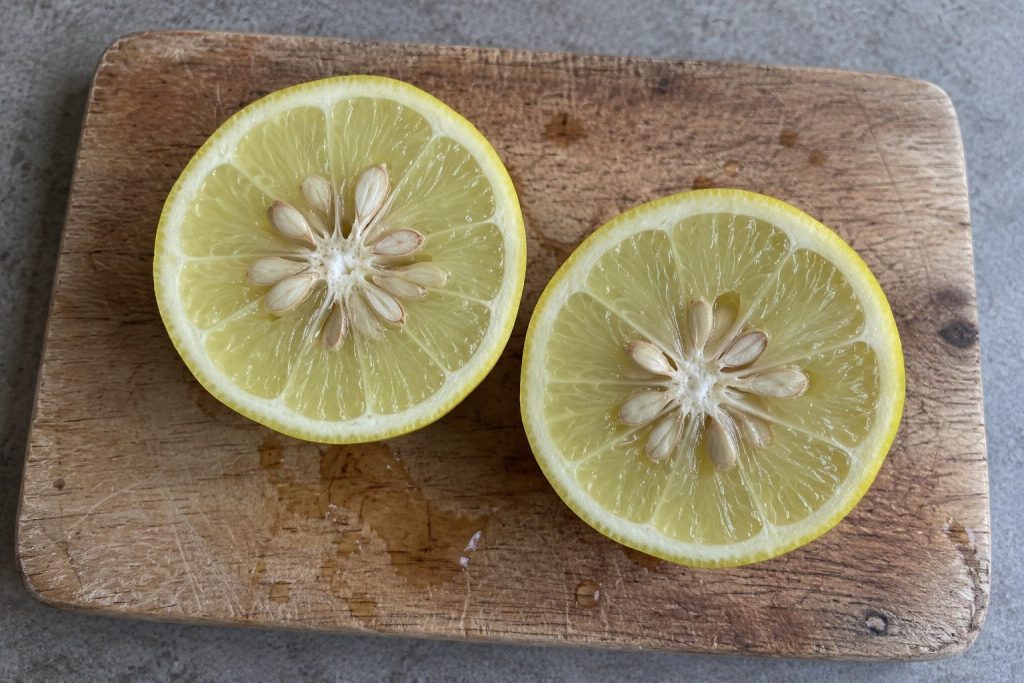
SeedsMany
UsesJuice, Savory cooking, Sweet cooking
FlavorsSour, Highly aromatic
History & Description
Origin
No. 1 Tri Voss is an exceptional hybrid from a cross between Poncirus trifoliata, the hardiest citrus known, able to survive at −13°F (−25°C), and the Ichang papeda (Citrus ichangensis), the central Chinese papeda whose own hardiness approaches 5°F (−15°C). This genetic combination brings together the two hardiest citrus lineages in the world. The selection was made in Germany by Bernhard Voss, a passionate amateur of extremely hardy citrus, and distributed in Europe through the Swiss nursery Eisenhut, which listed it under number 206 in its catalog. In France, it is the nursery Archedulivradois, grown at an altitude of 3,300 ft (1,000 m) in the Auvergne, that popularized its cultivation, confirming after several winters that the plants withstood 7°F (−14°C) without foliage damage. No. 1 Tri Voss is now considered one of the hardiest citrus hybrids grown in France.Tree description
No. 1 Tri Voss is a vigorous, reblooming tree with two-lobed leaves inherited from the Ichang papeda, very different from the trifoliate leaves of pure Poncirus and giving an original decorative look. It reaches 10 to 13 ft (3 to 4 m) in the ground and produces several blooms a year thanks to its reblooming character, ensuring continuous fruit production. The tree is heavily thorny, a characteristic inherited from Poncirus trifoliata, and establishes well in well-drained soil and a sunny exposure.Fruit quality
The fruit is pear-shaped, 2.4 to 3.1 in (6 to 8 cm) in diameter, with thin yellow skin at fall maturity. The juice is abundant, more than that of the Yuzu, very aromatic and lemony, with frank acidity and little bitterness thanks to the Papeda's genetic contribution, which reduces the poncirin content inherited from Poncirus. This juice profile makes it an excellent substitute for lemon in areas where the latter cannot survive. Seeds are numerous, a characteristic of Poncirus hybrids.Flavor and ornamental interest
No. 1 Tri Voss is offered for USDA zone 7b gardens by Biggio and Londeix; growing it in 7a remains to be confirmed for the site and the clone. Its quality lemony juice is used in sauces, desserts, jams, and drinks as a direct substitute for lemon. Its reblooming production guarantees fresh fruit in fall. Ornamentally, its original two-lobed foliage, decorative thorns, and yellow pear-shaped fruit create a striking picture in winter in the most exposed hardy gardens.
Back to the collection
Updated: