Identity
History & Description
Origin
This citrus is the product of the USDA's ambitious breeding program in Florida, aimed at creating cold-hardy citrus. Officially selected in 1980, it is a complex hybrid from a cross between a sweet orange, Citrus succari, and a Poncirus hybrid (Poncirus trifoliata x Citrus paradisi), achieving the feat of marrying wild hardiness with the sweetness of the orange.Tree description
The tree is vigorous and often has trifoliate, deciduous leaves, a legacy of its hardy parent. It resists disease very well, and cold down to 7°F (−14°C).Fruit quality
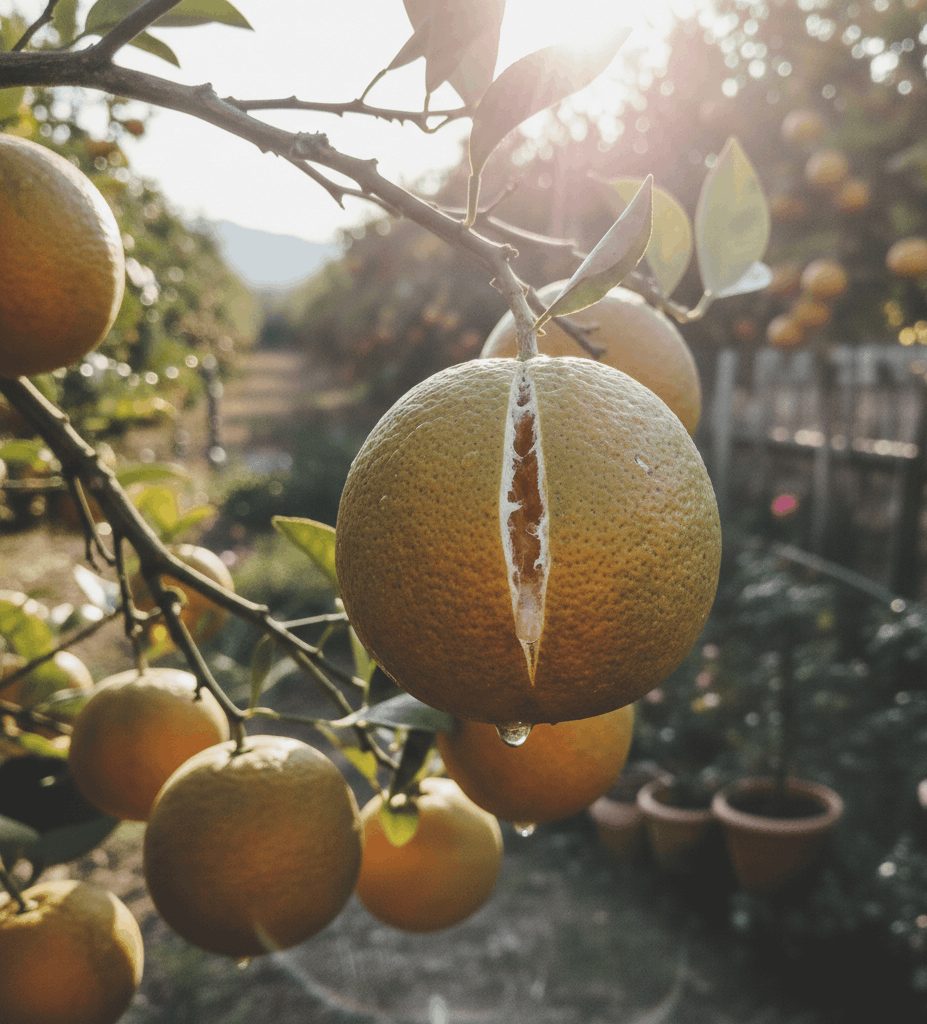
It produces an orange-like fruit with thin skin that peels easily. The flesh is juicy and contains few seeds.Flavor and ornamental interest
Its flavor is a true exotic curiosity, very sweet with marked vanilla aromas, without the bitterness of Poncirus. It is an essential variety for collectors of hardy citrus.Updated:
What matters when choosing
Key points about US 119
US 119 is an American hybrid bred to combine Poncirus cold resistance with orange-like fruit quality. The fruit is genuinely usable, juicy, and fairly sweet, but a resinous note may remain, maturity is late, and fruit can split.
Why choose it
- More pleasant fruit than many Poncirus hybrids.
- Good cold tolerance for orange-like fruit.
- Juicy flesh with distinctive fruity notes.
Its limits
- A Poncirus aftertaste can sometimes be noticeable.
- Late maturity and slow onset of fruiting.
- Possible susceptibility to fruit splitting.
Practical notes
- Parentage
- Citrumelo × sweet orange
- Development
- USDA breeding program
- Harvest
- Late fall to winter
Cold-hardiness reference: about 7°F (−14°C)
Reported temperatures often rely on isolated observations; they do not guarantee freedom from damage under different growing conditions.
Sources and method
The temperatures given are reference points for a mature tree with hardened wood. The table and callout repeat the same value as the profile. They guarantee neither freedom from damage nor a harvest after a freezing event.
Data reviewed on September 21, 2026.
- Thomas Fruit Trees — Fruit, flavor, maturity, splitting, and horticultural reference
- Greffeur d'Agrumes — Parentage, eating interest, and relative hardiness
- HortScience — US 145 breeding line — Breeding program and the position of US 119