Yuzu is one of the few citrus that can be planted in the ground in most French regions. Its hardiness benchmark reaches 5°F (−15°C) for a well-established adult tree. Choose a sunny, wind-sheltered, well-drained spot, and protect young plants during their first winters. A pot suits terraces and areas where frosts are very severe or prolonged.
The classic yuzu, Citrus × junos, gives an acidic fruit prized for its fragrance. But “hardy” does not mean that a freshly bought tree, its roots, and its fruits all withstand the same temperature. Here is how to choose its place and organize its care.
Yuzu in a pot or in the ground: how to choose?
| Your situation | Preferred choice | Point to check |
|---|---|---|
| Sheltered, well-drained garden, outside areas with very severe or prolonged frosts | In the ground preferred | Ability to protect the young tree during the first winters |
| Frosts regularly below 5°F (−15°C), lasting cold, or a very exposed site | Pot with frost-free overwintering | A bright, cool shelter, reachable with the pot |
| Terrace or small garden | Pot | Available volume for the roots and monitoring of watering |
| Soil where water stagnates in winter | Pot or another location | Do not plant in a wet hollow |
First choose according to your actually observed temperatures and the length of frosts. A USDA zone helps place a climate; it describes neither the wind, nor soil moisture, nor every corner of the garden. A sheltered wall can improve exposure without making a spot invulnerable.
How hardy is yuzu?
The hardiness benchmark for classic yuzu is 5°F (−15°C) for a well-established, acclimated adult tree. The Pépinière Vessières advertises 5°F (−15°C) for its yuzu. The Pépinière de Quissac states 10 to 5°F (−12 to −15°C) and specifies that these are adult plants with enough wood.
These commercial indications are not a universal threshold. A young plant, a tree still growing, and a root ball in a pot call for more caution. A prolonged freeze can also be more damaging than a brief cold spike.
The Yuzu N°3 profile concerns a particular selection and also retains a benchmark close to 5°F (−15°C) for a well-established adult. The hardiness advertised for the tree does not guarantee that the fruits will survive.
When and where to plant a yuzu?
In a garden exposed to frosts, favor spring planting, once the local hard frosts have passed. The tree will then have a growing season before its first winter. Prepare its protection from planting time: waiting for the first frost alert leaves little time to find suitable shelter.
Choose a bright spot, protected from the prevailing winds. Rule out low points where water collects. The soil should let water circulate without staying waterlogged; a hole filled with potting mix is not enough to make compacted ground drain.
Water the root ball before planting and set the tree at its original depth: bury neither the root collar nor the graft union. Keep mulch away from the trunk. The recommendations of the University of Florida on citrus in the home garden stress the importance of this planting depth and of choosing the rootstock according to the soil.
Which pot should you choose for a yuzu?
Use a container with drainage holes, stable and fairly easy to move to its shelter. Make sure the openings stay clear; a saucer full of water defeats their purpose. A well-draining citrus substrate suits better than heavy soil packed into the pot.
When repotting, increase the container size gradually rather than placing a small root ball in an oversized tub. You will be able to monitor its moisture better. The Royal Horticultural Society recommends spring repotting and a free-draining mix for growing citrus in containers.
In small spaces, ask the nursery for the plant’s expected development and the name of the rootstock. This information matters more than a pot volume presented as valid for all yuzus.
How do you water and feed yuzu?
Water according to the condition of the substrate, not a fixed schedule. In a pot, check the root ball before watering; in summer, a tree in the sun can use up its reserves quickly. Apply the water gradually, then let the excess drain away. In winter, adjust the frequency to the coolness of the shelter and the tree’s activity.
In the ground, monitor the root ball especially closely during establishment: it can dry out while the surrounding soil seems moist. As the roots spread, watering must reach their new zone. The University of California reminds us that excess water promotes root and crown diseases.
For nutrition, use a fertilizer suited to citrus, following its label and the plant’s growth stage. Multiplying feedings makes up for neither poor drainage nor damaged roots. Yellow leaves first call for checking the water, the substrate, and the growing conditions: see the guide to yellowing citrus leaves.
How do you protect yuzu in winter?
In a pot, set the tree in a bright, cool, frost-free place: a suitable greenhouse, a lightly heated sunroom, or another shelter offering these conditions. A warm, dark room is a poor fit for this overwintering. Check the moisture of the root ball again; a sheltered tree still needs monitoring.
In the ground, prepare a protection proportionate to the weather, the age of the plant, and the exposure. Fleece reduces exposure, but does not turn a very cold garden into a mild climate. Think of the root zone too, and avoid letting protections trap moisture for long periods.
To organize the interventions, see the guide to protecting citrus from freezes.
Should you prune yuzu?
Keep pruning light: remove dead wood, awkward branches, and rootstock suckers below the graft union. Preserve productive wood as much as possible. Regular severe pruning is not necessary to get fruit; it can reduce the harvest, as the University of Florida points out.
Yuzu can bear strong thorns. Wear gloves and place it away from a narrow passage or a play area.
When to harvest yuzu and how to use it?
Yuzu can be used green for its fragrance, then yellow when ripe. In France, October to December is a harvest benchmark, to be adjusted to the plant and the climate. Color, the condition of the fruit, and its fragrance count more than a fixed date. Anticipate frost episodes instead of assuming the fruits will withstand them like the wood.
JETRO, the Japanese trade promotion organization, presents yuzu as a seasoning whose zest and juice perfume culinary preparations. Try a little zest in a cream, a bit of juice in a sauce or a vinaigrette, then adjust: its flavor is acidic and its fragrance quickly takes over.
Classic yuzu, Yuzu N°3, or Yuzu Citron?
“Yuzu” here means the classic type of Citrus × junos. The names N°3, Gold, or Citron refer to commercial selections: check the label and the characteristics of the plant before choosing. Vessières sells a distinct “Yuzu citron”, described with a lemony aroma; its name is therefore not a general synonym for classic yuzu.
To compare plants, see the yuzu profile and the yuzus and papedas collection. To choose another Japanese citrus according to your uses, continue with the yuzu, sudachi, and kabosu comparison.
Frequently asked questions about growing yuzu
Can you plant a yuzu in the ground in France?
Yes, in most French regions, with a sheltered spot and well-draining soil. The 5°F (−15°C) benchmark concerns a well-established adult tree. Protect young plants during their first winters and adapt the protection to local frosts, especially in the mountains or in very exposed situations.
Why is my yuzu not producing fruit?
The age of the plant, how it was propagated, light, frosts on the flowers, and growing conditions can all play a part. A seedling can wait much longer than a grafted tree. Ask the nursery for the age and origin of the plant before concluding that a second tree is missing.
Can you grow yuzu indoors?
Think of the indoors mainly as a bright, cool winter shelter. Permanent cultivation in a poorly lit room complicates care. In the favorable season, a sheltered outdoor spot lets you give it more light.
How long until the first harvest?
There is no timeframe valid for all plants. The propagation method and the age at the time of purchase change the answer a lot. The RHS says that citrus grown from seed can take ten years or more to fruit: this timeframe should not be confused with that of an already-formed grafted yuzu.
To discover its culinary journey, also read the history of yuzu, from Asia to French chefs.
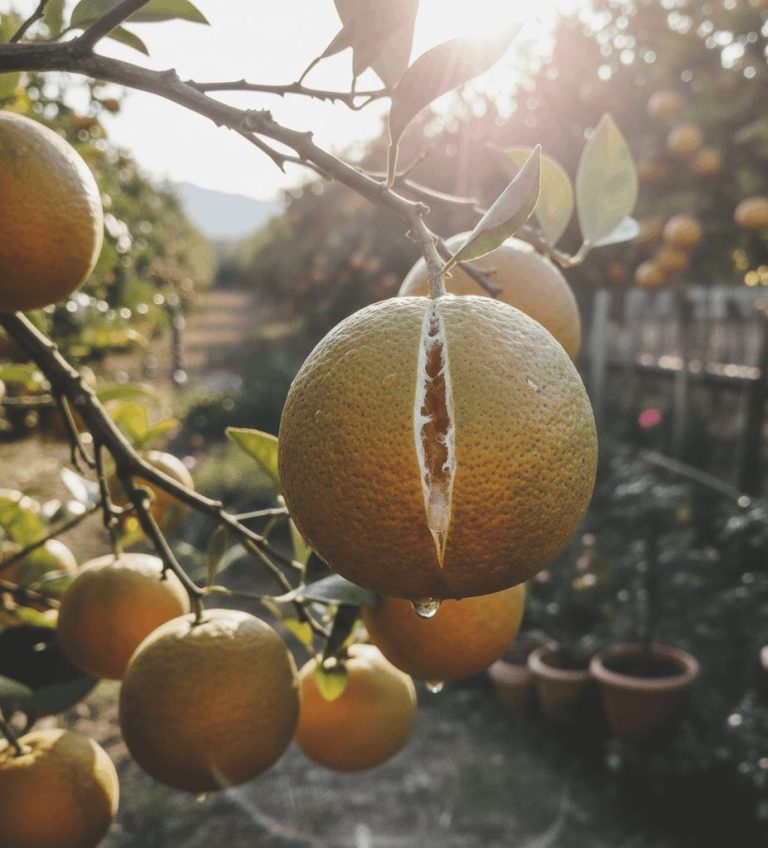
Cover photograph: yuzu in Léo’s garden, Arcachon Bay, USDA zone 8b. These photographs illustrate garden cultivation; they do not measure frost resistance.