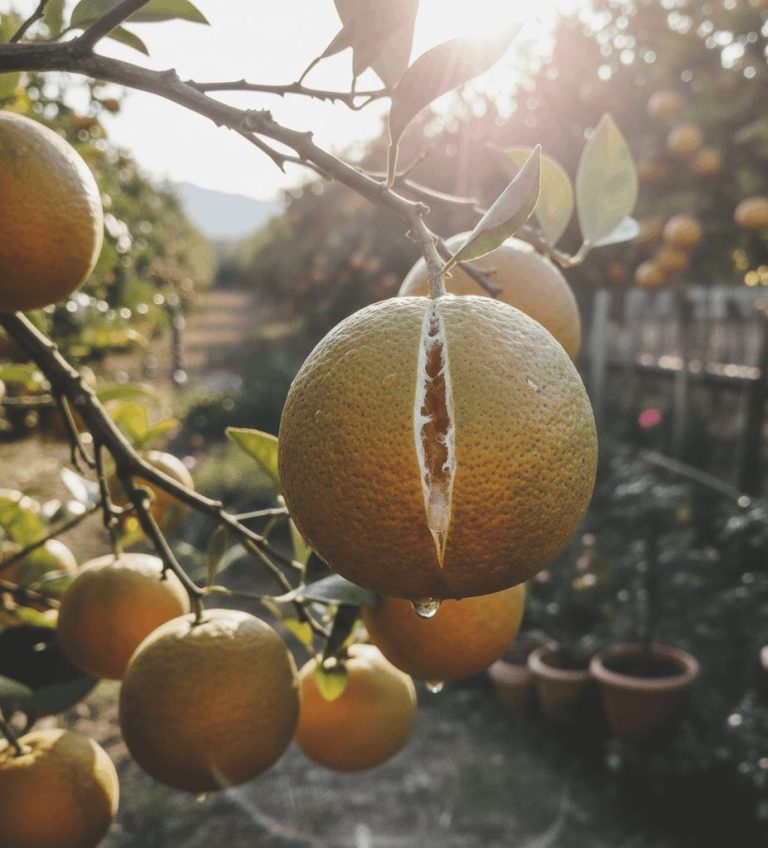
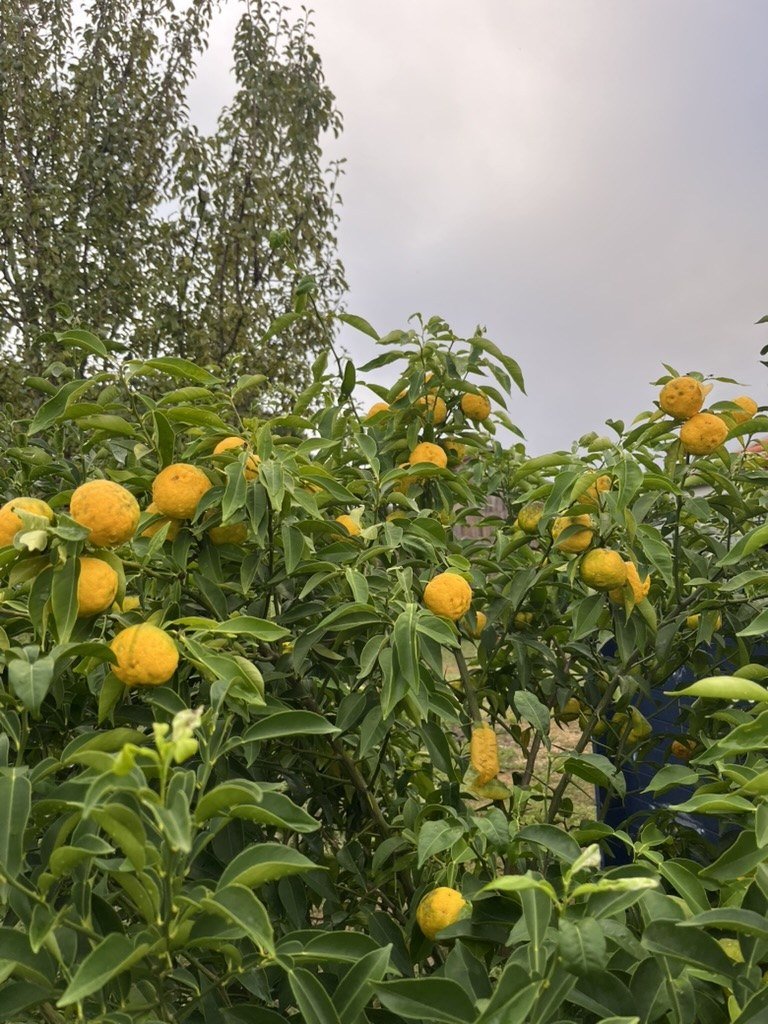
Yuzu is the Japanese citrus that people know in France. Sudachi and kabosu offer two other ways to flavor Japanese cooking. Their names, uses, and growing requirements deserve to be told apart. They are also three fruits with very different aromatic profiles, each of which deserves a place in a garden and in a kitchen.
This guide compares the three hardy Japanese citrus fruits most worth growing in mainland France: their hardiness, cultivation, culinary uses, and availability in nurseries.
Where do these Japanese citrus fruits come from?
Yuzu (Citrus × junos) is of Chinese origin, and its cultivation developed in Japan. Sudachi is particularly associated with Tokushima, while kabosu is a specialty of Oita. The Tokushima authorities and the Oita Kabosu Promotion Council document these regional identities.
These are three seasoning citrus fruits. Their closeness in the kitchen is not enough to give them exactly the same parents, the same dimensions, or the same cold resistance.
For a planting in France, check the characteristics of the plant, its rootstock, the drainage, and the frosts in your garden. The temperatures given in the profiles are conditional reference points; they guarantee neither the absence of damage nor a harvest.
Comparison table of the trio
| Criterion | Yuzu | Sudachi | Kabosu |
|---|---|---|---|
| Common botanical name | Citrus × junos | Citrus sudachi | Citrus sphaerocarpa |
| What people look for | Fragrant zest and tart juice | Juice and aroma of the fruit picked green | Fragrant juice to accompany dishes |
| Usual presentation | Green or yellow, depending on use | Green, before full maturity | Often green for seasoning uses |
| Uses to explore | Sauces, pastry, drinks, jams | Fish, noodles, seasonings | Sauces, vinaigrettes, fish, and drinks |
| For growing in France | Pot or in the ground, depending on climate and the plant | Check the profile and the conditions of the plant offered | Check the profile and the conditions of the plant offered |
| Profile to read | Classic yuzu | Sudachi | Kabosu |
For classic yuzu, the hardiness reference point used in the general profile is 5°F (−15°C) for a well-established adult tree, as stated by Vessières. It is one of the few citrus fruits suited to in-ground planting in most French regions, with a sheltered spot, well-drained soil, and protection for young plants. Quissac also stresses the importance of an adult tree with enough wood. The profile for Yuzu N°3 uses a similar reference point. These figures are not a comparative trial of the three citrus fruits and do not guarantee fruit resistance.
Yuzu: the trio’s ambassador
Why did yuzu become popular in France?
Yuzu has found its way into French sauces, macarons, and desserts. JETRO describes this spread and reports a tasting of Kochi yuzus held in France in 2011. Its zest brings a fragrance different from lemon; there is no need to assign it a universal aromatic multiplier to appreciate its appeal.
The choice between a pot and in-ground planting depends on the garden, not only on the region. Yuzu N°3 is a horticultural selection whose precise origin remains to be documented: its attribution to an Italian IVIA selection is not established. To plant and care for the classic type, see the yuzu growing guide.
How do you use it in the kitchen?
Yuzu is used mainly for its zest, green or yellow depending on the fragrance you want, and for its juice. The harvest date varies with the plant and the location. A few classic uses:
- Ponzu sauce: yuzu juice + soy sauce + dried bonito + kombu seaweed, marinated for 24 hours.
- Pastry: yuzu tarts (as a substitute for lemon), whipped ganaches, sorbets.
- Cocktails: yuzu juice + sake + honey + ice, or simply as a substitute for lemon in a gin and tonic.
- Fish marinades: grated zest over sashimi, carpaccio, ceviche.
- Yuzu jam (yuzucha): a Korean tradition, prepared as an infusion.
For the full profile and the specific varieties available, see our page on yuzus and papedas.
Sudachi: pure tartness
How does it differ from yuzu?
Sudachi is prized for the acidity and refreshing fragrance of fruit picked green. The Japanese Ministry of Agriculture describes this harvest before full maturity for Tokushima Sudachi. Leaving it on the tree changes its color; green here refers to a harvest stage, not to an inability to ripen.
See the sudachi profile for growing reference points. Ask the nursery about the conditions attached to the stated threshold and how well the rootstock suits your soil.
How do you use it?
A few savory uses of sudachi to try:
- Squeezed over grilled fish (salmon, mackerel, sea bream): this is the signature use in Tokushima.
- On soba (cold buckwheat noodles): a few thin slices of sudachi placed on the noodles before the sauce.
- On tempura: a wedge of sudachi replaces the Western lemon.
- In Japanese vinaigrettes: sudachi juice + soy sauce + sesame oil.
These savory uses are a good starting point. Nothing stops you from trying its juice in a dessert: adjust the sugar and the acidity rather than limiting each citrus fruit to a single family of recipes.
Where can you find it at a nursery?
Sudachi is found at specialist nurseries. Check the stock, the method of propagation, and the rootstock at the time of purchase: availability and prices change.
Kabosu: the almost forgotten rarity
Why is it so little known in France?
Kabosu is associated with Oita, whose Promotion Council presents its production and culinary uses. In France, look for a specialist grower and check whether the plant is available rather than assuming a fixed number of sellers.
It is nonetheless a fascinating citrus to grow: its tree is elegant, its fruit round and smooth like a small green apple, and its flavor unique among hardy citrus fruits.
What does it taste like?
The Oita Kabosu Promotion Council highlights a fragrant juice and a mild acidity compared with other seasoning citrus fruits. Try it in a sauce or vinaigrette to appreciate this balance. The harvest stage and tasting preferences matter: a precise aromatic note is not a constant for every fruit.
How do you use it?
In Japan, kabosu is the citrus of refined ponzu sauces and flavored vinegars. Outside Japan, its uses follow those of yuzu and sudachi, but with a more floral signature:
- Kabosu dressing: mix a little juice with rice vinegar just before serving, then adjust to your taste.
- Sorbet: kabosu’s floral note makes a more subtle sorbet than yuzu.
- Raw fish sauces: a substitute for yuzu on sashimi, with a more delicate effect.
- Contemporary cocktails: paired with Japanese gin or junmai sake for a very fragrant cocktail.
How do you choose among the three?
For a beginner who wants a single Japanese citrus
The yuzu is a good starting point for discovering the fragrance of these citrus fruits and exploring sweet and savory uses alike. Start with classic yuzu, then choose a plant according to your garden’s climate and the grower’s information.
For an amateur cook who already has yuzu
The sudachi complements yuzu with its fragrance and its seasoning uses. It is the ideal citrus for lovers of traditional Japanese cooking (grilled fish, soba, tempura).
For a collector or an advanced garden
The kabosu lets you explore another Japanese seasoning citrus. Keep it for gardens that are already well stocked, or for enthusiasts who want to complete the authentic Japanese trio.
For a garden in a borderline zone (USDA 7b)
In USDA zone 7b, the yuzu is a candidate for in-ground planting, with a reference point of 5°F (−15°C) for a well-established adult tree. Choose a sheltered, well-drained spot, and protect the young plant during the first winters. Check the frosts actually observed and how long they last. For sudachi and kabosu, look at the characteristics of the plant offered and the grower’s advice before settling on the same setup.
The trio in a single garden
The three can provide harvests at different times: the green fruits of sudachi and kabosu, then the yellow yuzus in fall. The calendar of a French garden depends, however, on the plants and the climate; it does not automatically reproduce that of the Japanese growing regions.
To plant them together, allow the space matching the expected growth of each tree and the rootstock chosen. In pots, keep access for watering and for moving them to winter shelter. Ask for a quote and the expected dimensions of the plants offered.
Where to buy in France?
A few specialist nurseries to consult; check their current stock for each citrus:
- Pépinières Bachès: consult the catalog and ask for the characteristics of the plant offered.
- Pépinière Vessières: several yuzu designations appear in the catalog.
- Pépinière de Quissac: yuzu listing with the conditions attached to the stated hardiness.
- Pépinière Ripaud: check which references are currently available.
Always check the rootstock before buying and ask how well it suits your garden’s soil and climate. For the exhaustive list of sources and cultivars, see the site’s complete inventory of hardy Japanese citrus.
In summary
The yuzu-sudachi-kabosu trio offers three complementary culinary profiles: yuzu for pastry and cocktails, sudachi for grilled fish and noodles, kabosu for floral sauces and sorbets. Success in France depends on the plant and the garden: exposure, drainage, the length of frosts, and the protection available. The yuzu growing guide details these choices for the classic type.
To go further on growing citrus in cold temperate climates, see our page on climate and French acclimation and the detailed history of yuzu in France.
Cover image: AI-generated illustration.