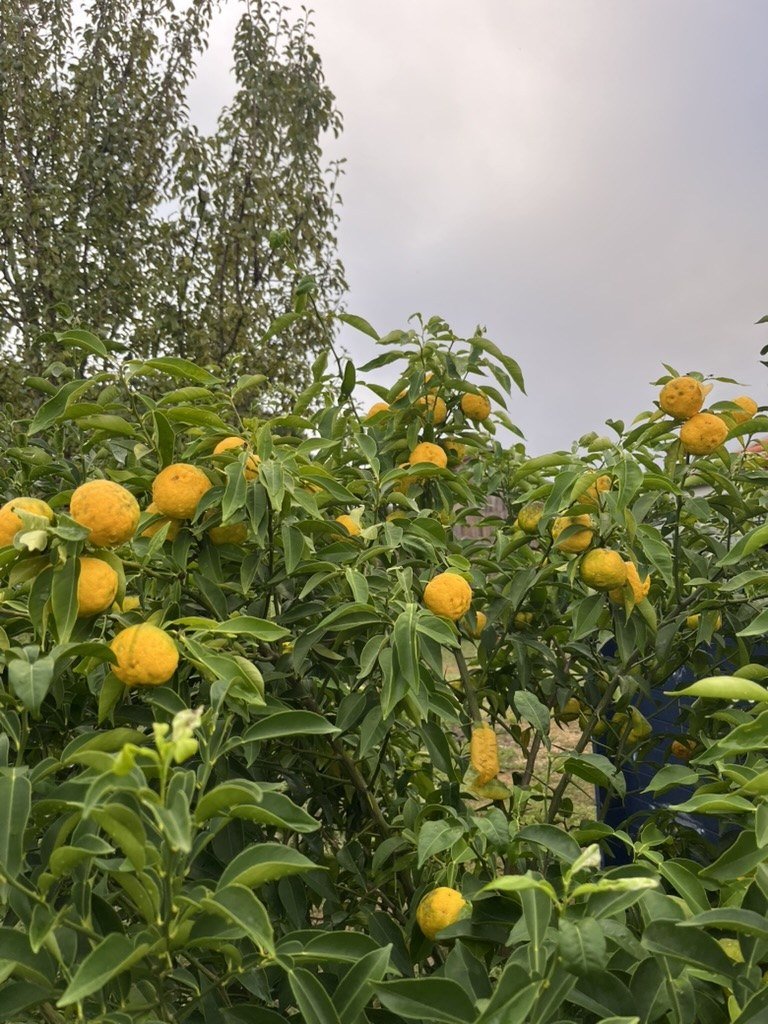
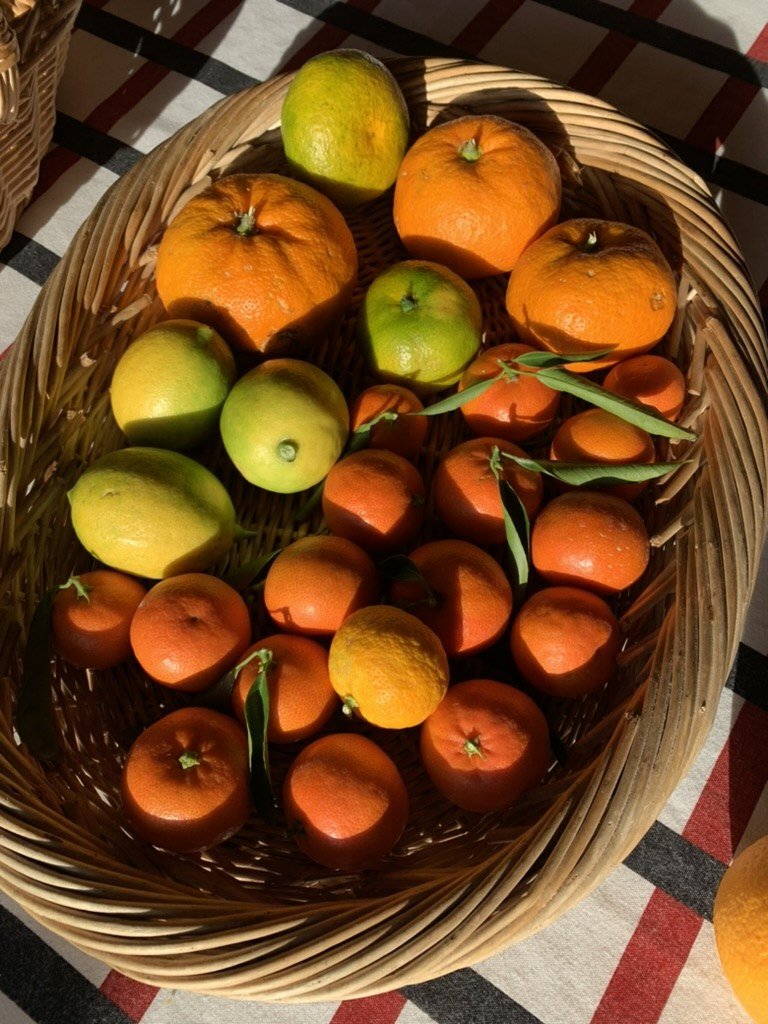
US 119 is one of the few hardy citrus whose fruit truly looks like an orange. It is an American hybrid of grapefruit, Poncirus trifoliata, and sweet orange. It is worth planting for a patient collector, in a sheltered corner, provided you accept three flaws: a Poncirus flavor that fades only if the fruit ripens for a long time, fruit that splits easily, and real-world hardiness closer to 14°F (−10°C) than the 7°F (−14°C) sometimes advertised.
The verdict fits in one line: an excellent collector’s citrus, a poor first citrus. If the goal is to eat good oranges by the third year, you are better off starting with a satsuma or a yuzu. If the idea is to try a hardy orange and discover this hybrid, it deserves its place. What follows explains why.
The US 119 profile gives the summarized reference points; this portrait draws the practical consequences from them.
What is US 119?
“US 119” is the working name of a complex hybrid from a program of the USDA, the U.S. Department of Agriculture. The “US” refers to that program, not to a country of cultivation. The University of California, Riverside collection classes it among the ×Citroncirus hybrids, that is, crosses between a Citrus and Poncirus trifoliata, under the identifiers CRC 3998, PI 539832, and VI 489. UC Riverside.
These identifiers keep it from being confused with other numbered selections, such as US 145, which is a different line.
What is its parentage?
The formula to remember is the one from the Riverside collection: (Duncan grapefruit × Poncirus trifoliata) × Succory sweet orange. A citrumelo, a cross of grapefruit and Poncirus, was crossed back with a sweet orange. The result: about one quarter Poncirus, one quarter grapefruit, and one half sweet orange.
Two other formulations circulate and should be set aside. The first, a “Dunstan” citrumelo with a “Gotha Road” Poncirus, rests on no breeding document consulted. The second, a “mandarin” background, comes from a sensory-study classification and does not match the Riverside parentage.
What this changes for cultivation: US 119 is above all an orange by its genes. The Poncirus share brings cold tolerance, but it also explains the fruit’s flaws.
Where does it come from?
The budwood arrived in Riverside from Florida in 1988, brought by Dr. Gumpf, from the original seedling numbered FF 5-9-11. A July 1988 USDA technical sheet is kept in the collection’s archives. UC Riverside.
It belongs to the USDA breeding programs in Florida and Texas, which since at least the 1930s have been crossing citrus with Poncirus trifoliata, first for rootstocks, then for fruit trees.
The exact year of creation and the name of the breeder are not documented anywhere. The dates in circulation, particularly on old profiles, rest on no document that can be consulted: the only solid date is 1988, when the budwood arrived in Riverside.
How good is its fruit?
Verdict: good if it ripens late, disappointing if picked early.
The fruit looks like a small orange, firm and juicy, with few seeds. At full ripeness, it is sweet and low in acid, with notes compared to banana or mango. But a Poncirus note, herbal, resinous, and astringent, often dominates the first weeks of ripeness.
Growers confirm this, with very divided opinions:
- a grower in the Paris region finds it good and ripe in January, with no Poncirus influence;
- a grower in Florida judges it inedible, because of a flesh reminiscent of the taste of bark;
- a third observes that the Poncirus note disappears if the fruit stays on the tree until March, and that tropical aromas appear.
A sensory study published in 2025 on juice harvested in November points the same way: astringent, green, slightly bitter juice (4.6 out of 15, far from Valencia at 1.5), with 10.9% soluble sugars for 0.67% acidity. November is early for a tree that ripens late; this result therefore describes fruit picked too soon, not its best state.
What to do about it: wait. In a mild climate, leave the fruit until January if frost is not a threat. Taste before judging. Count on it as a juice and fresh-eating fruit rather than as a supermarket orange.
Why does the fruit split?
Verdict: this is the variety’s main flaw, and it calls for careful management.
Nurseries report a tendency to split during ripening, and several growers confirm it: “extremely fragile” fruit that opens after slight water stress in the Paris region, fruit split shortly before ripeness in Switzerland, to the point that one grower never tasted a ripe fruit.
The precise cause is not demonstrated for this hybrid. The practices that make sense are those that limit swings in moisture:
- water regularly during ripening, without alternating drought and heavy watering;
- mulch to even out soil moisture;
- place the tree in the warmest, most sheltered position possible, which is also recommended to improve flavor.
Grafting onto Poncirus and adding calcium are mentioned as remedies; these are ideas, not proven solutions. Do not count on them.
What hardiness should you expect, and under what conditions?
Verdict: plan protection starting at 18°F (−8°C), plan around 14°F (−10°C), and do not count on 7°F (−14°C).
The most-cited reference point is 10°F (−12°C) for a mature, well-established tree in a sheltered position during a brief freeze. It comes from American nurseries and growing booklets that present it as “to be confirmed.” No published trial gives a measurement: the Riverside profile does not mention hardiness.
Field reports are more cautious than the catalog:
| Grower and location | Observation | What to take from it |
|---|---|---|
| Paris region, France | Three-year-old tree in the ground lost after 14°F (−10°C) | A young tree does not survive 14°F (−10°C) without protection |
| Tallahassee, Florida | Tree planted in 2004, described as very hardy, after lows of around 14°F (−10°C) | An established tree can get through 14°F (−10°C) |
| Brno, Czech Republic | Resistance judged superior to published data, in a pot | No temperature given |
American booklets also note damage to young plants at 19 to 23°F (−7 to −5°C).
What this means in practice:
- Young plant (1 to 3 years): protect starting at 23°F (−5°C), with a frost cover or by bringing the pot indoors.
- Established tree: protection starting at 18°F (−8°C), especially if the freeze lasts several days or the soil freezes.
- Caution threshold: 14°F (−10°C). Beyond that, expect partial or total loss.
- Upper value: 10°F (−12°C), only for a brief freeze, on a mature tree, in a sheltered position.
The site’s profile currently uses 7°F (−14°C): this is the catalog’s maximum reference point, not to be used to size a protection. For reasoning about advertised temperatures, the climate and acclimatization guide details the method. Actual cold damage also depends on age, rootstock, the tree’s growth stage, and the microclimate.
How do you grow it?
Location. A south-facing wall, sheltered from the wind, is the best choice. The tree is upright and thorny, of moderate to strong vigor and slow growth in its early years. It can reach about 15 to 18 ft (4.6 to 5.5 m) tall in good conditions; in France, it will often stay more modest.
Rootstock. Poncirus or FA5 are the logical choices for a cold garden. Their precise effect on this hybrid’s hardiness is not documented, but they suit garden soils. For a large pot, the dwarfing Flying Dragon is offered by some nurseries. The guide to the FA5 rootstock explains what these rootstocks bring.
Harvest. At Riverside, the fruit ripens in October and November. In Europe, aim rather for November to January, depending on the climate. Leaving the fruit on the tree improves flavor, but ripe fruit exposed to frost deteriorates: watch the forecasts and pick before a cold snap.
Time to fruiting. It is slow. Allow several years before the first harvest, especially on a vigorous rootstock.
Growing in a pot. This is a good option in cold regions. The logic for bringing it indoors is that of When should you bring a potted citrus tree indoors?: watch the minimum temperatures, the light, and the condition of the leaves rather than following a date.
Where does it fit among hardy citrus?
In the Top 15 hardiest citrus, US 119 sits on the second tier, with fresh-eating fruit and juice uses. A one-degree difference in a catalog does not make up for ripeness, exposure, and the length of the freeze.
The logic of the Poncirus hybrid group is simple: the more the Poncirus share increases, the more hardiness improves and the more fruit quality drops. US 119 occupies the middle point where a usable fruit is kept. Two other hybrids on the site help place this balance:
| Citrus | Fruit type | Strength | Weakness |
|---|---|---|---|
| US 119 | Orange type, juicy | Orange-like fruit | Poncirus note, splitting, late ripening |
| Thomasville citrangequat | Small, tart, fragrant fruit | Candied fruit, in liqueur or marmalade | Small, tart fruit, not an orange to eat out of hand |
| Five Star citrumelo | Grapefruit and Poncirus hybrid | Same family of crosses as US 119 | Tart, sometimes bitter fruit, better for juice and cooking |
Should you plant it?
Yes, if:
- the goal is to collect hardy citrus and try a hybrid orange;
- the garden offers a sheltered, full-south spot, with winter protection ready;
- you can wait several years and water regularly;
- growing in a large pot with winter protection indoors is an option.
No, if:
- you expect a sure fresh-eating fruit from the first harvest;
- the garden sees freezes of 14°F (−10°C) or colder with no way to shelter the tree;
- regular watering is not assured.
For a first experience with hardy citrus, a satsuma or a yuzu offers a better balance of reliability and pleasure. US 119 remains the variety of the curious, who enjoy the challenge as much as the fruit.
Frequently asked questions about US 119
What is US 119?
It is an American hybrid of grapefruit, Poncirus trifoliata, and sweet orange, classed as ×Citroncirus by the Riverside collection, with about one quarter Poncirus, one quarter grapefruit, and one half sweet orange.
How cold can US 119 take?
Count on 14°F (−10°C) as a caution threshold, and 10°F (−12°C) only for a mature, sheltered tree in a brief freeze. A young tree was lost at 14°F (−10°C), and young plants are damaged starting at 19 to 23°F (−7 to −5°C). The 7°F (−14°C) reference point is not confirmed.
Is US 119 good to eat?
Yes, if it ripens for a long time: the fruit is then juicy, sweet, and fragrant. Picked early, it keeps an astringent Poncirus note and can disappoint. Taste in December and January before concluding.
Why does US 119 fruit split?
The cause is not demonstrated for this variety. Regular watering, mulching, and a warm, sheltered location are the best known remedies.
When is US 119 harvested?
At Riverside, in October and November. In Europe, from November to January depending on the climate, with an advantage for fruit left as long as possible before frost.
Can it be grown in a pot?
Yes, it is even the best option in cold regions, on a suitable rootstock such as Flying Dragon. Bring the tree indoors before hard freezes. See When should you bring a potted citrus tree indoors?.
Sources and further reading
References consulted on October 14, 2026. Grower reports are dated, localized testimonies, not trials; nursery reference points are commercial information.
- UC Riverside, Citrus Variety Collection, US 119 (CRC 3998), parentage, origin of the budwood, collection rootstocks, ripening period at Riverside.
- Jeffries et al., 2025, Food Chemistry: X, 26, 102289, flavonoids, bitterness, and sensory profile of citrus juice with or without Poncirus in its parentage.
- Thomas Fruit Trees, US119, horticultural description, ripening, splitting, and hardiness reference point from a European nursery.
- Greffeur d’Agrumes, US 119, parentage, nursery observations, and hardiness reference point.
- Woodlanders, Citrus ‘U.S. 119’ and history of hardy citrus, description from an American nursery and context of the selection.
- Tropical Fruit Forum, U.S. 119… who is growing it?, grower testimonies (France, Florida, Czech Republic), 2016–2018.
- Citrus Growers Forum, US119 flavor, testimonies on flavor and splitting, 2022–2024.
- US 119 encyclopedia entry, Top 15 hardiest citrus, and climate and acclimatization guide, site pages linked to this portrait.
Cover image: AI-generated illustration.