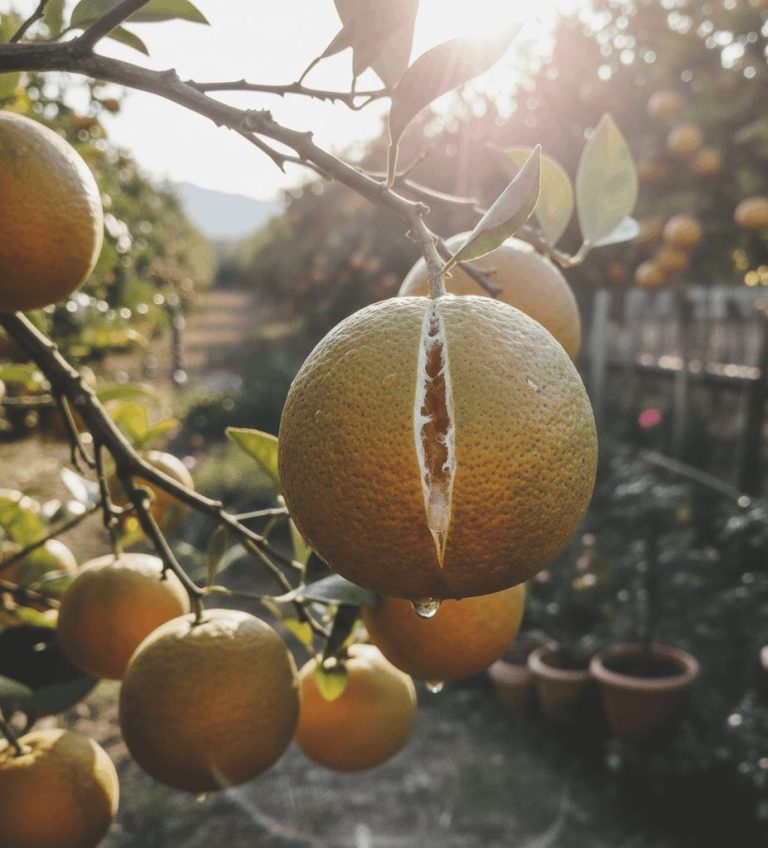
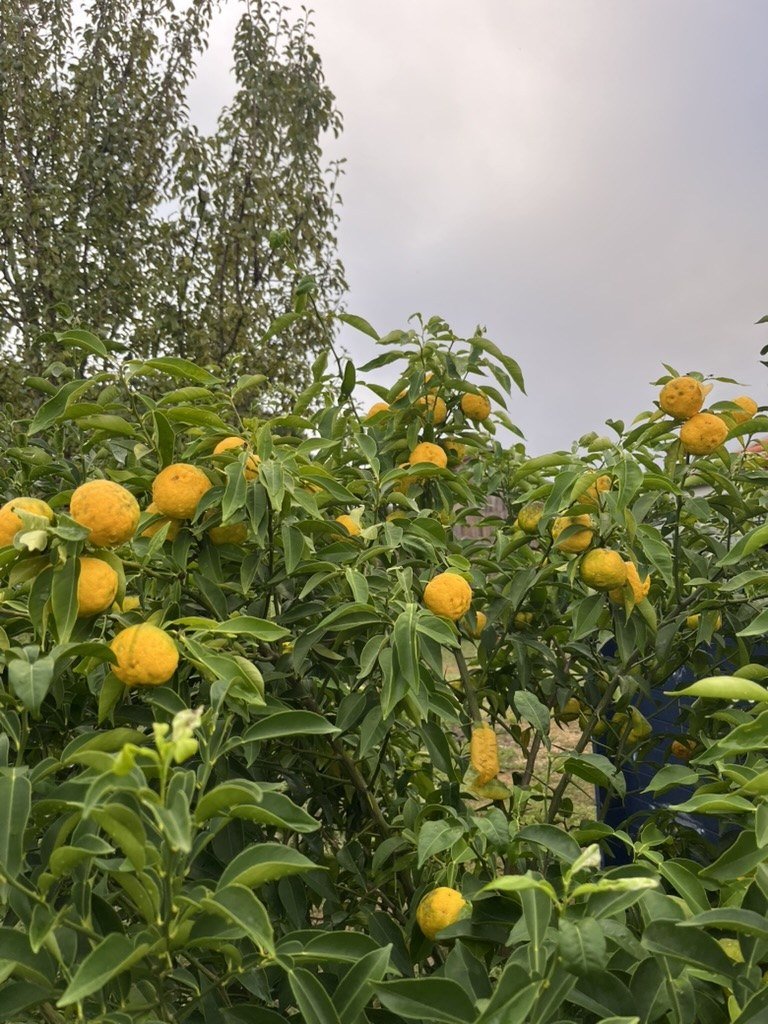
The right time to bring a potted citrus indoors depends on the forecast nights and on its variety. Get the shelter ready in the fall. For a sensitive plant, or one of unknown hardiness, anticipate frost instead of waiting for the first damaged leaves. For a hardy citrus, also assess the exposure of the pot and the length of the cold: its roots are more exposed than in the ground.
The real guidepost: frost risk, not the calendar
Citrus grown in pots do not all need to come in at the same time. Their thresholds depend on the species, the rootstock, the age of the plant, how mature its twigs are before winter, and the microclimate. The roots of a container plant are less insulated than those of a tree in the ground: a lasting cold spell therefore quickly becomes riskier. The RHS recommends also protecting the container, to limit freezing of the root ball.
In practice, start by checking the overnight forecasts for your area. If the lows approach 32°F (0°C), a sensitive or poorly identified variety should already have its shelter ready. This figure signals the approach of frost; it does not measure the hardiness of all citrus. Some sensitive types need higher winter temperatures: do not wait for 32°F (0°C) if your plant’s needs call for bringing it in earlier. Choose between two responses: move the pot to a bright, frost-free space, or reinforce an outdoor protection for a brief alert, if the variety and your setup allow it. University recommendations for potted citrus agree on one point: it is better to anticipate the cold spell than to move a tree after the first damage.
The month matters little: a sheltered coastal garden and a cold courtyard in a continental region can call for very different dates. The climate and acclimatization page helps you reason at the scale of the garden rather than from a regional average.
The point not to forget: the hardiness advertised for a tree in the ground does not guarantee that of the same citrus in a pot. The container and the length of the cold also count.
Before bringing it in: three useful checks
1. Prepare a bright spot
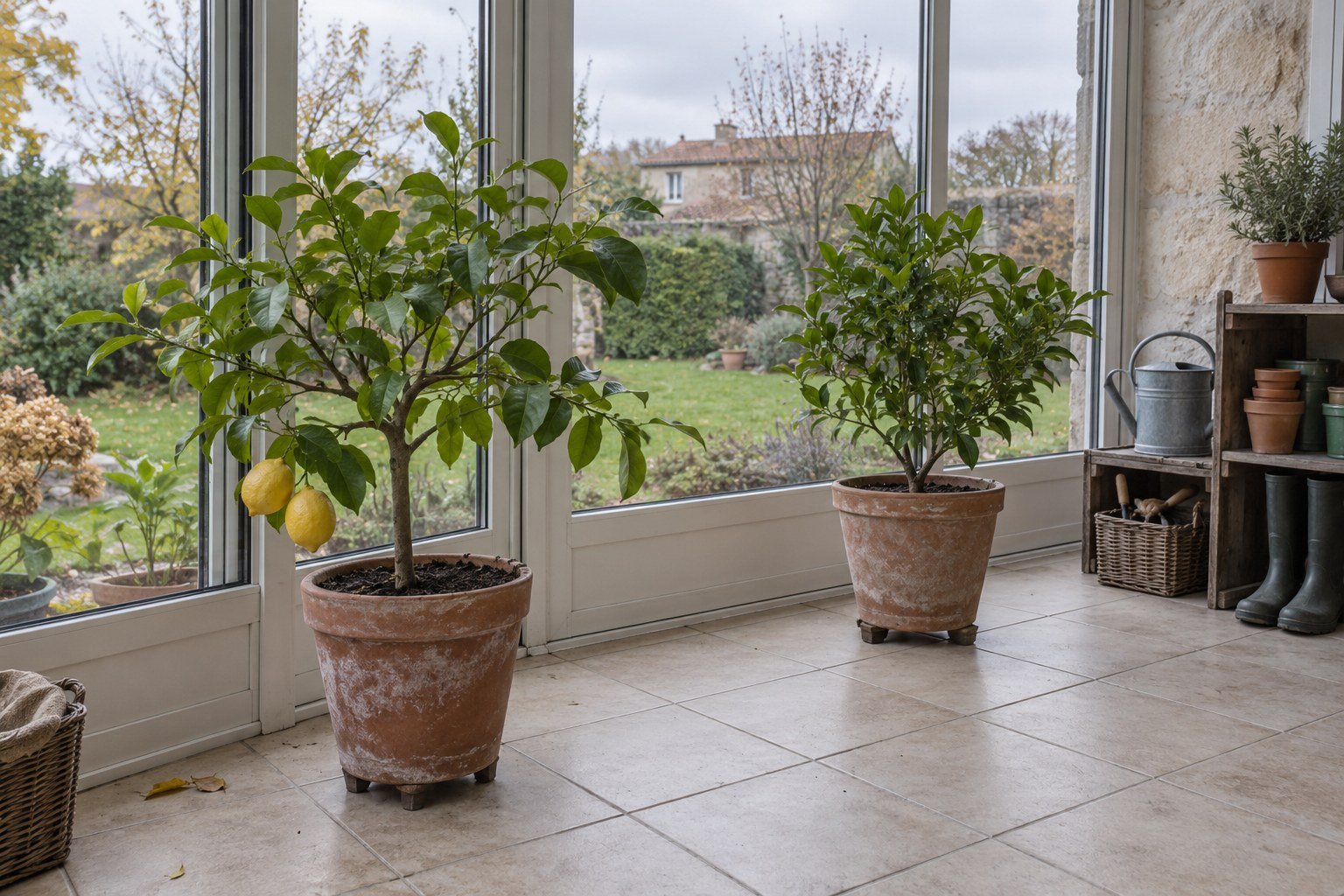
A citrus keeps its leaves in winter and therefore still needs light. A very bright window, a sunroom that is not overheated, or a frost-free greenhouse generally suits better than a dark room. Favor the brightest window. The recommendations of six hours or more of direct sun mainly concern good growth and fruiting indoors, not a universal survival minimum for cool overwintering. Grow lights can supplement insufficient light.
Avoid placing the pot against a radiator, under a warm-air vent, or in a cold draft. The outdoor-to-indoor transition often combines less light, drier air, and a different temperature; these sudden changes can promote leaf drop or loss of young fruit.
2. Reduce the contrast before the move
If the citrus has to spend several months indoors, prepare the transition before the weather alert. Place it for a few days in a more sheltered, slightly shaded outdoor area, then set it up in its winter quarters. Container-growing recommendations call for gradual acclimation to limit the stress of changes in light and temperature.
This precaution should not delay an urgent move before a forecast freeze. In case of an immediate alert, protection from the cold comes first; you can take more care over the transition on the next move.
3. Inspect the foliage and the pot
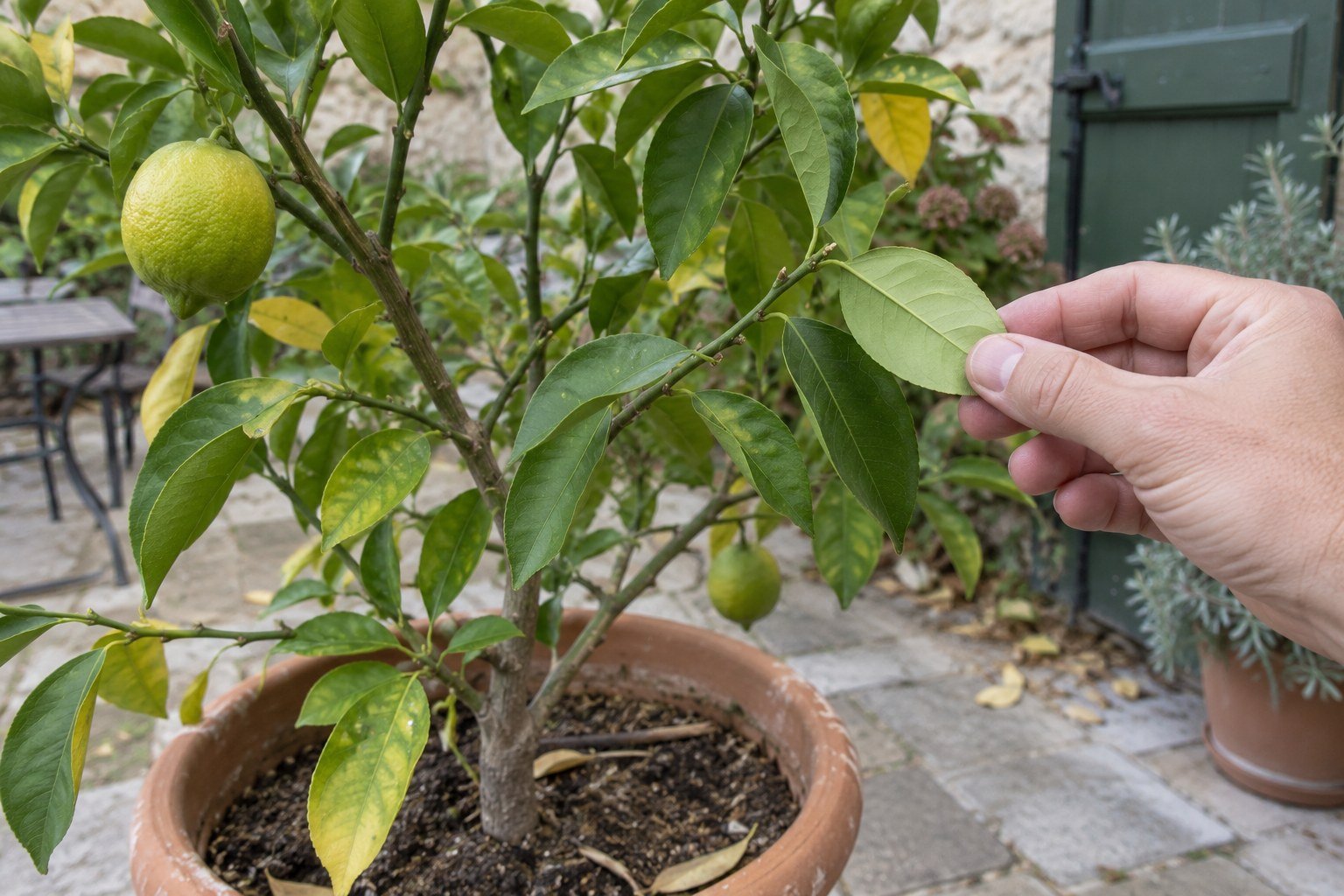
Before bringing it in, examine the undersides of the leaves, the young twigs, and the root collar: scale insects, whiteflies, aphids, and mites spread more easily in an enclosed space. Remove any pests you find and, if necessary, isolate the plant from other plants. Avoid routine treatments; if a product is needed, check that it is approved for citrus and the intended use, then follow its label.
Check the drainage too. The pot should not sit in a saucer full of water: winter slows growth and increases the risk of root suffocation if the substrate stays saturated.
Which shelter should you choose?
On mobile, swipe the table to read the three columns.
| Situation | Preferred solution | Point to watch |
|---|---|---|
| A few cool nights without lasting frost | Sheltered outdoor spot, pot insulated from the ground, suitable temporary protection | Remove or ventilate the protections when conditions soften |
| Frost forecast or sensitive variety | Bright frost-free room, sunroom, or suitable greenhouse | Avoid lack of light and direct heat sources |
| Prolonged cold | More stable bright shelter, without sudden variations | Check substrate moisture and pests every week |
| Citrus reputed to be hardy | Assess the specific variety, the pot, the microclimate, and the forecast cold spell | The advertised hardiness of a tree in the ground does not guarantee that of the same plant in a pot |
A frost-free shelter is not necessarily a heated interior, but a cold greenhouse does not suit all citrus. Check the minimum temperature your variety needs and measure that of the shelter: an unheated greenhouse can freeze too. The RHS points out that winter needs vary by type of citrus and that heated central rooms are often too warm and too dry for a long stay. To decide whether a plant can stay outside under protection, consult instead its variety profile and the freeze protection guide.
Watering and fertilizer during overwintering
The frequent mistake is to apply the summer rhythm in a cool room. In winter, check the substrate moisture once or twice a week. Water thoroughly only when the top inch (a few centimeters) has dried out, let the excess drain, then empty the saucer. The goal is neither a dried-out root ball nor roots permanently sitting in water.
In a cool shelter where growth slows, reduce or stop fertilizing. A plant kept warmer and still growing calls for different monitoring: there is no single fertilizer rule for all overwintering conditions. Resuming feeding is adjusted to the actual restart of growth in spring, not to a fixed date. The guide to growing potted citrus details the choice of container and substrate and the monitoring of watering; it complements this article without replacing it.
Signs that call for action
Anticipate the move or reinforce the protection if:
- frost is forecast and the spot is exposed;
- cold is arriving and the pot is small, very exposed, or hard to insulate;
- the tree is young, weakened, or still in late growth when a cold alert comes;
- the variety is sensitive to cold or its precise identity is uncertain, and nights are cooling;
- the cold spell is expected to last several nights.
Conversely, leaf drop after the move does not automatically mean you should water or fertilize more. It may reflect the change in light, humidity, or temperature. First check the substrate, the location, and the presence of pests.
Key takeaways
Prepare for overwintering before the first alerts. For a sensitive citrus, or one of unknown hardiness, shelter before frost remains the prudent choice. A hardy citrus can sometimes stay outside, provided you also assess the pot and the length of the cold. Choose a bright room, out of drafts and without excessive heat, make a gradual transition when the weather allows, then reduce watering without letting the root ball dry out completely. The exact date varies with the variety, the pot, and the garden: local forecasts are worth more than a calendar rule.
For the rest of the season, also see the hardy citrus suited to your climate and the guide to bringing citrus out of overwintering.
Sources
Advice checked on October 7, 2026. These guides deal with different climates and growing conditions: read their recommendations alongside the needs of the variety and your microclimate.
- Royal Horticultural Society: growing citrus, for winter needs by type of citrus.
- University of Wisconsin Extension: Indoor Citrus, for light and transitions between outdoors and indoors.
- University of Maryland Extension: Growing Dwarf Citrus, for acclimation, watering, and pest monitoring.
- Clemson Cooperative Extension: Container Citrus Production, for drainage, root ball moisture, and easy-to-move containers.
- Royal Horticultural Society: preventing winter damage, for protecting roots in containers.
Cover image and illustrations in this article: AI-generated images. They illustrate the techniques and locations; they do not document the founder’s garden.