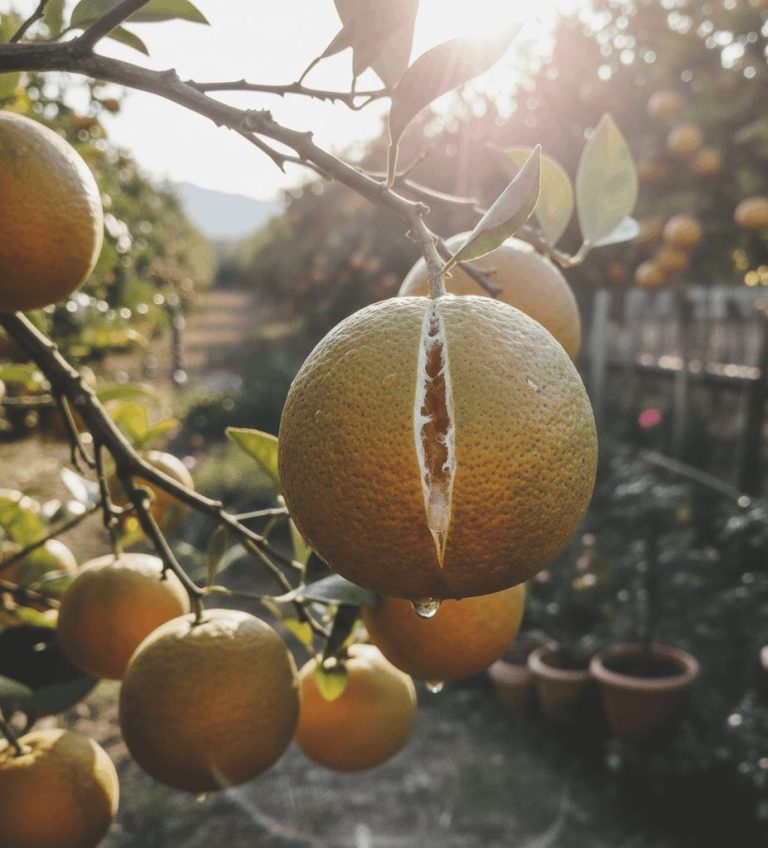
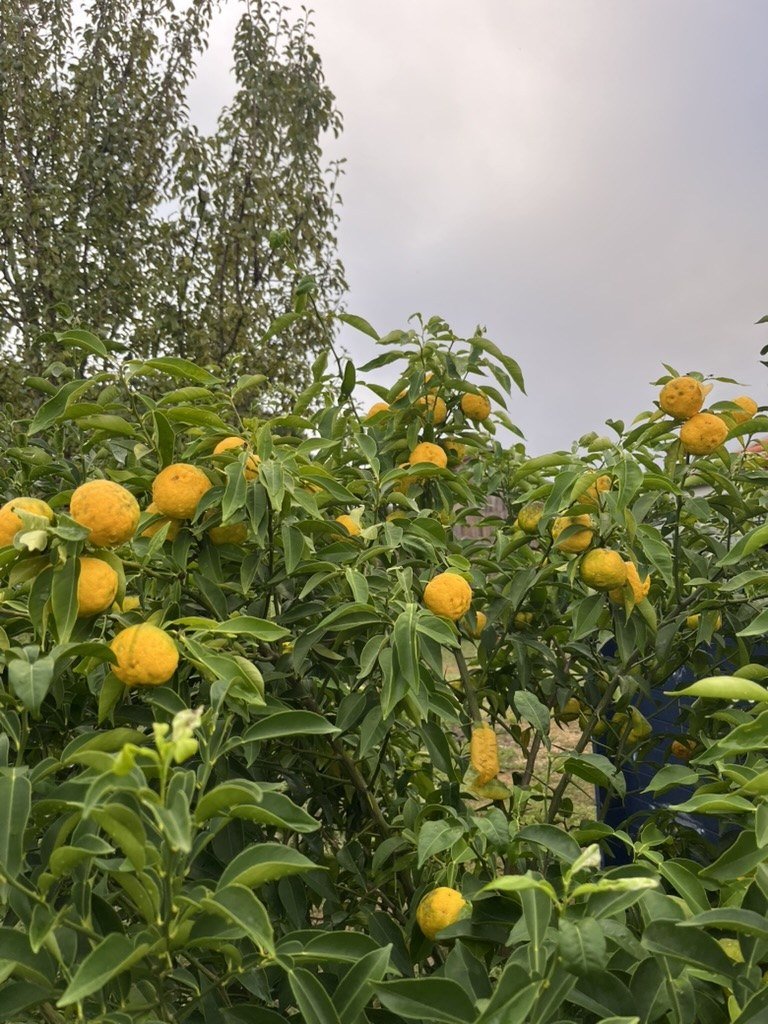
May is the month when you discover what winter really did. A well-protected citrus tree comes out of dormancy with intact foliage and swelling buds; a poorly protected one reveals blackened branches, burned leaves, sometimes split bark. This month is also when the most frequent mistakes are made: removing the cloth too early, fertilizing too heavily, pruning before regrowth.
This guide details the complete sequence of 7 steps to follow between May 1 and June 15, in the order they should be done. It is aimed at citrus in the ground (USDA zones 7 to 9) and in pots, with precise adjustments for each French climate zone.
When can you bring a citrus tree out of winter protection?
The schedule for coming out of winter protection depends on your zone and the year’s weather. The basic rule:
| USDA zone | Indicative region | Cloth and mulch removal |
|---|---|---|
| 9a-9b | Côte d’Azur, Roussillon | March 15 to April 1 |
| 8b | Southern Atlantic coast, Corsica, Provence | April 1 to 15 |
| 8a | Northern Atlantic coast, inland Southwest, Loire Valley | April 15 to May 1 |
| 7b | Inland Brittany, Centre, northern Bordeaux area | May 1 to 15 |
| 7a | Borderline continental climates | May 15 to 31 |
The absolute rule: wait until nighttime lows stay above 37°F (3°C) for 7 consecutive nights. A late freeze returning on an uncovered citrus can do more damage in April than the whole previous winter — the tree, just beginning to wake, no longer has its winter hardiness and its young shoots freeze at just 28°F (−2°C).
1. Remove the protections gradually
Why not all at once?
A citrus under frost cloth has lived for several months in a humid atmosphere, in relative shade and sheltered from the wind. Taking it suddenly out into direct light and dry wind causes a sun shock: the leaves burn, the young shoots dry out, and the tree loses a massive amount of water before the roots, still sluggish, can compensate.
How to proceed?
The 3-stage sequence, spread over 8 to 10 days:
- Days 1 to 3: open the cloth at the top and roll it into a collar around the trunk. The tree sees the light and feels the wind, but stays partly protected.
- Days 4 to 7: remove the cloth completely during the day if the weather is mild, and put it back at night if the lows fall below 41°F (5°C).
- Days 8 to 10: remove the cloth for good, mulch included if you expect a mild spring. Keep a minimal layer of mulch, 2 in (5 cm), to limit summer evaporation.
For a potted citrus brought into a sunroom or cold greenhouse, the transition outdoors follows the same principle: 3 days in partial shade, then gradual exposure to direct sun, spread over 10 days.
2. Diagnose the winter damage
How do you know if a citrus tree suffered from the freeze?
Before any pruning, do a complete examination:
- Bark test: with a fingernail or clean pruning shears, gently scratch the bark of a young branch. If the wood underneath is tender green, the branch is alive. If it is brown or black, the branch is dead on that section.
- Flexibility of the twigs: a living twig bends without breaking. A dead twig snaps dry, like dry wood.
- Buds: buds that swell and turn light green = tree in full recovery. Black or withered buds = partial mortality.
Should you worry about damaged foliage?
Yellowing and leaf drop coming out of winter protection is normal and frequent. The tree gets rid of its damaged tissue before starting again. To understand whether it is abnormal, see our guide to the causes of yellowing leaves.
As long as the wood stays green under the bark and new buds appear, the tree will restart — even if it has lost 80% of its foliage.
3. Prune the dead or damaged branches
Why wait for growth to return?
Pruning too early risks cutting wood that is still alive and would have restarted. The rule: wait until the new growth is visible to see precisely where the dead wood stops.
In practice, this falls between mid-May and early June in most French regions.
How do you prune cleanly?
- Disinfect the pruning shears with 70% alcohol before each tree (preventing bacterial contamination such as Pseudomonas).
- Cut at an angle, 3/4 in (2 cm) below the dead zone, into wood that is still green.
- Remove the pruning waste from the garden (infected twigs can pass bacterial canker to neighboring trees).
- Seal cuts larger than 3/4 in (2 cm) in diameter with a natural sealant or a horticultural wound dressing.
This is also the time for a light training prune on young trees: cut crossing twigs and open the center of the tree for light. No severe pruning on a citrus coming out of winter protection: it has already lost energy over the winter.
4. Gradually resume watering
How much water and how often?
Winter watering was almost nil (cold soil = very little evaporation). In May, needs rise quickly with the restart of growth and the rise in temperatures.
Target for the first two weeks:
– Citrus in the ground: one deep watering of 4 to 5 gallons (15 to 20 liters) for a 5-year-old tree, per week, except when more than 0.6 in (15 mm) of rain falls within 7 days.
– Potted citrus: water as soon as the top 1 in (3 cm) of the potting mix is dry to the touch. Check 2 to 3 times a week depending on exposure.
The classic mistake is to drown the tree as soon as the first mild days arrive, to make up for winter. This causes root suffocation (uniform yellowing + massive leaf drop), which is the leading cause of citrus death in spring in France.
What water should you use?
In a calcareous region (half of mainland France), tap water loaded with lime and chlorine is an aggravating factor in iron chlorosis. Prefer:
– Collected rainwater (the best),
– Filtered water (reverse osmosis or charcoal filter),
– Failing that, tap water left 24 hours in open air to let the chlorine evaporate.
5. Apply the first fertilizer of the year
When and what to apply?
The first fertilizer application is made after the first leaves, never before. Applying nitrogen to a dormant tree does nothing — the tree does not absorb it — and needlessly acidifies the soil.
Target: a citrus-specific NPK fertilizer (a formula like 12-6-6, 15-10-15 or 18-6-12), following the manufacturer’s rate. For an adult tree in the ground, count 3 to 5 oz (80 to 150 g) spread in a ring around the trunk, at least 12 in (30 cm) from the base.
Mineral or organic fertilizer?
Both work. Mineral acts in 7 to 10 days, ideal for quickly reviving a tree weakened by winter. Organic (dried blood, ground horn, composted manure) releases more slowly and also feeds the soil’s microbiology — better over the long term, slower to show its effect.
Best of all: an organic application in fall (composted manure in November) that mineralizes over the winter, then a mineral supplement in May for the spring growth.
What mistakes should you avoid?
- Over-fertilizing: excess nitrogen produces tender shoots that are very sensitive to scale insects and to the next freeze.
- Fertilizing after July: late shoots will not have time to harden before winter and will invariably freeze.
- Fertilizing a sick tree: a citrus weakened by excess water or by freezing does not benefit from the fertilizer — you must first correct the cause of the weakness.
6. Watch for spring pests
Which pests appear in May-June?
The mild temperatures of May mark the simultaneous awakening of citrus and their main pests:
- Scale insects (mealybugs, armored scales): favored by the tender growth after fertilizing. Small cottony masses or brownish domes on the undersides of leaves and along the stems.
- Aphids: colonize young tender shoots in masses, distort the leaves, secrete sticky honeydew.
- Citrus leaf miner (Phyllocnistis citrella): its larvae dig silvery zigzag tunnels in young leaves, which curl and dry out.
- Mites: leaf surfaces yellowing in fine small dots, fine webbing visible in full sun on the undersides.
What preventive treatments?
- Spraying white oil (paraffin oil breaks down eggs and larvae) on young shoots as soon as they appear. Preventive and curative.
- Diluted black soap (1 tablespoon per quart of water, about 15 ml per liter) as a weekly spray on tender shoots in case of an aphid attack.
- Sticky bands on the trunks to stop the ants that farm aphids.
- Releases of ladybugs or lacewings for greenhouses and sunrooms.
A vigorous, well-watered tree resists far better than a stressed one. The best prevention remains a living soil, regular watering and maintained mulch.
7. Prepare for flowering and fruiting
When do hardy citrus flower?
The main flowering of citrus in mainland France runs from late April to June depending on the variety and climate:
- April-May: Marumi and Nagami kumquats, Four Seasons lemon.
- May: most varieties (yuzu, lemons, mandarins, satsumas, bitter oranges).
- May-June: oranges (Washington Navel, Salustiana, Cara Cara), grapefruits.
- All summer: continuously flowering lemons (Eureka, Meyer).
How do you support fruiting?
- Water regularly throughout flowering: water stress during flowering causes massive drop of flowers and young fruit. It is the number one cause of a poor harvest on an otherwise healthy tree.
- Do not spray any treatment product on open flowers (it disrupts pollinators).
- Hand-pollinate citrus in pots or in a closed sunroom if fruit set is poor: a brush passed from flower to flower, ideally in the morning between 9 and 11 a.m.
- Thin the young fruit on overloaded trees: a tree carrying too many small fruits will produce all mediocre fruit. Better 30 quality fruits than 100 aborted ones.
To go further on the varieties to favor according to your zone, see the inventory of 170+ varieties filterable by USDA zone and the ranking of the hardiest.
The condensed gardener’s checklist for May
For those who want the essentials without the detail:
- Mid-April to mid-May: gradually open the cloth, an 8 to 10 day transition.
- Mid-May: complete diagnosis (bark, twigs, buds), prune dead wood back to green.
- Late April to late May: gradual resumption of watering, with rainwater if possible.
- Mid-May to early June: first NPK fertilizer application once the new leaves have come out.
- All of late spring: weekly monitoring for scale insects, aphids, leaf miner.
- Flowering: sustained watering, no treatment on open flowers.
- June: thin young fruit on overloaded trees, mulch 2 in (5 cm) deep for summer.
In summary
Coming out of winter protection is the most delicate operation of the year: it forgives neither excess zeal (removing the cloth too early, fertilizing too heavily) nor neglect (forgetting to watch for pests). Done well, it conditions the entire rest of the season — a vigorous tree, generous flowering, quality fruit.
The golden rule to remember: observe, act gradually, never rush a tree coming out of dormancy. Citrus are Mediterranean or subtropical plants that have learned to get through the winter in our climates — their recovery takes a few weeks of patience before getting the most out of the summer that follows.
For next winter, plan ahead now: see our complete guide to the 9 freeze protection techniques and our page dedicated to climate and acclimatization to assess the viability of each variety in your microclimate.
Cover image: AI-generated illustration.