Variety profile

Thomasville Citrangequat

(Citrus x georgiana)

Documented by Léo — grown in the ground, USDA zone 8b

Thomasville citrangequat (Citrus × georgiana) is an exceptional triple hybrid combining kumquat, orange, and Poncirus trifoliata, selected in Georgia in the United States. Its hardiness reaches 7°F (−14°C) on the tree, making it suitable for in-ground growing in USDA zones 7b and 8a, among the hardiest citrus. The tree generally reaches 7 to 10 ft (2 to 3 m), sometimes up to 13 ft (4 m) depending on catalogs and training, with a rounded thorny habit, semi-evergreen foliage, and fragrant white flowers. Its small golden-orange fruit, 1.6 to 2 in (4 to 5 cm), with thin skin, ripen in fall and winter and concentrate a very fragrant sour juice with intense zest, excellent candied, in liqueur, or in marmalade. Its skin is edible like that of kumquats. The tree is very ornamental and suits in-ground growing as well as a large container on a terrace. Graft onto Poncirus trifoliata to maximize hardiness.

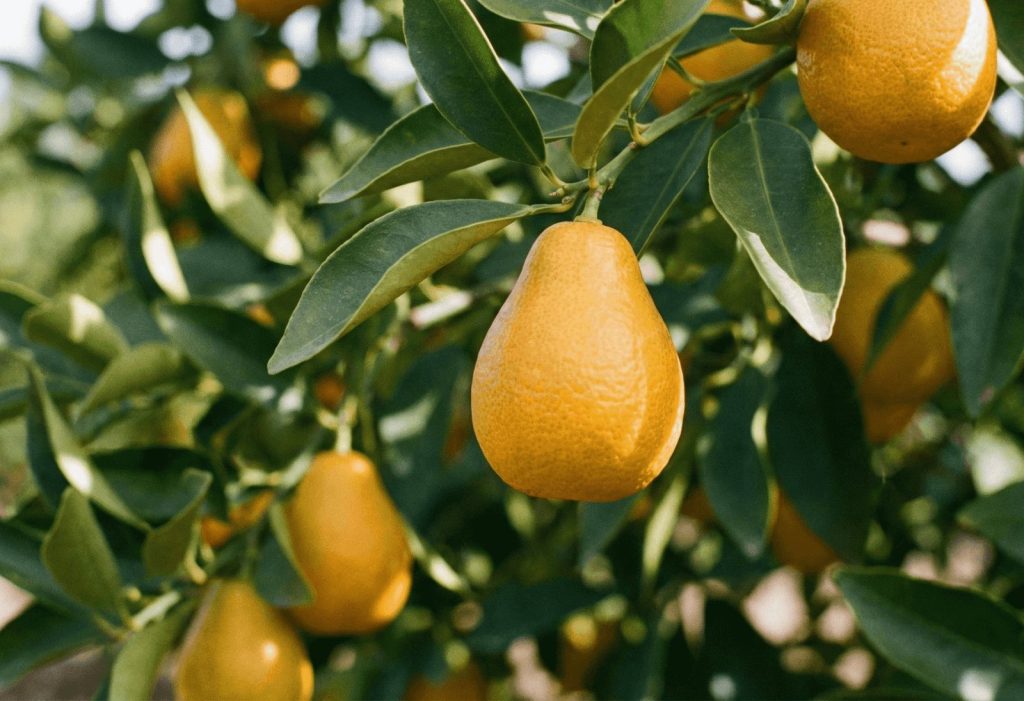
Pear-shaped orange citrus fruit hanging among leaves
AI-generated illustration. It does not authenticate cultivar identity or cold tolerance.
Cold hardiness 7°F (−14°C)

Identity

OriginUnited States
Genetic originHybrid (Citrange x Kumquat)
USDA zone
Cold hardiness7°F (−14°C)
Fruit cold hardiness23°F (−5°C)
GrowthVigorous
Height13 ft (4 m)
HarvestSeptember, October, November, December
SeedsFew
FlavorsSour, Bitter, Tart

History & Description

Origin

This historic citrus is the very first named citrangequat, made in 1909 at Thomasville (Georgia, USA) by the famous hybridizers Swingle and Robinson. It is a complex (trigeneric) cross between an oval kumquat and a Willits citrange, designed to push back the northern limit of edible citrus growing in the United States.

Tree description

The tree is vigorous and remarkably hardy, down to 7°F (−14°C), because it goes dormant in winter. It has fine, elegant, very ornamental foliage.

Fruit quality

It produces oval yellow-orange fruit, larger than a kumquat. The skin is edible and the flesh, sour at first, becomes sweeter at full ripeness.

Flavor and ornamental interest

It is an excellent substitute for lemon when harvested green or yellow. At full ripeness, it becomes a pleasant fresh-eating fruit. Its abundant bloom also makes it a handsome landscape asset.
Back to the collection

Updated:

"Growing rare citrus means accepting that nature has the last word, while whispering in its ear how to survive the winter."

Scroll to Top