Identity
History & Description
Origin
Kabosu (Citrus sphaerocarpa) is an emblematic citrus of Oita Province, on the island of Kyushu in Japan, where it has been grown since at least the seventeenth century. A close cousin of Yuzu, it comes from a natural hybridization between ancient Asian citrus and remains to this day an almost exclusive specialty of this Japanese region, which produces more than 90% of the world harvest. Its name literally means “citrus fragrance” in regional Japanese, a testament to the central place its aromas hold in traditional Japanese cooking. Introduced very gradually to Europe since the 2000s, it is beginning to win over chefs and hardy-citrus enthusiasts for its remarkable cold resistance and incomparable aromatic profile. Its hardiness, estimated from 10 to 7°F (−12 to −14°C), makes it a solid candidate for zone 8a gardens.Tree description
Kabosu is a vigorous and very productive tree once established, reaching 10 ft (3 m) at maturity under European growing conditions. Its habit is naturally bushy, with very decorative dark green evergreen foliage. Slightly thorny, it produces a fragrant spring bloom of small white flowers. Unlike Yuzu, which can be prone to alternate bearing, Kabosu generally proves more regular in its production.Fruit quality
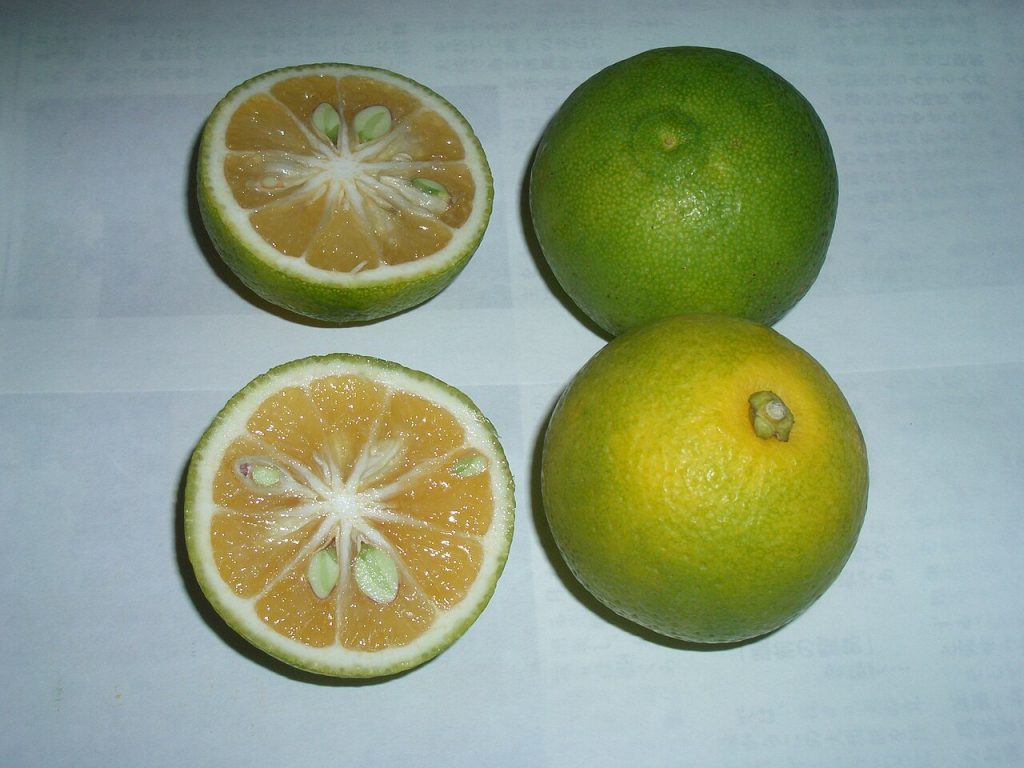
The Kabosu fruit looks like a small, less bumpy Yuzu, weighing about 2.8 oz (80 g), green to yellow in color depending on ripeness. Its zest is extraordinarily fragrant, offering complex, elegant notes between mandarin and lime. The flesh is juicy, much more so than that of Yuzu, with a juice that is both tart and slightly saline, of remarkable aromatic finesse. The fruit contains noticeably fewer seeds than Yuzu, which makes it easier to use. It is best harvested while still green, in October to November according to Vessière, to enjoy its acidity and aromas at their peak.Flavor and ornamental interest
Kabosu is above all a culinary citrus, and more precisely an exceptional flavor enhancer in the Japanese culinary tradition. Its juice brightens grilled fish and meats, replaces lemon in many preparations, and goes into ponzu, the emblematic sauce of Japanese gastronomy. Like Sudachi, Kabosu is considered an unequaled umami enhancer. Its versatility in the kitchen, from fish carpaccio to vinaigrettes and cocktails, makes it a sought-after collector’s citrus for amateur and professional cooks in temperate regions.Updated:
What matters when choosing
Key points about Kabosu
Kabosu is a Japanese culinary citrus harvested green for its moderately acidic juice and fresh fragrance. It accompanies fish, sauces, and drinks; its appeal lies more in its aroma and summer harvest in Japan than in exceptional cold hardiness.
Why choose it
- Fresh fragrance and milder acidity than a lemon.
- Green harvest usable from late summer in Japan.
- Very versatile in savory cooking and drinks.
Its limits
- Primarily a culinary fruit, poorly suited to eating plain.
- Many seeds are possible.
- Numeric cold-hardiness claims have little support from comparable trials.
Practical notes
- Cultural origin
- Oita Prefecture, Japan
- Green harvest
- August through October in Oita, Japan
- Uses
- Juice, ponzu, fish, drinks
Cold-hardiness reference: about 10°F (−12°C)
Official sources precisely document its uses and season but provide little freezing evidence; the reference is therefore deliberately cautious.
Sources and method
The temperatures given are reference points for a mature tree with hardened wood. The table and callout repeat the same value as the profile. They guarantee neither freedom from damage nor a harvest after a freezing event.
Data reviewed on October 7, 2026.
- Japan’s Ministry of Agriculture — geographical indication — Origin, green harvest, fragrance, and uses
- Oita Prefecture — History, flowering, harvest, and culinary uses
- Oita Kabosu Association — Optimal season and growing tradition