Identity
History & Description
Origin
Kinkoji is an old Japanese citrus whose parents are unknown. The citrus collection of the University of California, Riverside, received it as seed from Okitsu, in Shizuoka Prefecture, in 1963, and lists it under the historical botanical name Citrus obovoidea and the synonym Marumero; the reference work The Citrus Industry treats it as a pummelo × mandarin hybrid. In Texas it is grown and sold under the name Bloomsweet grapefruit, a name popularized by Houston-area growers who planted it in their yards for its tolerance of cold.Tree description
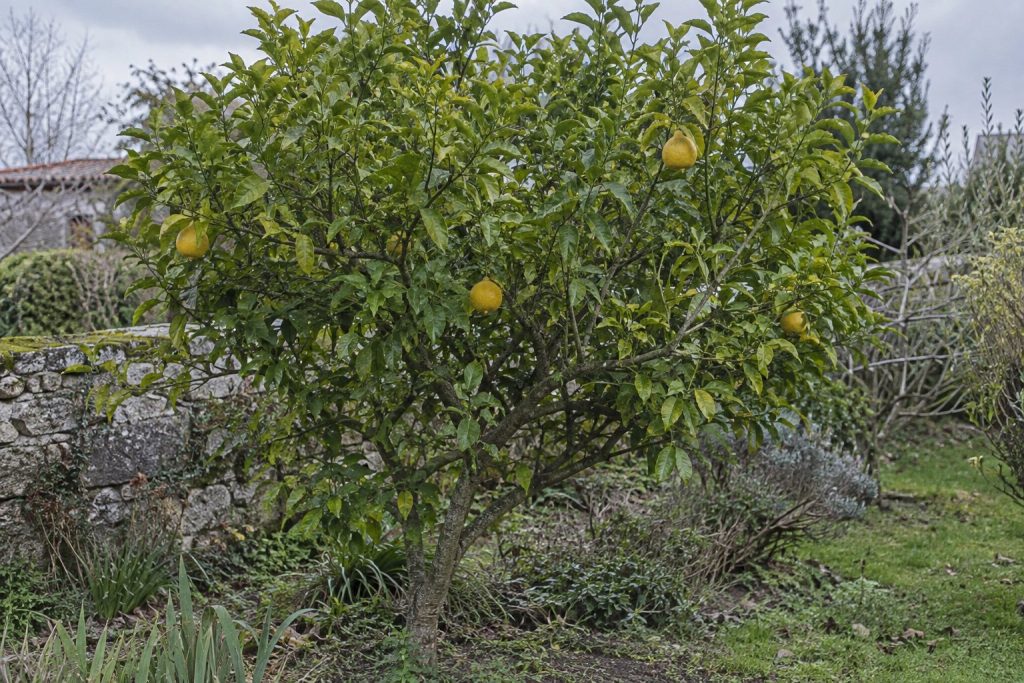
The tree is vigorous and upright, reaching 10 to 13 ft (3 to 4 m), with long, pointed leaves on winged petioles that recall those of a grapefruit, and some thorns. Its cold tolerance is better than that of common grapefruits: growers in Texas report that mature trees survive about 14 to 15°F (−10 to −9°C), while some growers in the Pacific Northwest rank it only slightly hardier than a Satsuma. No published trial has measured it, so treat these figures as an estimate, protect young trees, and favor a sheltered spot on a trifoliate-type rootstock.Fruit quality
The fruit is large, yellow-orange, round to slightly pear-shaped, with a thick rind of about a quarter of an inch (5 to 6 mm). The flesh is juicy and tender, mildly acidic, low in sugar and free of bitterness. Each fruit holds about 10 to 15 seeds. At Riverside it ripens from October to November, and it can hold on the tree into winter.Flavor and ornamental interest
Its mild taste, without the bitterness of grapefruit, makes it pleasant to eat fresh or juiced, and its thick, fragrant rind suits marmalade and candied peel. Laden with golden fruit at the start of winter, the tree is also an attractive specimen for gardens in USDA zones 8b and 9, where few grapefruit-type citrus can stay outdoors.Updated:
What matters when choosing
Key points about Bloomsweet Grapefruit, Kinkoji
Kinkoji, sold in Texas as Bloomsweet grapefruit, is an old Japanese citrus in the Citrus obovoidea group, probably a pummelo × mandarin hybrid. Its large, thick-skinned fruit has mild, non-bitter flesh, but it should neither be presented as a wild species nor assigned extreme cold hardiness.
Why choose it
- Sweet-tart flesh with little bitterness.
- Large, original fruit with aromatic peel.
- Heritage and botanical interest.
Its limits
- Thick, tough peel.
- Fruit sometimes seedy.
- Actual cold hardiness remains poorly documented.
Practical notes
- Historical botanical name
- Citrus obovoidea
- Other names
- Bloomsweet (Texas), Marumero
- Type
- Probable pummelo × mandarin hybrid
Cold-hardiness reference: about 14°F (−10°C)
Figures reported by growers for mature trees (Texas, Pacific Northwest); no published comparative trial. Some growers find it only slightly hardier than a Satsuma.
Sources and method
The temperatures given are reference points for a mature tree with hardened wood. The table and callout repeat the same value as the profile. They guarantee neither freedom from damage nor a harvest after a freezing event.
Data reviewed on November 1, 2026.
- UC Riverside — Citrus Variety Collection, Kinkoji (CRC 3465) — Origin, synonyms, fruit description and season
- Citrus ID — Identity, morphology, and fruit flavor
- Genesys — USDA PI 433260 — Genetic conservation and proposed parentage
- UC Riverside — collection inventory — Kinkoji’s presence in the variety collection