Cold hardiness
5°F (−15°C)
Identity
OriginChina; traditional cultivation in Japan
Genetic originCitrus of hybrid origin; papeda × mandarin relationship described by UCR
USDA zone7b
Cold hardiness5°F (−15°C)
GrowthModerate
Height10 ft (3 m)
HarvestOctober, November, December
SeedsMany
FlavorsSour, Highly aromatic
History & Description
Origin
Yuzu (Citrus × junos) is a citrus of Chinese origin, traditionally grown in Japan. This entry presents the classic type, without attributing its traits to a specific commercial selection. The citrus collection of the University of California, Riverside describes it as a citrus of hybrid origin, related to the papedas and the mandarins. Yuzu N°3, Yuzu Gold, and Yuzu Citron have their own separate entries.
Tree description
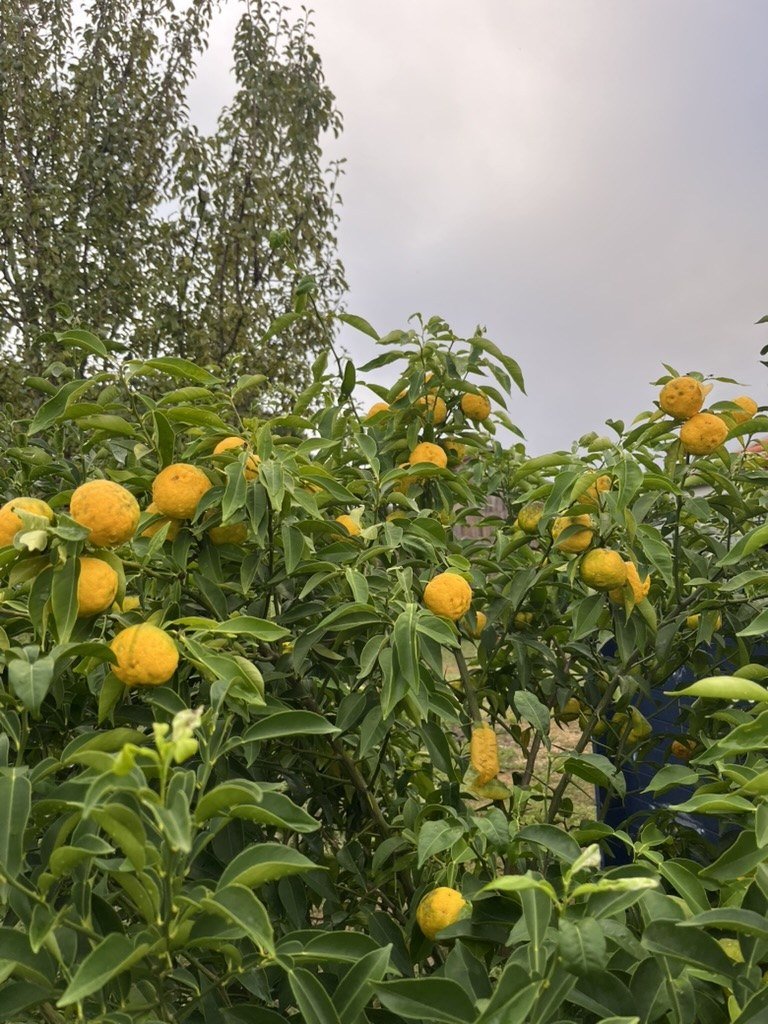
The yuzu has evergreen foliage, winged petioles, thorns, and fragrant white flowers. For a small garden, the 5 to 10 ft (1.5 to 3 m) of growth reported by the Pépinière du Penthièvre serves as a reference; the tree can become larger depending on its age, the rootstock, and the climate. Its growth is moderate. The hardiness reference for the classic yuzu is 5°F (−15°C) for a well-established, acclimated adult tree, notably reported by Vessières and Quissac. Young plants, roots in pots, and prolonged freezes call for more protection. USDA zone 7b, the limit of the 7b/8a range explicitly stated by Vivaio di Castelletto, remains a climate reference: it guarantees neither the absence of damage nor a harvest.
Fruit quality
The rounded, slightly flattened fruit with irregular rind turns from green to yellow. The Pépinière du Penthièvre describes a diameter of about 2 in (5 cm). The sour flesh contains many seeds; the zest and the juice are the parts most sought after in cooking. October to December is a harvest reference in France, varying by plant and location. The green fruit can also be used as a condiment. No fruit-specific hardiness temperature is retained here: its keeping should not be inferred from the threshold reported for the tree.
Flavor and ornamental interest
The yuzu is among the few citrus that can be planted in the ground in most French regions. Its reference of 5°F (−15°C) applies to a well-established adult tree; protect young plants during their first winters. It flavors sauces, vinaigrettes, desserts, drinks, and jams. Its foliage, bloom, and yellow fruits also add interest to the garden. In France, choose a sunny, wind-sheltered, well-drained location; ask for a rootstock suited to the soil. In areas with very severe or prolonged freezes, a pot overwintered in a bright, frost-free shelter makes protection easier. The choice between pot and in-ground depends on the freezes actually observed, their duration, and the protection available.
Back to the collection
Updated: