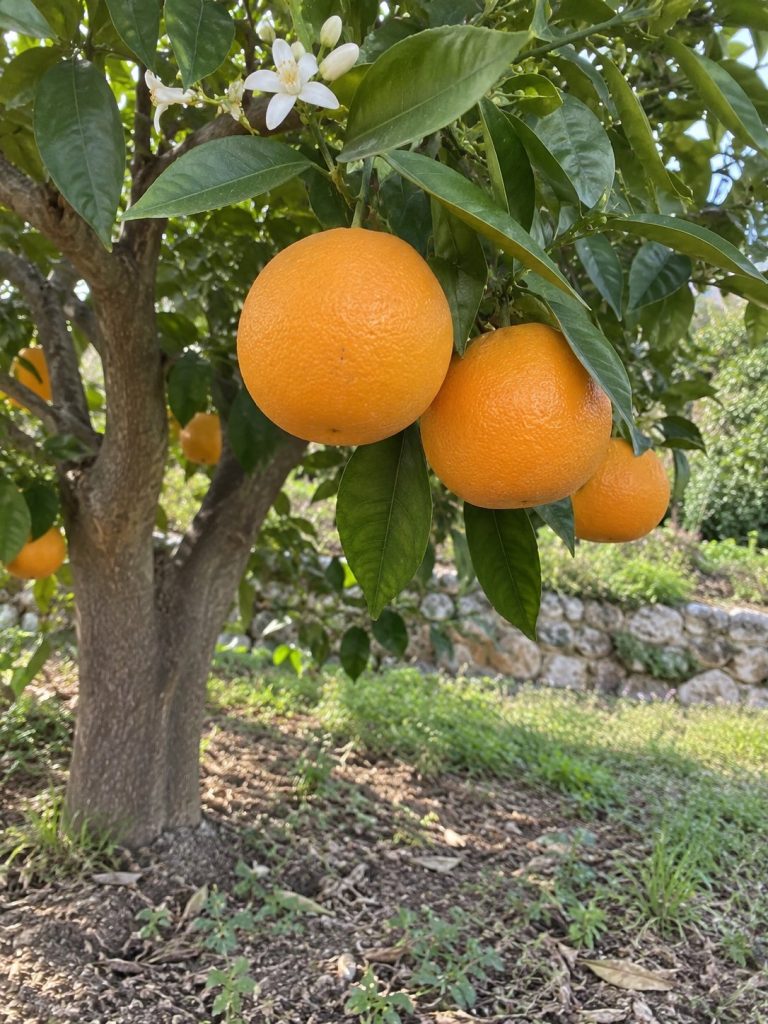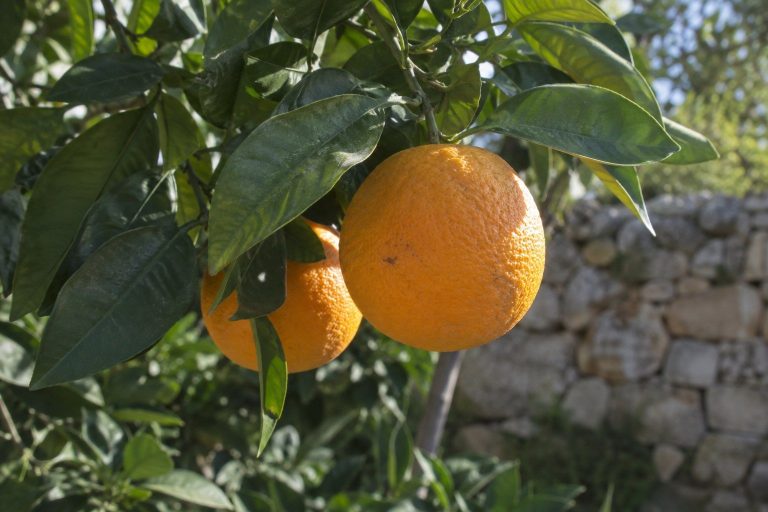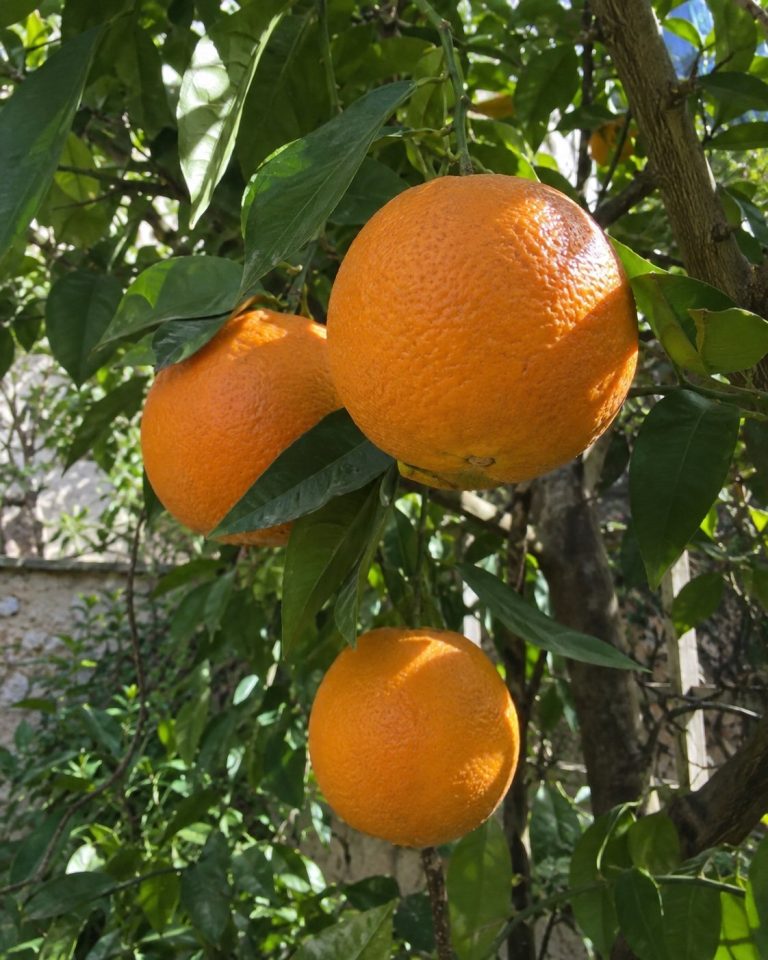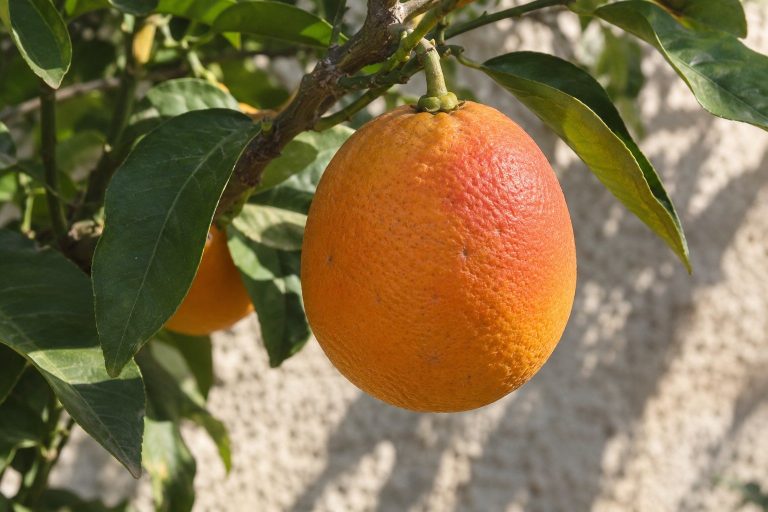
Growing an orange tree in a container or in the ground
Container growing makes an orange tree movable and lets you choose a rootstock that limits its vigor. Planting in the ground allows it to develop freely but requires a suitable site for several years. Give it sunlight, effective drainage and enough room to maintain a leafy canopy.
UC ANR notes that citrus grafted onto a dwarfing rootstock is better suited to containers. Check drainage holes and water flow beneath the container; garden soil alone may retain too much water there. Whenever you repot, assess how fully the roots occupy the container rather than immediately choosing the largest possible volume.
References: UC ANR — Growing Citrus in Pots · UC IPM — Cultural Tips for Growing Citrus
Caring for an orange tree without sacrificing its productive canopy
Light pruning is usually enough: remove shoots below the graft and branches that cross or genuinely cause problems. Keep foliage around the main branches, which can protect them from sunlight. In a container, check that watering moistens the root ball rather than simply running down its sides.
Avoid stimulating young shoots just before cold weather through late pruning or fertilizing. After flowering, some small fruit may fall naturally. Observe how things develop before interpreting every drop as a pollination or nutrition problem.
References: UC ANR — Growing Citrus in Pots · UC IPM — Cultural Tips for Growing Citrus · UC ANR — How can I best care for my citrus trees?
Can an orange tree spend winter outdoors?
It depends on the plant and garden. Sweet oranges are described as more cold tolerant than some common lemons, but fruit and young shoots remain vulnerable. An orange tree that survives a freeze may therefore lose its crop: the hardiness of the wood and the harvest are two separate questions.
Fall acclimation, the length of the cold spell and the tree’s age affect damage. Prepare to move container plants to shelter; for in-ground plants, plan protection for the young tree. Red or pink fruit color provides no evidence of additional cold tolerance.
References: UC ANR — Growing Citrus in Pots · UC IPM — Freezing and Frost Damage to Citrus
Flavor, juice and ripening: when should you harvest oranges?
Harvest when the flavor suits you: oranges do not develop true eating ripeness after picking. Color alone is insufficient. UCR describes Salustiana’s pulp as melting and juicy; with Moro, leaving fruit on the tree for a long time can eventually impair flavor.
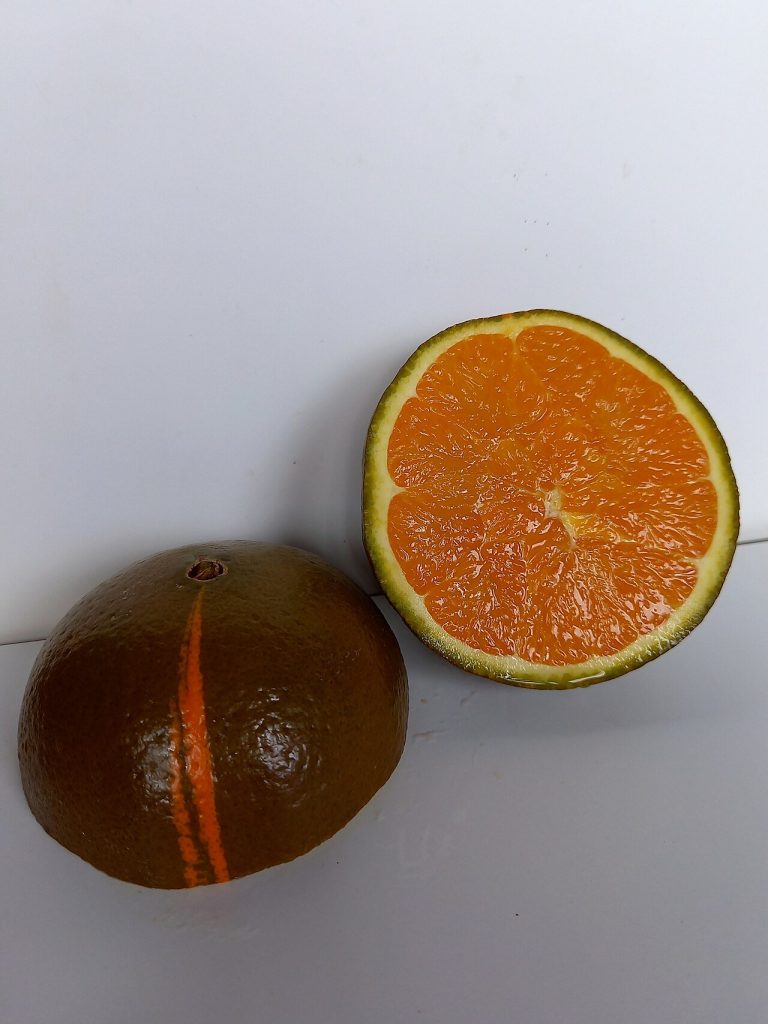
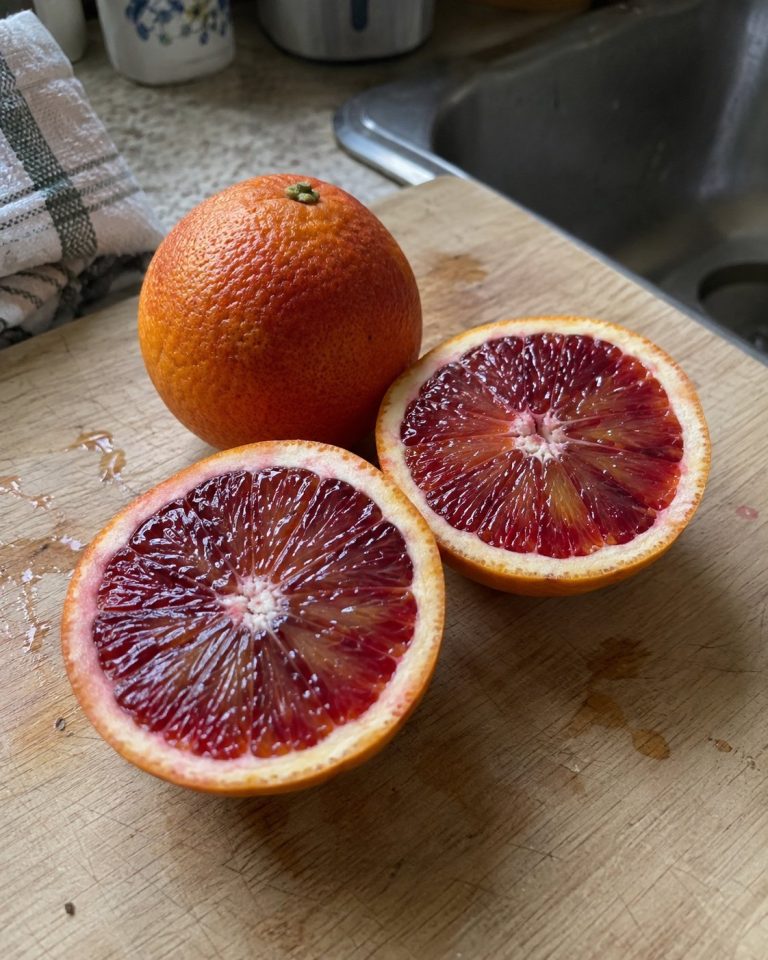
Cool nights affect citrus coloration. Blood oranges depend particularly on differences between daytime and nighttime temperatures to express their anthocyanins. A Moro that is not very red in a particular climate is therefore not necessarily misidentified. Also taste its acidity and aromas, rather than basing your choice solely on color intensity.
References: UCR — Salustiana, CRC 3868 · UCR — Moro, CRC 3811 · UF/IFAS — Citrus Fruit Pigments · UC ANR — How can I best care for my citrus trees?
Sweet, navel and blood oranges: understanding the groups
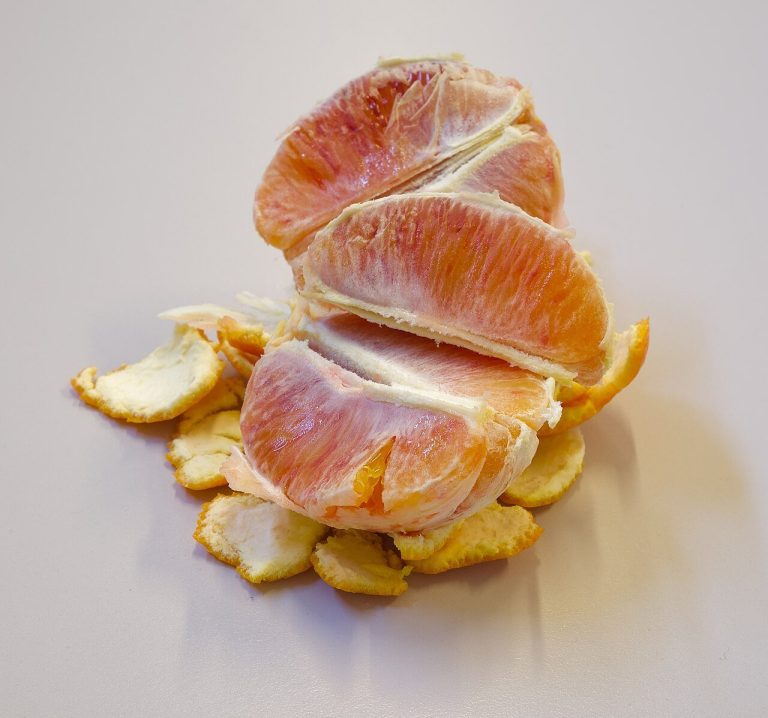
Navel and blood oranges belong to the sweet oranges, generally named Citrus sinensis. Cara Cara is a Washington Navel mutation with pink flesh rich in lycopene. Moro is a blood orange whose color comes from anthocyanins: two colorful oranges, but two different mechanisms.
The collection also includes Amber Sweet, described by UCR as the result of a cross involving clementine, tangelo and sweet orange. The horticultural classification makes browsing easier without erasing this parentage. Sour orange trees, which produce bitter oranges, have their own separate guide.
References: UCR — Cara Cara, CRC 3994 · UCR — Moro, CRC 3811 · UF/IFAS — Citrus Fruit Pigments · UCR — Ambersweet, CRC 4002
Frequently asked questions about orange trees
Which orange tree should I choose for an early fresh-eating orange?
Navelina is a documented option: UCR describes a very early, juicy, sweet navel fruit. Still, check its ripening in your region, because a variety’s relative earliness does not guarantee the same harvest date everywhere.
Which orange should I consider for juicing?
Salustiana deserves attention for its melting, juicy, sweet flesh. Taste the fruit when it is locally ripe; juice quantity and flavor balance matter more than a rigid distinction between a “juice” and a “fresh-eating” orange.
Is Cara Cara a blood orange?
Cara Cara is a pink-fleshed navel, colored in particular by lycopene. In a blood orange such as Moro, anthocyanins explain the red color. Similar-looking colors therefore do not mean identical pigmentation.
Why is my blood orange not very red?
Anthocyanin expression depends on the variety and climate, particularly differences between daytime and nighttime temperatures. A very red photograph taken elsewhere does not predict the results of your own harvest.
Do oranges ripen after picking?
They do not continue developing eating ripeness like some other fruits. Taste an orange on the tree before picking the batch; fruit picked too early will not become a sweet orange simply by waiting in the kitchen.
Does an orange tree need pruning every year?
It does not need annual cutting back to produce fruit. Focus on rootstock shoots, troublesome branches and crowding. Targeted interventions maintain a balanced canopy.
Sources and method
A documentary synthesis from the encyclopedia, published by Léo, an amateur gardener on the Arcachon Basin, in USDA zone 8b. University collections document fruit and its differences in color, flavor and ripening. Success in the garden also depends on the plant, its graft and the local climate. The cited sources are documentary; this page does not report a personal freezing trial.
- UCR — Salustiana, CRC 3868
Melting, juicy, sweet flesh; seed observations vary between descriptions.
- UCR — Cara Cara, CRC 3994
Washington Navel mutation and pink flesh.
- UCR — Moro, CRC 3811
Blood orange, anthocyanins and flavor deterioration when fruit is left too long on the tree.
- UF/IFAS — Citrus Fruit Pigments
Lycopene in Cara Cara, anthocyanins in blood oranges and the effect of temperatures on coloration.
- UCR — Ambersweet, CRC 4002
Hybrid parentage involving clementine, Orlando tangelo and sweet orange.
- UC ANR — Growing Citrus in Pots
Dwarfing rootstock, well-drained container, root ball, exposure and protection of container-grown citrus.
- UC IPM — Cultural Tips for Growing Citrus
Planting, moderate pruning, suckers, foliage protection and young fruit drop.
- UC IPM — Freezing and Frost Damage to Citrus
Differences between citrus, sensitive organs and acclimation factors; no threshold transferred.
- UC ANR — How can I best care for my citrus trees?
Avoiding late growth before cold weather; eating ripeness develops on the tree and is checked by tasting.