
Cold hardiness
14°F (−10°C)
Identity
OriginSpain (Picassent, Valencia)
Genetic originSpontaneous bud mutation of a navel orange (rind retains green pigments)
USDA zone8a
Cold hardiness14°F (−10°C)
Fruit cold hardiness27°F (−3°C)
GrowthVigorous
Height16 ft (5 m)
HarvestJanuary, November, December
SeedsSeedless
UsesFresh eating, Juice
FlavorsVery sweet, Balanced, Acidless
History & Description
Origin
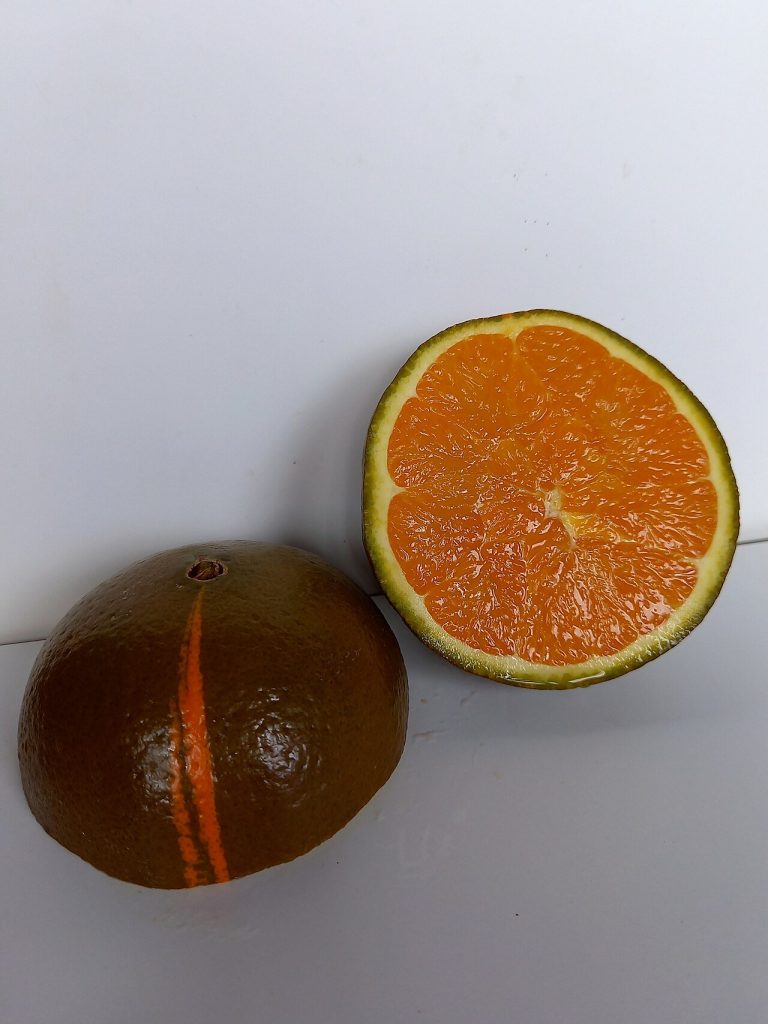
The Chocolate Orange, also called Navel Chocolate, is a spontaneous bud mutation of a navel orange, discovered in 2006 in an orchard at Picassent, near Valencia, Spain, where one tree bore brown, variegated fruit among normal oranges. It is thought to be the same as the old Spanish 'Black Navel', once grown and later lost. Its rind keeps its green pigments as the fruit ripens; they blend with the orange pigments into a coppery brown evoking milk chocolate, entirely unusual in sweet oranges. The trait is passed on by grafting and gives each orange a unique appearance. Under the coppery skin, the flesh remains a classic orange, juicy and seedless, making this variety a true "pomological trompe-l'oeil". Rarely distributed in Europe, the Chocolate Orange is now sold in France by Pépinière du Bosc, which offers it as an ornamental and gastronomic collector's piece for amateur gardens. Its cold tolerance is that of a navel orange.Tree description
The tree forms a vigorous, very productive specimen of 10 to 16 ft (3 to 5 m) at maturity, with an upright habit and dense evergreen foliage of a glossy deep green. Its growth is fast and sustained, and the tree comes into production from the fifth year on FA5 or Poncirus rootstock. The very fragrant white spring blossom is abundant. Its hardiness, documented at 14°F (−10°C) for a well-acclimated adult tree, places it among the oranges best suited to the temperate zones of France, requiring light winter protection in the first years.Fruit quality
The fruits, medium to large, have a classic round shape and skin of a completely unique coppery-brown coloring, sometimes zoned with lighter bands. When cut, the flesh reveals a bright orange that contrasts sharply with the dark exterior, particularly juicy and melting, remarkably sweet (very little acidity) and seedless, like other navel oranges. The characteristic navel remains present.Flavor and ornamental interest
Beyond its striking visual effect at the table (the chocolate orange systematically surprises guests when presented whole), the Chocolate Orange offers exceptionally sweet flesh that makes it a first-rate fruit for eating and juicing. As an ornamental, it is a unique conversation piece in an amateur orchard: few citrus varieties combine such aesthetic rarity with authentically delicious flavor quality, which makes it one of the most photographed and discussed subjects of modern pomological collections.
Back to the collection
Updated: