Identity
History & Description
Origin
Moro blood orange (Citrus sinensis 'Moro') is one of the most iconic and most deeply pigmented blood oranges there is. Born in Sicily in the 19th century from a spontaneous natural mutation, it is grown mainly around Catania and Lentini, at the foot of Mount Etna, on black volcanic soils rich in minerals. This unique terroir, combined with the large temperature swings between mild Sicilian days and cool nights, favors the accumulation of anthocyanins, the pigments responsible for the ruby to intense purple color of the flesh. The Moro is protected by the protected geographical indication Arancia Rossa di Sicilia, alongside the Tarocco and the Sanguinello. Its hardiness of 16°F (−9°C), which can reach 14 to 12°F (−10 to −11°C) in a very sheltered spot, allows it to be grown in zone 8b, notably in the Southwest and on the mild Atlantic coasts.Tree description
Vigorous and very productive tree, reaching 13 to 16 ft (4 to 5 m) in the ground in favorable regions. Dense, dark green, glossy evergreen foliage. Very fragrant white bloom in spring, ornamental and attractive to bees. Vigorous growth with good, regular fruit set.Fruit quality
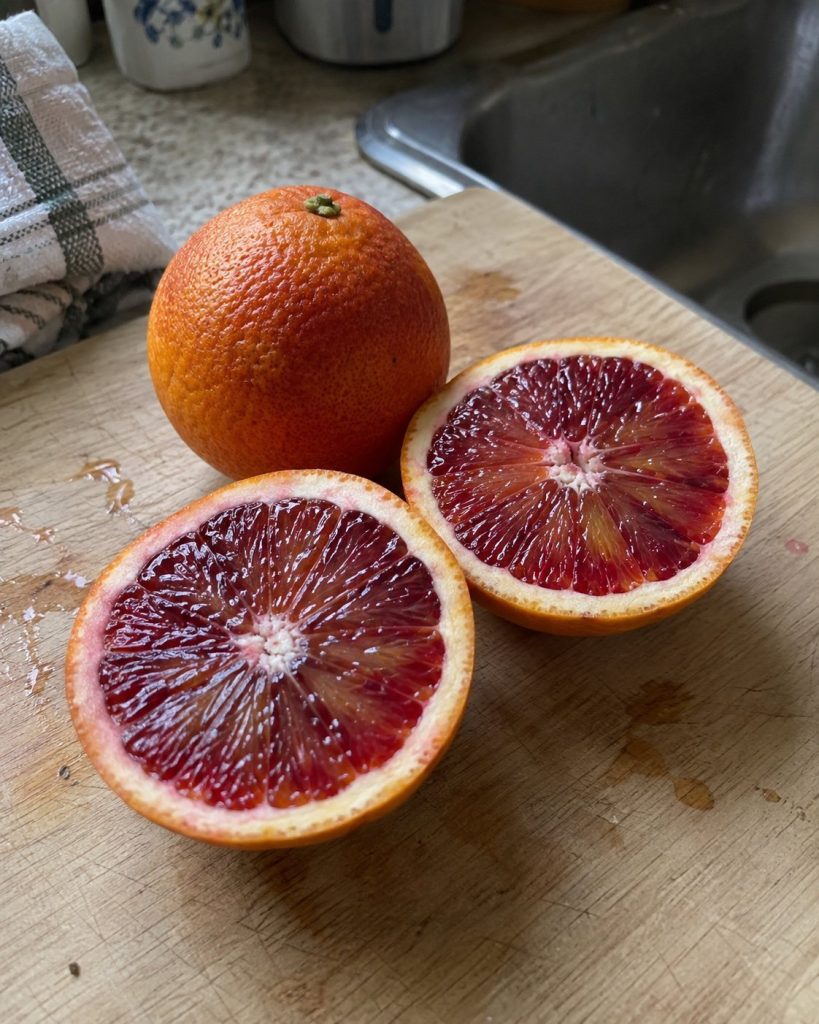
Round to slightly oval fruit of medium size, with orange skin often tinged with red or purplish highlights at maturity. The flesh is ruby red to almost purple, the most deeply colored of all blood oranges, and very juicy. The flavor is sweet-tart with characteristic notes of raspberry and red berries that enthusiasts greatly appreciate. Few seeds. The harvest runs from December to February.Flavor and ornamental interest
The juice of the Moro orange is considered one of the best orange juices in the world, with its spectacular blood-red color and unique red-berry aromas. In pastry, its red flesh is highly sought after for tarts, sorbets, and desserts. The Moro is also enjoyed plain or turned into seasonal jam. Visually, the tree adorned with its dark red fruit is very ornamental in winter in southern gardens.Updated:
What matters when choosing
Key points about Moro Blood Orange
Moro is the most intensely pigmented blood orange: its deep-red flesh has a lively flavor with berry notes. Color depends on cool nights, and quality declines if fruit remains on the tree too long.
Why choose it
- Strong red pigmentation in favorable conditions.
- Complex, tangy, aromatic flavor.
- Generally few seeds.
Its limits
- Variable color when winters are too mild.
- Flavor may become unpleasant when overripe.
- Low tolerance of severe freezes.
Practical notes
- Type
- Blood orange
- Harvest at UCR
- December through February
- Pigment
- Anthocyanins
Cold-hardiness reference: about 16°F (−9°C)
Cool nights stimulate pigmentation without making the orange tree cold-hardy; freezing can damage the fruit well before the wood.
Sources and method
The temperatures given are reference points for a mature tree with hardened wood. The table and callout repeat the same value as the profile. They guarantee neither freedom from damage nor a harvest after a freezing event.
Data reviewed on September 21, 2026.
- Givaudan Citrus Variety Collection — UCR — Season, pigmentation, seeds, and quality at maturity
- UF/IFAS — blood-orange anthocyanins — Pigmentation and the influence of temperature
- UF/IFAS — blood-orange production — Horticultural characteristics and climate requirements