Cold hardiness
16°F (−9°C)
Identity
OriginCalifornia
Genetic originWashington Navel
USDA zone9a
Cold hardiness16°F (−9°C)
Fruit cold hardiness28°F (−2°C)
GrowthModerate
Height10 ft (3 m)
HarvestJanuary, November, December
SeedsSeedless
UsesFresh eating, Juice
FlavorsSweet
History & Description
Origin
The story of Navelina is a transatlantic journey. Originally discovered in Riverside, California, in 1910 as an early mutation of the 'Washington Navel' (under the name 'Smith's Early'), it did not meet the success expected in the USA. It was its introduction to Spain in 1933 that revealed its potential. Renamed 'Navelina' for the small size of its navel, it became the leading variety of early harvests in Europe.Tree description
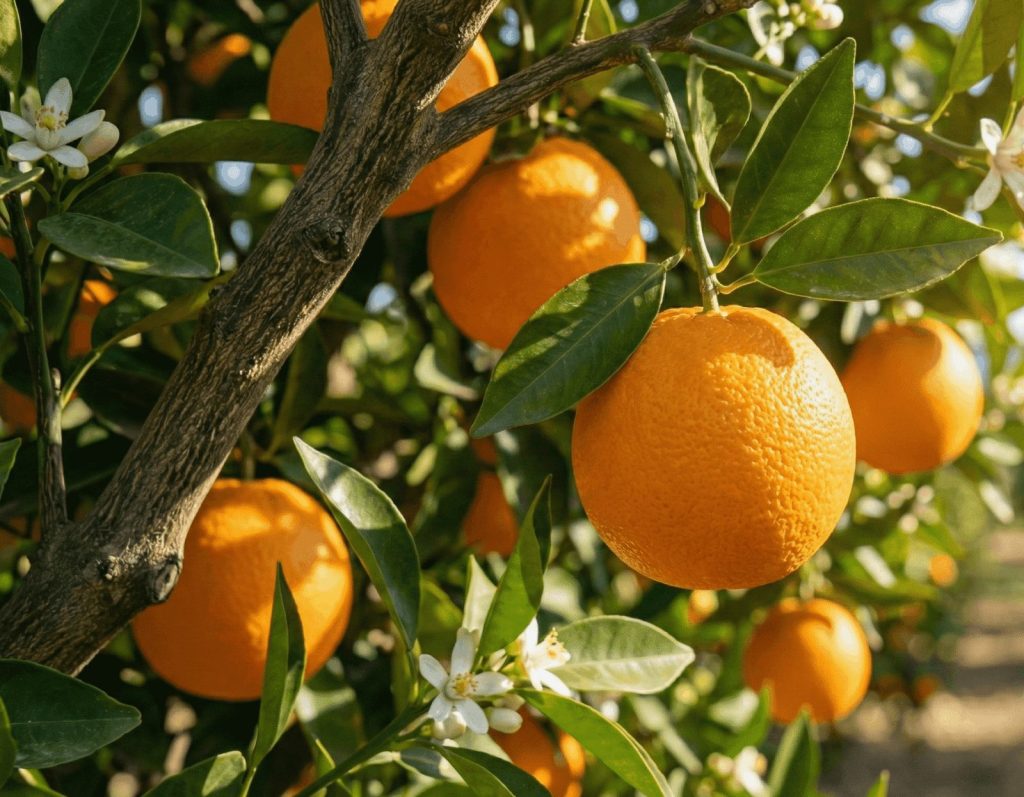
This is a medium-vigor orange tree with a compact, rounded habit, well suited to small gardens and pot culture. Its dark green foliage is dense. It adapts well to cooler, more humid climates than other navels.Fruit quality
The fruit is medium to large, often slightly oval. It is characterized by very early ripening (from late October/November), a deep orange skin, and firm flesh that is completely seedless.Flavor and ornamental interest
This is the table orange par excellence for starting the winter. Its flesh is very juicy, sweet, and fragrant. Its earliness and the handsome color of its fruit make it a very ornamental tree in the fall.
Back to the collection
Updated: