Identity
History & Description
Origin
Washington Navel orange is the most widely grown sweet orange variety in the world, native to Brazil, where it was discovered around 1820 as a spontaneous mutation in the Franciscan convent of Bahia. In 1870, the U.S. Department of Agriculture introduced trees to Washington, before distributing them a few years later to Riverside, California, a region that would become the cradle of navel orange production in the United States. The name Navel, meaning belly button, refers to the rudimentary floral bud visible at the end opposite the stem. The variety was named Washington in homage to the American capital and quickly became the world reference for the table orange. Its cultivation then spread to Spain, Morocco, Australia, and South Africa. In France, it is prized by enthusiasts for the exceptional quality of its winter fruit, which ripens when other fruit trees are dormant.Tree description
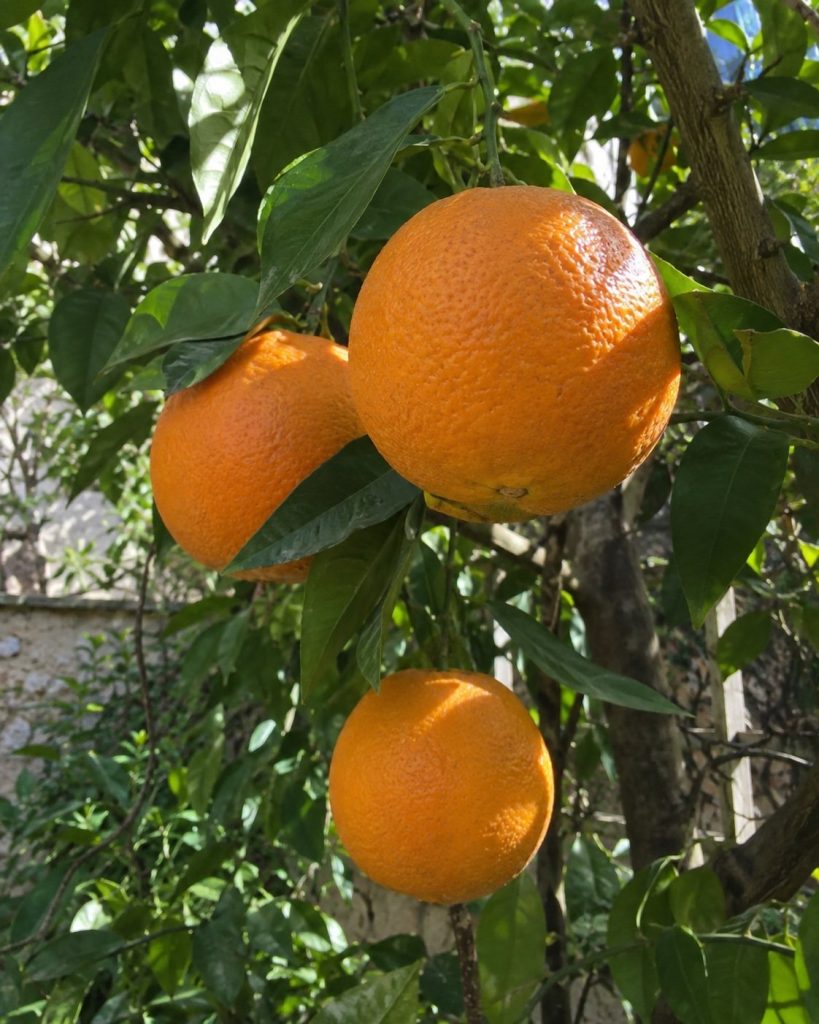
Washington Navel orange is a vigorous tree able to reach 13 to 20 ft (4 to 6 m), with an upright habit and a dense, well-rounded crown. Its dark green, glossy evergreen foliage is decorative all year. The abundant, intensely fragrant spring bloom produces the famous orange blossoms with relaxing properties. Growth is vigorous, especially in young trees well established in the ground.Fruit quality
Washington Navel orange is a large round to slightly oval fruit, weighing from 7.1 to 12.3 oz (200 to 350 g), with thick, bright orange, easily peeled skin. The flesh is dark orange, melting, very juicy, and deliciously sweet. It is completely seedless thanks to the variety's natural pollen sterility. The harvest comes from December to February, in the heart of winter, when the fruit reaches perfect flavor maturity.Flavor and ornamental interest
Washington Navel orange is eaten above all as a table fruit, its sweetness and juiciness making it one of the most appreciated oranges in the world. It also gives an excellent juice, to be drunk quickly to avoid the bitterness due to limonin. Its intensely fragrant zest is valuable in pastry, jam, and cooking. Its large white flowers with an intoxicating scent are traditionally harvested for perfumery and infusions. Ornamentally, its bright orange fruit contrasting with the dark green foliage make it a remarkable tree for sheltered zone 8b gardens.Updated:
What matters when choosing
Key points about Washington Navel Orange
Washington Navel is the classic eating orange: large, seedless, richly flavored, and easy to peel. It is excellent fresh but less suitable for stored juice, which can develop bitterness, and the tree remains sensitive to hard freezes.
Why choose it
- Seedless, easy-to-peel fruit.
- Rich flavor for fresh eating.
- Ripe fruit holds well on the tree.
Its limits
- Poorly suited to stored juice because of delayed bitterness.
- Tree of moderate vigor.
- Low tolerance of severe freezes.
Practical notes
- Historical synonym
- Bahia
- Harvest at UCR
- November through January
- Use
- Fresh-eating orange
Cold-hardiness reference: about 16°F (−9°C)
Tolerance depends strongly on freeze duration, wood hardening, and rootstock; this is not an orange to recommend without protection in a cold zone.
Sources and method
The temperatures given are reference points for a mature tree with hardened wood. The table and callout repeat the same value as the profile. They guarantee neither freedom from damage nor a harvest after a freezing event.
Data reviewed on September 21, 2026.
- Givaudan Citrus Variety Collection — UCR — History, fruit, seeds, season, habit, and keeping quality
- UF/IFAS — Florida Citrus Varieties — Fresh-eating quality and limitations for juice
- Australian Citrus — Washington — Varietal description and harvest characteristics