8a

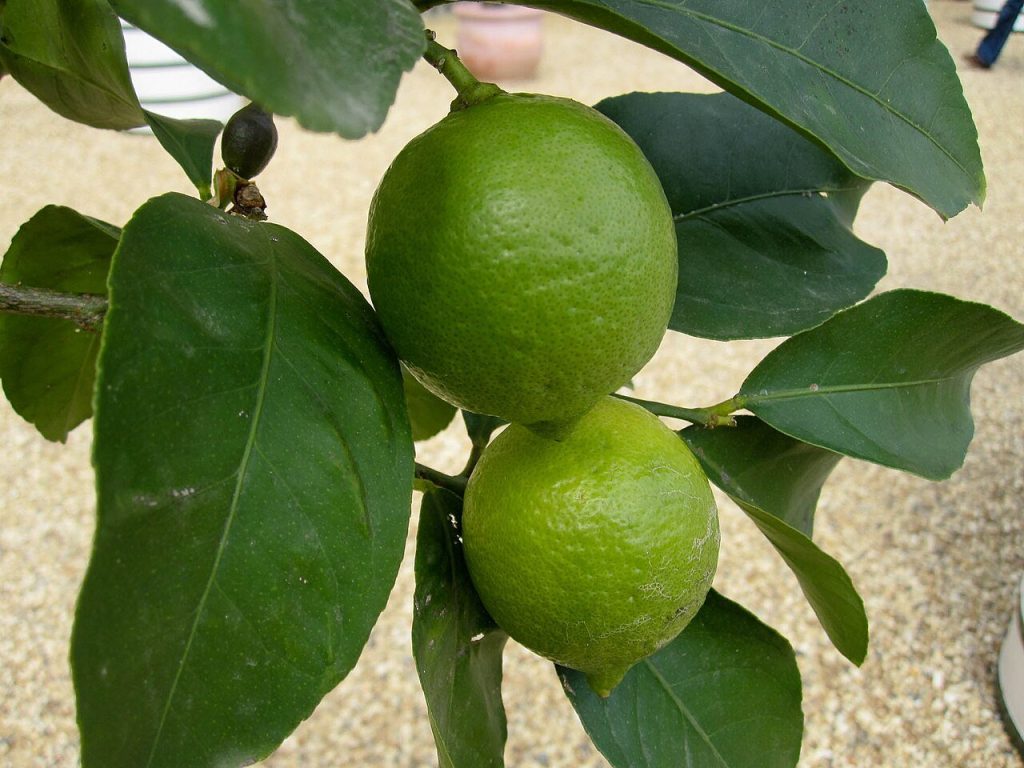
Green citrus fruit hanging among glossy leaves

Taichang Hybrid

Taichang hybrid (Citrus sp.) is a rare Chinese hybrid originating in Sichuan Province, selected in an experimental collection to combine hardiness and flavor quality. Its tree hardiness reaches 10°F (−12°C), making it suitable for in-ground growing in USDA zone 8a. The tree reaches 6 to 13 ft (2 to 4 m) with an upright, semi-thorny habit, aromatic evergreen foliage, and fragrant white flowers. Its yellow-orange fruit, medium-sized and thin-skinned, ripens in winter and offers a sweet-sour aromatic juice with complex notes blending Asian citrus and floral accents. A little-known variety for collectors of rare Asian citrus. The precise botanical classification remains to be confirmed because it is a hybrid whose exact parents have not been identified with certainty. Graft onto Poncirus trifoliata, south-facing wall, well-drained soil.
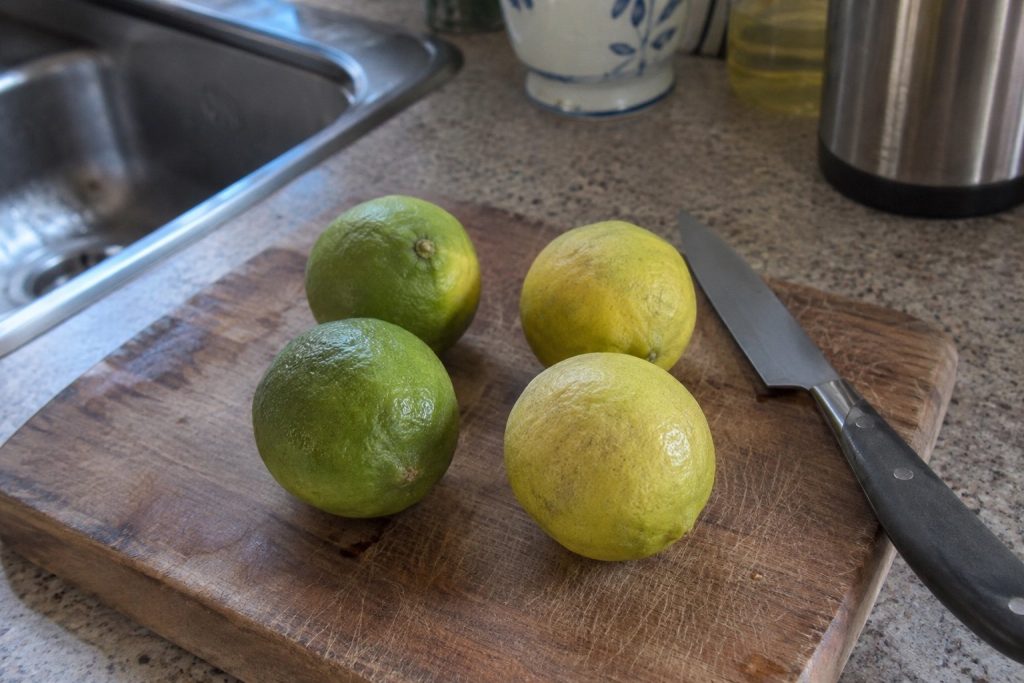
Four green and yellow citrus fruit on a kitchen board

Dragon Lime

Dragon Lime (Poncirus trifoliata hybrid) is a modern hybrid between Poncirus trifoliata and an edible citrus, selected to combine the maximum hardiness of Poncirus with improved flavor. Its tree hardiness reaches 7°F (−14°C), among the hardiest citrus in the world, with a USDA zone 8a climate reference retained in this entry, indicative and to be confirmed for this selection. The tree reaches 6 to 10 ft (2 to 3 m) with an upright, heavily thorny habit inherited from the Poncirus parent, deciduous trifoliate foliage, and abundant white spring flowers. Its small yellow-orange fruit, with thin skin, ripens in fall and offers a sour, fragrant juice, with a moderate residual bitterness more tolerable than that of pure Poncirus. Used in blended juice, in marinades, or in marmalade. Very ornamental, especially decorative at spring bloom. Graft onto pure Poncirus trifoliata to stabilize vigor.

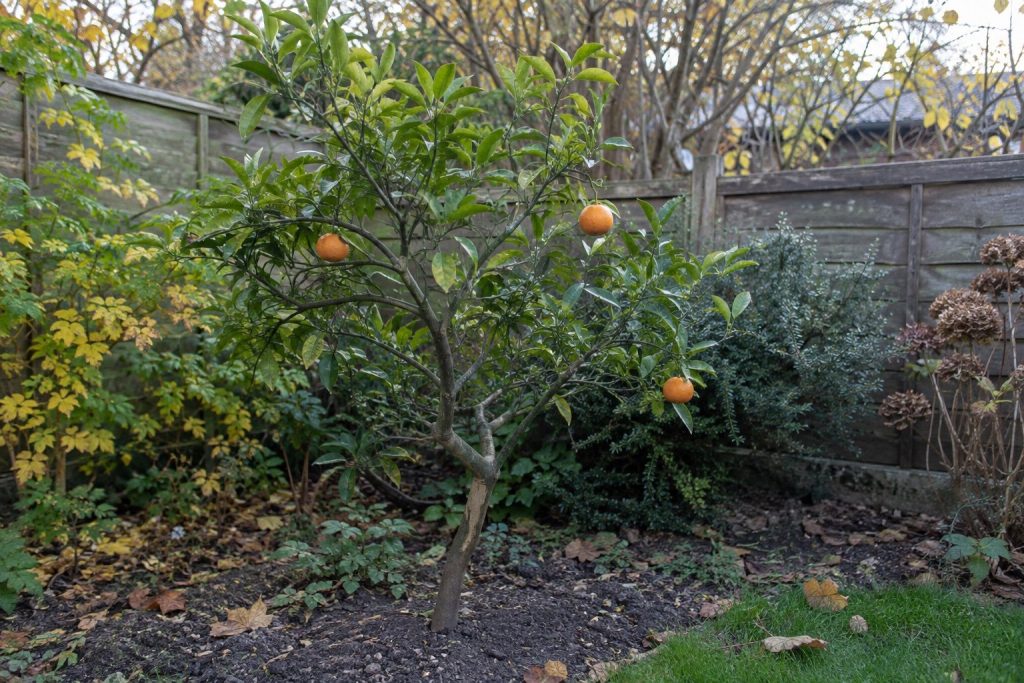
A small citrus tree bearing orange fruit beside garden beds

Prague Citsuma

Prague citsuma (Citrus unshiu + Poncirus) is an emblematic example of a Satsuma × Poncirus hybrid developed in Central Europe in the 20th century at the Prague institute. Its tree hardiness reaches 5°F (−15°C); Biggio and Londeix classify it in USDA zone 8a, and Anjou Citrus also considers growing it in zones 7 and 6, often with winter protection. The vigorous tree reaches 10 to 13 ft (3 to 4 m) with an upright, semi-thorny habit and foliage with double leaflets, sometimes twisted (a Poncirus inheritance), which makes it a remarkable landscape specimen, along with fragrant white spring flowers. Its small orange fruit, 2 to 3.5 oz (60 to 100 g), has skin that is easy to peel and ripens from December to February according to the Vessières catalog; the flesh is sweet and fragrant when cooked, less interesting raw because of residual bitter notes from the Poncirus. Excellent as compote, candied, or in marmalade. Graft onto Poncirus trifoliata, plant against a south-facing wall, in well-drained soil.

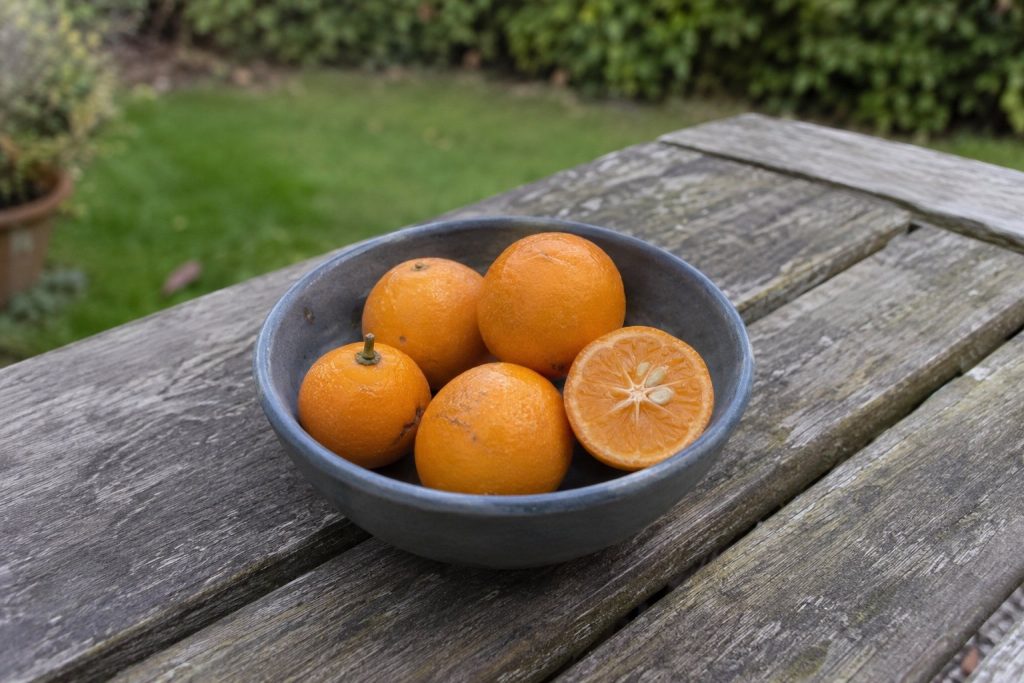
Whole and halved orange citrus fruit in a bowl on a garden table

Glen Citrange

Glen citrange (Citrus sinensis × Poncirus) is one of the historic citranges of the American USDA program, a hybrid of sweet orange and Poncirus trifoliata. Its tree hardiness reaches 10°F (−12°C), making it suitable for in-ground growing in USDA zone 8a. The vigorous tree reaches 10 to 16 ft (3 to 5 m) with an upright, semi-thorny habit, semi-evergreen trifoliate foliage inherited from Poncirus, and white spring flowers. Its yellow-orange fruit, medium-sized at 3.5 to 7 oz (100 to 200 g) and thick-skinned, ripens in winter and yields a markedly sour juice with a sweet-orange fragrance, acceptable for juice, marmalade, or as a cocktail base. A few seeds. Glen belongs to the lineage of citranges used both as a supplementary citrus and as a rootstock in regions with continental winters. Graft onto pure Poncirus trifoliata.

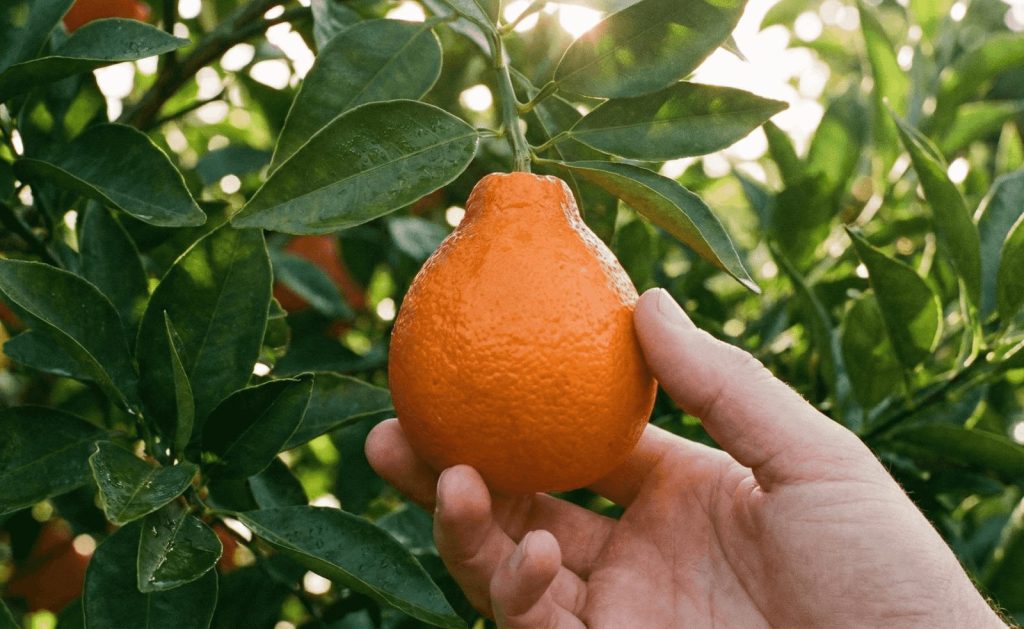
A hand holding a pointed orange citrus fruit beside foliage

Dekopon (Shiranui)

Dekopon Shiranui (Citrus × shiranui), also called Sumo Citrus, is a Japanese hybrid between a Kiyomi mandarin and a Ponkan mandarin, created in 1972 and popularized since for its large, sweet fruit. Its hardiness reaches 12°F (−11°C) on the tree, making it suitable for in-ground growing in USDA zones 8a and 8b. The vigorous tree reaches 10 to 13 ft (3 to 4 m) with an upright habit, evergreen foliage, and fragrant white flowers. Its very large, bright orange fruit, generally 7.1 to 10.6 oz (200 to 300 g), sometimes up to 14.1 oz (400 g), recognizable by their characteristic bump at the top (the ‘deko’), with thick, easy-to-peel skin, ripen from November to early spring depending on the climate and management, with typical maturity in February-March in Japan, and offer juicy, exceptionally sweet, low-acid, seedless flesh. A premium variety considered one of the best mandarins in the world. Graft onto Poncirus trifoliata, plant against a south wall, generous mulch in winter.

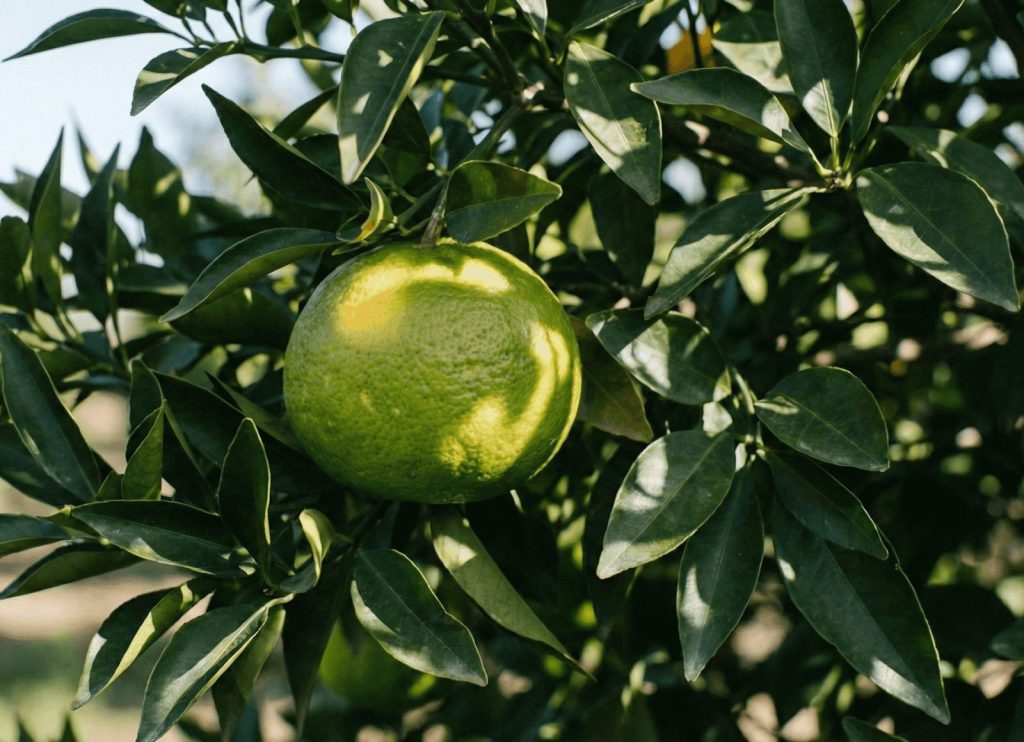
Green citrus fruit among dark green leaves

Keraji Mandarin

Keraji mandarin (Citrus reticulata ‘Keraji’) is an exceptionally hardy Japanese mandarin, withstanding 10°F (−12°C) on the tree. Native to the Okinawa archipelago and the island of Kikai, it was traditionally grown in coastal villages for centuries before being rediscovered by modern breeders. The compact tree reaches 7 to 10 ft (2 to 3 m) with a rounded habit and aromatic evergreen foliage. Its yellow-orange, flattened-round, small fruit, 1 to 2 in (3 to 5 cm), ripen in winter and have very easy-to-peel thin skin and juicy flesh with a taste balanced between sweetness and acidity, with subtle floral notes. Fragrant, with few or no seeds, it is eaten fresh for dessert or in salads. Graft onto Poncirus trifoliata to reach maximum hardiness. A rare and precious mandarin for USDA zone 7b/8a gardens.

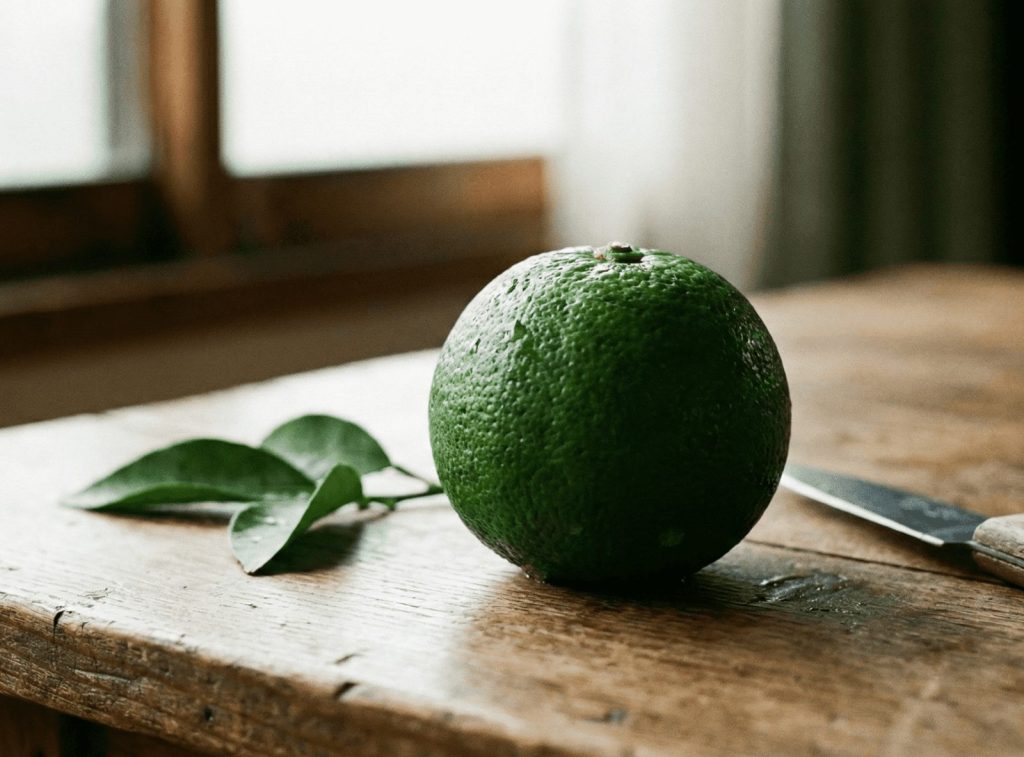
A dark green citrus fruit on a wooden table

Oishi Sudachi

Oishi sudachi (Citrus sudachi ‘Oishi’) is a hardy Japanese selection of sudachi, a traditional citrus of Tokushima Prefecture grown for more than a thousand years. Its hardiness reaches 10°F (−12°C) on the tree, making it suitable for in-ground growing in USDA zones 7b and 8a, among the hardiest edible Japanese citrus. The tree reaches 7 to 13 ft (2 to 4 m) with a rounded habit, aromatic evergreen foliage, and fragrant white flowers. Its flattened-round fruit, bright green (harvested green) or golden yellow (at full ripeness), small, 1.6 to 2 in (4 to 5 cm), with thin skin, are harvested from October to January according to the Vessières catalog, green or at the start of yellowing, and concentrate a very sour, fragrant juice with notes of lime and yuzu, without bitterness. Essential in Japanese cooking (fish, mushrooms, soba, sauces). A few seeds. Graft onto Poncirus trifoliata, plant against a south wall.

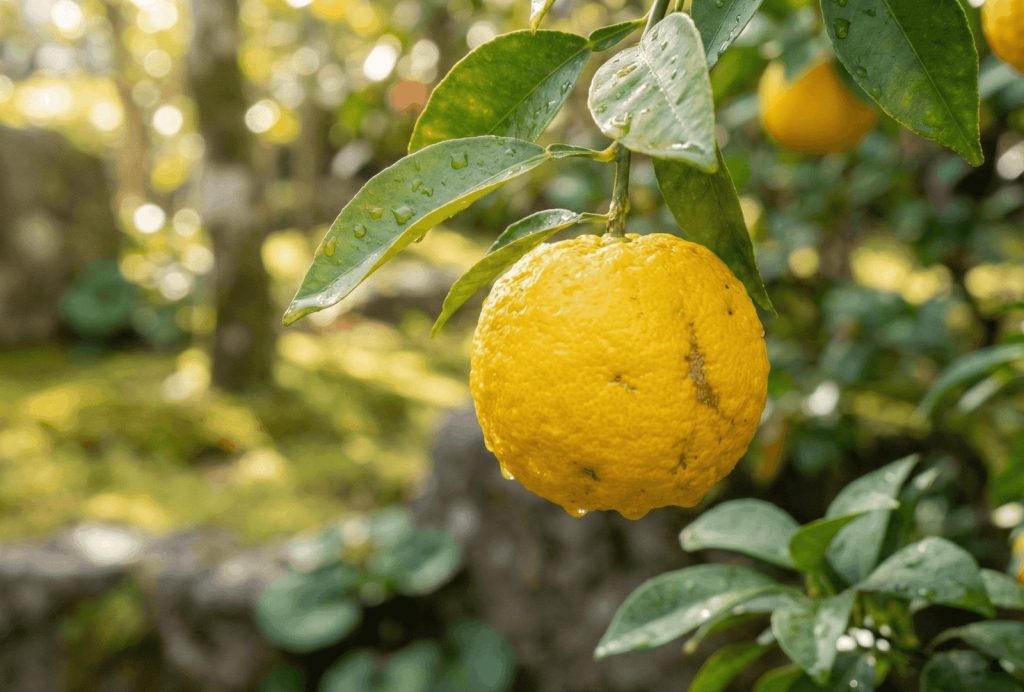
A rough-skinned yellow citrus fruit hanging among leaves

Hana Yuzu

Hana yuzu (Citrus hanayu) is a Japanese variant of the yuzu selected for its abundant, strongly fragrant bloom, as important as its fruit in Japanese tradition. Very hardy, it withstands 5°F (−15°C) on the tree, which makes it one of the yuzus best suited to USDA zone 7b and 8a gardens. The tree reaches 7 to 10 ft (2 to 3 m), with a compact rounded habit and aromatic evergreen foliage. Its very fragrant white flowers appear abundantly in spring. The yellow fruit, smaller than those of the classic yuzu, ripen in October-November with a fragrant sour juice. The flowers are traditionally used in infusions, in Japanese perfumery, and as an aromatic garnish. A tree with a dual flavor and ornamental purpose, ideal near a terrace or a window. Graft onto Poncirus trifoliata, plant against a south-southwest-facing wall.

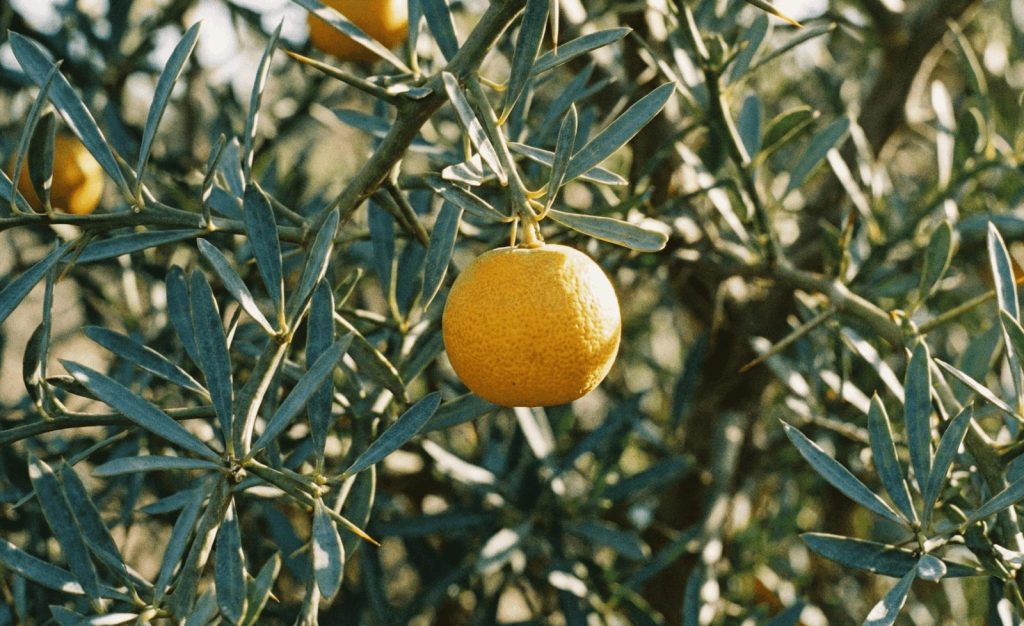
Yellow citrus fruit among narrow grey-green leaves

Eremorange

Eremorange (Citrus glauca × Citrus sinensis) is a remarkable hybrid between the Australian desert lime (Eremocitrus glauca) and the sweet orange, created in Australia to combine cold hardiness and drought tolerance. Its exceptional hardiness reaches 5°F (−15°C) on the tree, classed in USDA zone 8a by Biggio and Londeix as well as G. Roques; Mon Jardin Extraordinaire offers its selection grafted onto FA5 in zone 7, which remains to be verified for the clone grown. The tree reaches 7 to 13 ft (2 to 4 m) with a spreading habit, almost exotic silvery foliage evoking an olive tree, and fragrant white flowers. Its small, light orange fruit, with thin skin, ripen in fall and winter with juicy flesh and an original, slightly tart taste, blending orange and the lemony notes of the desert parent. Excellent in blended juice or in cooking for its unique notes. Very ornamental, particularly well suited to Mediterranean-continental gardens. Graft onto Poncirus trifoliata, perfectly drained soil, tolerates summer drought exceptionally well.

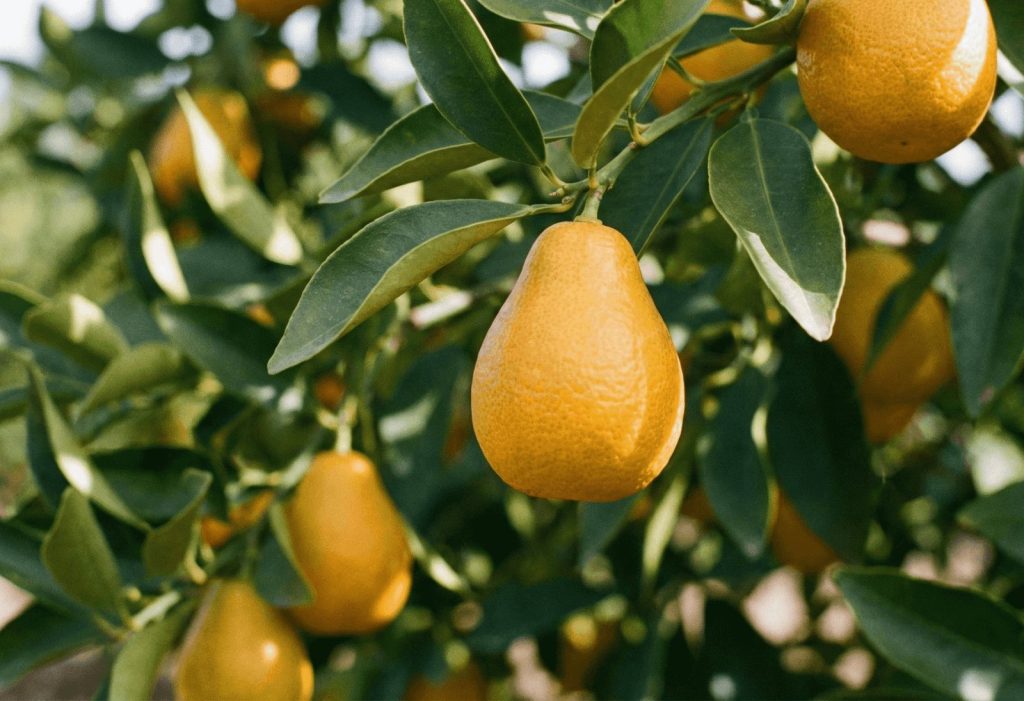
Pear-shaped orange citrus fruit hanging among leaves

Thomasville Citrangequat

Thomasville citrangequat (Citrus × georgiana) is an exceptional triple hybrid combining kumquat, orange, and Poncirus trifoliata, selected in Georgia in the United States. Its hardiness reaches 7°F (−14°C) on the tree, making it suitable for in-ground growing in USDA zones 7b and 8a, among the hardiest citrus. The tree generally reaches 7 to 10 ft (2 to 3 m), sometimes up to 13 ft (4 m) depending on catalogs and training, with a rounded thorny habit, semi-evergreen foliage, and fragrant white flowers. Its small golden-orange fruit, 1.6 to 2 in (4 to 5 cm), with thin skin, ripen in fall and winter and concentrate a very fragrant sour juice with intense zest, excellent candied, in liqueur, or in marmalade. Its skin is edible like that of kumquats. The tree is very ornamental and suits in-ground growing as well as a large container on a terrace. Graft onto Poncirus trifoliata to maximize hardiness.

Scroll to Top