Variety profile

Glen Citrange

(Citrus sinensis x Poncirus)

Documented by Léo — grown in the ground, USDA zone 8b

Glen citrange (Citrus sinensis × Poncirus) is one of the historic citranges of the American USDA program, a hybrid of sweet orange and Poncirus trifoliata. Its tree hardiness reaches 10°F (−12°C), making it suitable for in-ground growing in USDA zone 8a. The vigorous tree reaches 10 to 16 ft (3 to 5 m) with an upright, semi-thorny habit, semi-evergreen trifoliate foliage inherited from Poncirus, and white spring flowers. Its yellow-orange fruit, medium-sized at 3.5 to 7 oz (100 to 200 g) and thick-skinned, ripens in winter and yields a markedly sour juice with a sweet-orange fragrance, acceptable for juice, marmalade, or as a cocktail base. A few seeds. Glen belongs to the lineage of citranges used both as a supplementary citrus and as a rootstock in regions with continental winters. Graft onto pure Poncirus trifoliata.

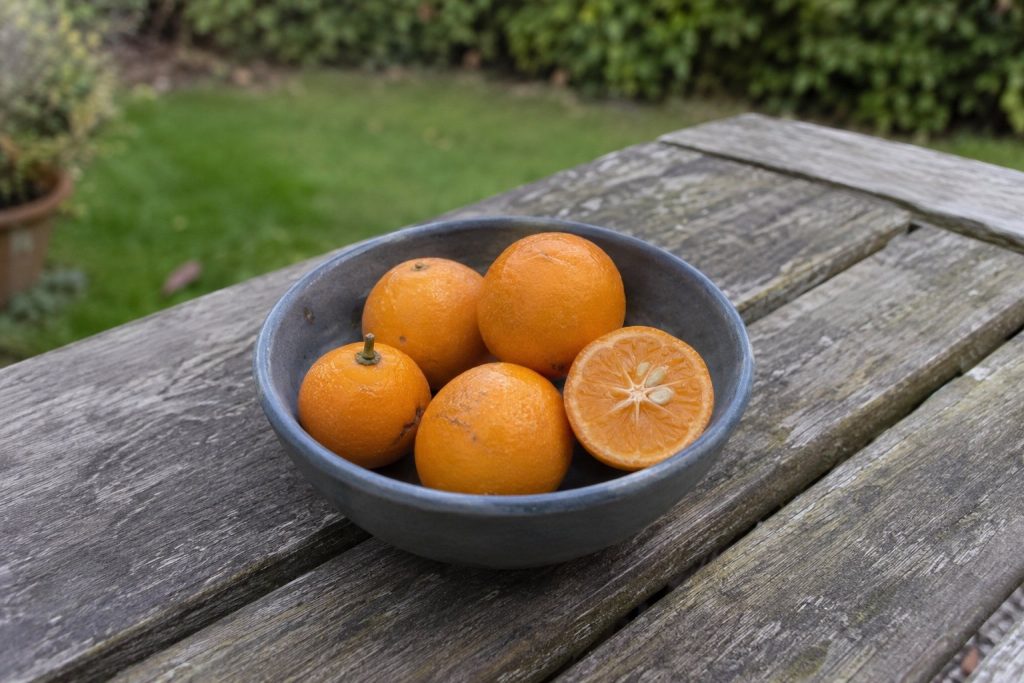
Whole and halved orange citrus fruit in a bowl on a garden table
AI-generated illustration. It does not authenticate cultivar identity or cold tolerance.
Cold hardiness 10°F (−12°C)

Identity

OriginUnited States
Genetic originIntergeneric hybrid
USDA zone
Cold hardiness10°F (−12°C)
Fruit cold hardiness25°F (−4°C)
GrowthVigorous
Height13 ft (4 m)
HarvestNovember, December
SeedsModerate
FlavorsSour, Sharp acidity, Tart

History & Description

Origin

Originating in Australia, Glen citrange is a rare hybrid of sweet orange and Poncirus trifoliata. Unlike most citranges, which are inedible, the Glen variety was selected for its unique flavor qualities.

Tree description

The tree is highly ornamental and extremely robust, able to withstand temperatures close to 10°F (−12°C). It may have deciduous or semi-evergreen trifoliate leaves depending on the climate.

Fruit quality

It produces small round fruit that look like little oranges or large kumquats. The skin is smooth and the flesh is orange, juicy but tart, without the unpleasant bitterness (poncirin) of other citranges.

Flavor and ornamental interest

It is used as a hardy substitute for lemon or bitter orange in cooking. Its ornamental value is strong thanks to its cold hardiness and its abundant winter fruiting.
Back to the collection

Updated:

"Growing rare citrus means accepting that nature has the last word, while whispering in its ear how to survive the winter."

Scroll to Top