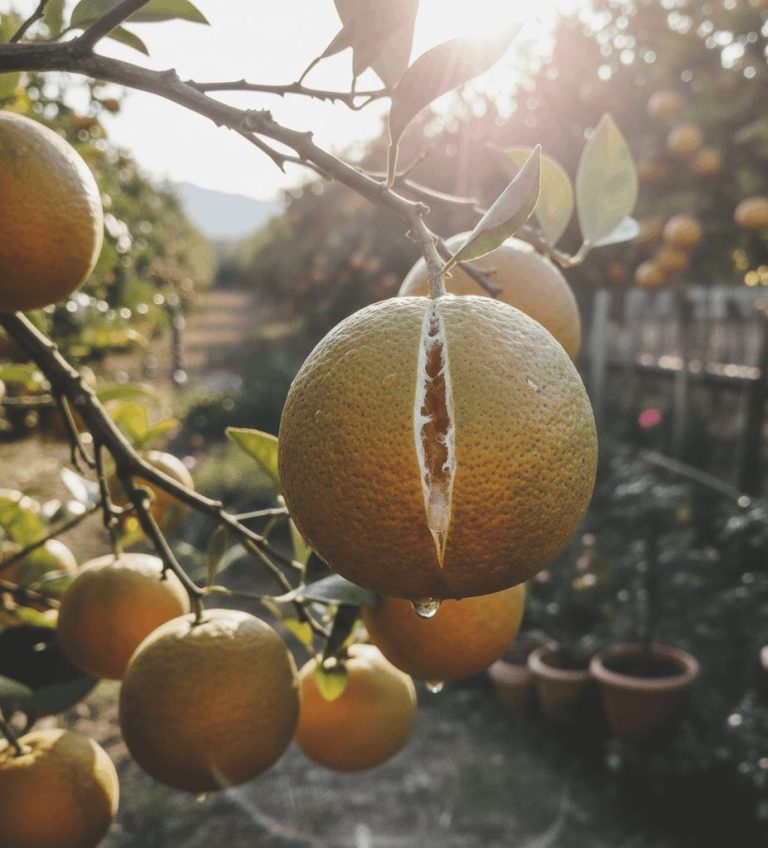
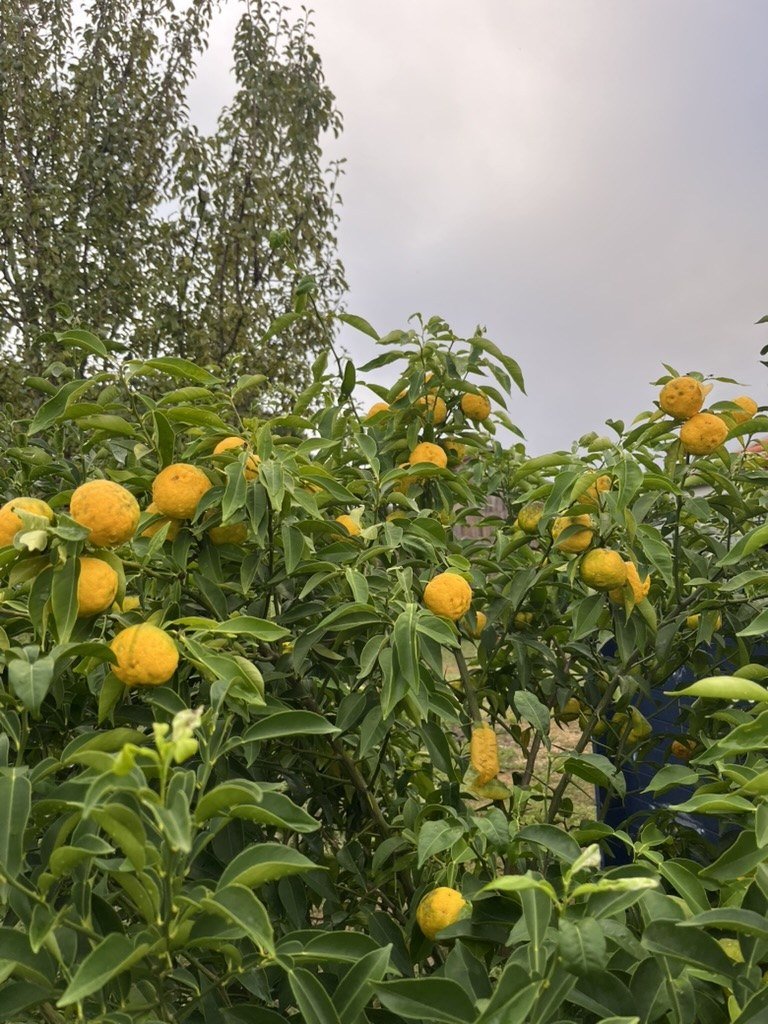
The bitter orange tree is the sour orange tree, generally named Citrus × aurantium. Its fruit, the bitter orange, is turned into marmalade and aromatic products; its flowers provide neroli. A historic Mediterranean citrus, it also long served as a rootstock, until tristeza upended its use. INRAE and Cirad, presentation of bitter oranges.
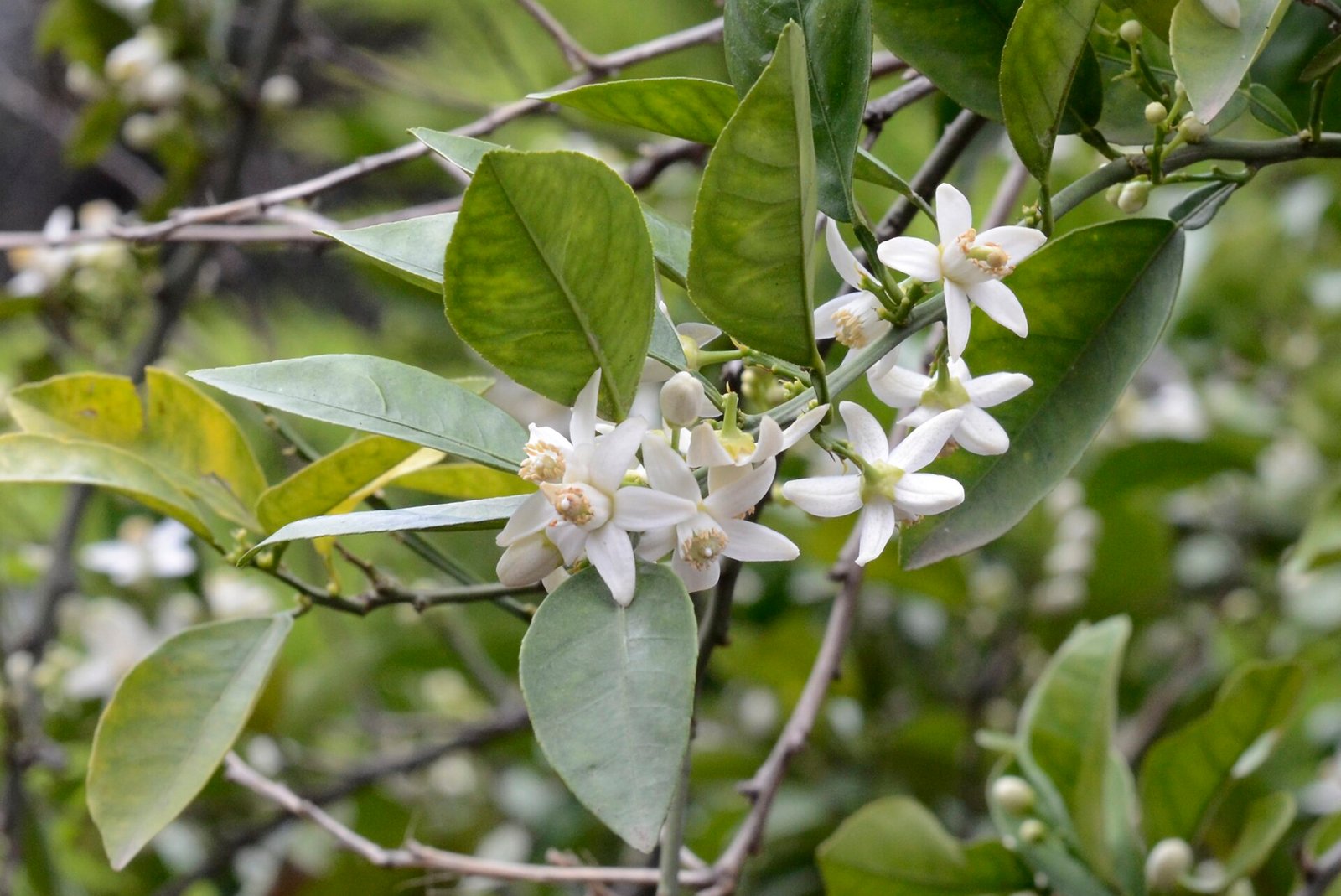
All it takes is walking past a bitter orange tree in bloom to understand why this tree has endured for centuries. The fragrance almost arrives before the silhouette. Then come the evergreen leaves, the luminous oranges, and that surprise at tasting: a bitterness that calls for the kitchen rather than the fruit bowl.
Its history brings together ornamental gardens, flower harvests, and scientific discoveries. It also tells an agricultural paradox: a tree adopted to cope with a soilborne disease became, in certain graft combinations, the weak point of immense orchards. To discover the trees featured in the encyclopedia, start with the profiles of the bitter orange family.
What is a bitter orange tree?
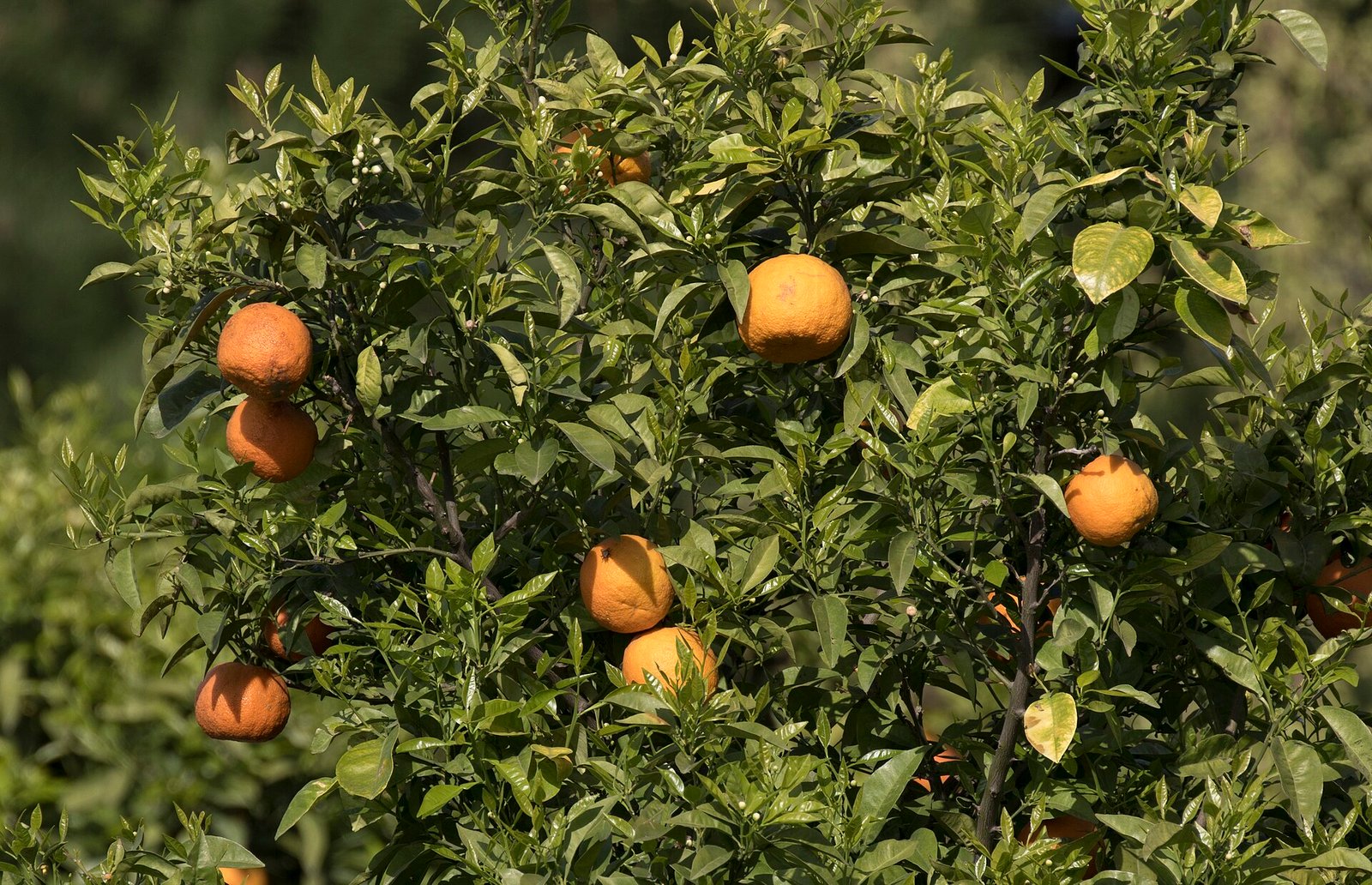
The word bigaradier designates the tree; bigarade designates its fruit. You also meet the names sour orange tree, bitter orange, and Seville orange. That last name does not always correspond to a single variety: at Riverside, the University of California collection specifies that it can be used as a synonym for bitter orange. UC Riverside, Seville sour orange.
Genetically, the bitter orange studied under the name Seville comes from a direct cross between a pummelo, Citrus maxima, and a wild mandarin, Citrus reticulata. The pummelo here is the large ancestral Asian citrus, distinct from the grapefruit sold in supermarkets. The sweet orange shares these two major ancestries, but its genetic history is more complex. A bitter orange is therefore not simply a sweet orange that ripened badly. Wu et al., Nature Biotechnology, 2014.
Botanical names vary with classifications. Citrus aurantium, Citrus × aurantium, and Citrus × aurantium var. aurantium may appear for the bitter orange. The × sign recalls a hybrid origin; INRAE’s recent classification uses a broader Citrus × aurantium grouping, in which the bitter orange and the sweet orange are distinguished. When buying a plant, the cultivar name and its provenance are therefore as useful as the Latin name. INRAE, citrus classifications.
The common type forms an evergreen tree, often thorny, with fragrant white flowers. The botanical descriptions gathered by Kew mention trees that can reach 33 ft (10 m); some compact selections develop quite differently. This difference explains why two plants sold as “bitter orange trees” can occupy very different places in the garden. Kew, Plants of the World Online.
Why is the bitter orange tree a historic citrus?
From Asia to the medieval Mediterranean
The bitter orange tree has an Asian origin and an ancient Mediterranean history. In its summary on citrus, INRAE places the arrival of the bitter orange between the 9th and 11th centuries, well before the wide spread of the sweet orange. Its collection booklet mentions an earlier introduction, in the 8th century, by the Arabs: these chronologies invite us to remember a gradual medieval spread rather than a single year of introduction. INRAE, history and genetics, INRAE and Cirad booklet, page on bitter oranges.
The name Seville orange preserves the trace of this Mediterranean anchoring. Today it evokes an urban landscape as much as a culinary raw material. For the contemporary reader, the chronological distinction is valuable: old mentions of “oranges” are not automatically to be read as references to the sweet oranges we squeeze at breakfast.
A tree of orangeries and collection gardens
The bitter orange tree also belongs to the history of French gardens. The Château de Versailles presents it among its remarkable trees and recalls the construction, beginning in 1684, of Louis XIV’s new Orangerie by Jules Hardouin-Mansart. The potted trees, brought out in the fine season, combined foliage, fruit color, and the fragrance of the flowers in the staging of the garden. Château de Versailles, Arbres admirables, pages on the bitter orange tree.
This container growing deserves to be seen as a craft as much as a decoration. It made it possible to keep a precious citrus and move it with the seasons. An orangery was therefore a horticultural tool: the presence of old trees on an estate does not, by itself, show that they all spent every winter outdoors.
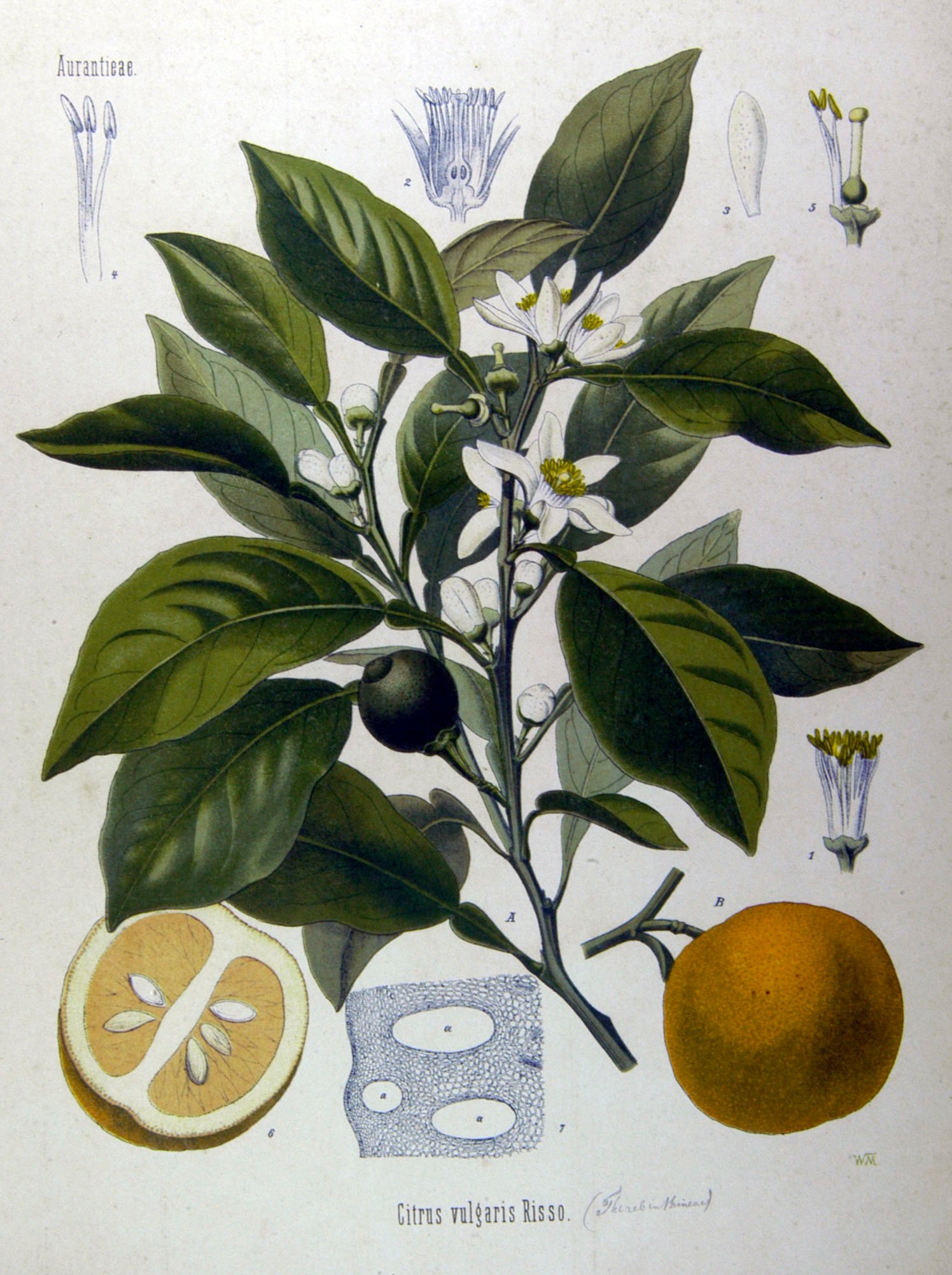
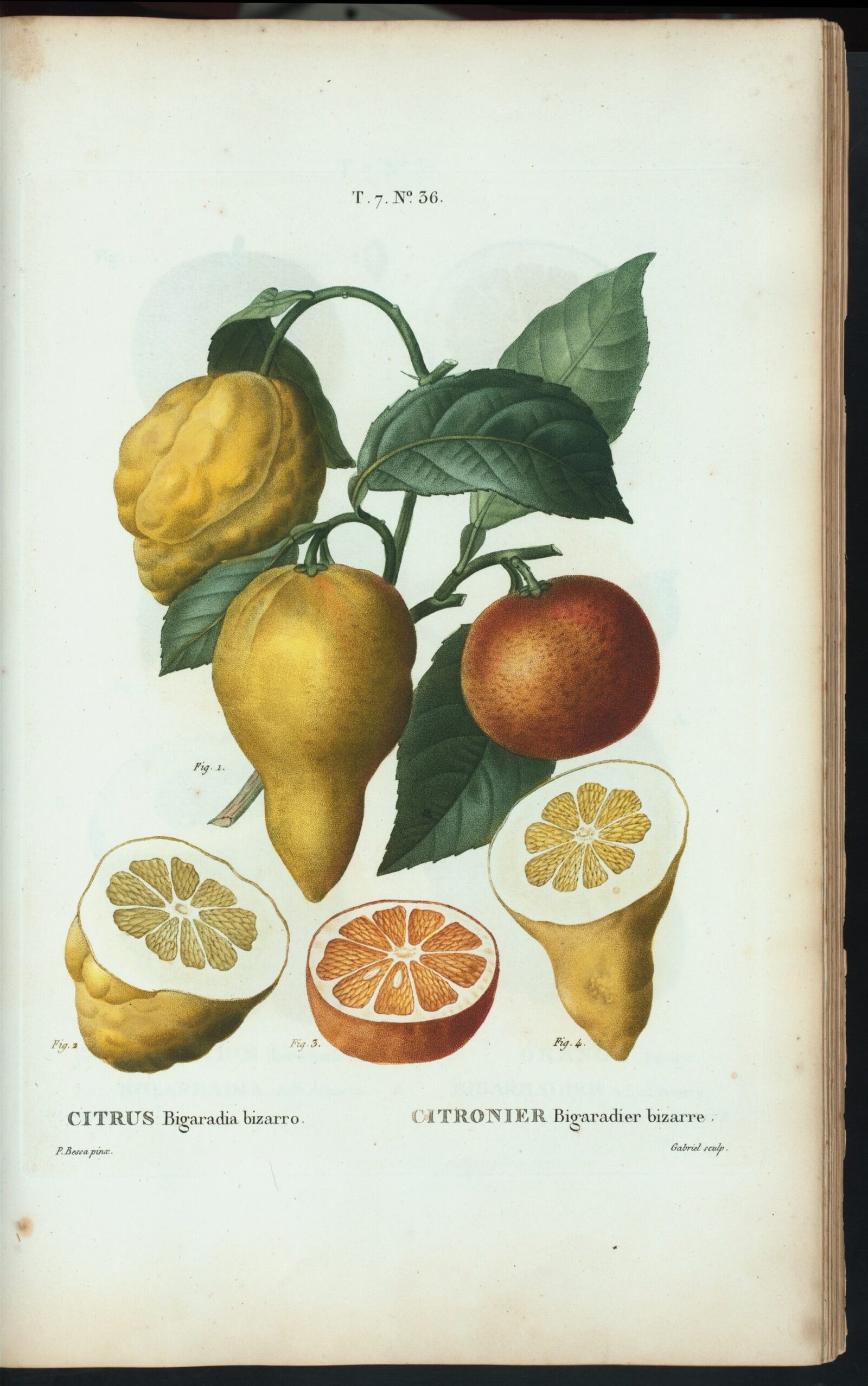
Collectors’ interest did not stop at the ordinary fruit. Horned, variegated, or singular forms were preserved and depicted. Old plates show how much observing differences was already part of the pleasure of growing citrus. Some names have nevertheless changed meaning through exchanges: the historical image of a “bizarre bitter orange tree” is not enough to identify a modern plant.
Orange blossom as living heritage
On the Côte d’Azur, the history continues in the harvests. In Vallauris Golfe-Juan, the Nérolium cooperative describes a bitter orange cultivation geared toward picking the flowers in spring and distilling the young twigs for petitgrain. Here the tree supports an agricultural activity and handed-down skills, beyond its ornamental interest. Nérolium, the bitter orange tree and its calendar.
La Coopération Agricole also documents the processing of flowers brought in by the growers and the production of neroli for perfumery. These industry testimonies explain the tree’s value better than a simple “old citrus” label: its fragrance still has uses, a season, and harvesting work. La Coopération Agricole, the heritage of orange blossom.
What do we do with bitter oranges and their flowers?
An orange for processing
The classic bitter orange is mainly prized for marmalade. Riverside describes Seville fruit as bitter, acidic, and rich in seeds, and recalls this traditional use. Choosing an orange for eating and an orange for marmalade are two distinct undertakings. UC Riverside, the Seville orange.
Uses are not limited to jam. The North Carolina horticultural extension also mentions liqueurs, notably triple sec. NC State Extension, uses of sour orange. In home cooking, the point is to dose the fragrance and the bitterness: starting with a small amount in a preparation lets you decide on the balance you want. To continue this exploration, see the citrus cooking section.
To use the peels, favor fruit meant for eating, whose growing conditions you know. A street tree or a decorative citrus is not automatically a harvest suited to this use.
Neroli, orange flower water, and petitgrain
These names do not designate the same product. Neroli is the essential oil from the flowers; orange flower water is the hydrosol obtained when they are distilled. Bitter orange petitgrain comes from distilling the leaves and young twigs. The Nérolium cooperative distinguishes these products in its presentation of the tree. Nérolium, the products of the bitter orange tree.
This diversity gives a good key for reading varieties: a tree selected for its blooming was not necessarily selected for the flavor quality of its pulp. The name “bouquetier” therefore draws attention to the flowers. The wish to perfume a garden and the wish to harvest oranges for the kitchen can lead to different choices.
Which bitter orange varieties should you know?
Bitter orange trees are not a single model. The names group together clones, horticultural forms, and sometimes related citrus. Here are the most useful differences for understanding a label or guiding a collection.
| Type or selection | Main interest | Point to check |
|---|---|---|
| Common bitter orange tree, Seville type | Marmalade and the classic bitter orange | “Seville” can designate several selections |
| Bouquetier de Nice | Flowering and perfumery | Identity of the selection and shape of the fruit |
| Bouquet de Fleurs | Low habit, dense foliage, and ornament | To be told apart from Bouquetier de Nice |
| Chinotto | Small leaves, compact habit, and fruit for processing | Several forms exist |
| Corniculata | Fruit bearing horn-shaped outgrowths | Traceability of the clone |
| Variegated or striped forms | Decorative fruit and sometimes leaves | Variegation varies with the material |
| Historic Bizzarria | Botanical curiosity linked to a graft chimera | Stripes alone do not prove this identity |
The common bitter orange tree and Seville oranges
The common type remains the reference for understanding the bitter orange. Riverside notably keeps a “Standard sour orange,” selected as a typical form in its trials. This collection material should be distinguished from a general commercial designation: the word “common” does not by itself document the origin of a plant. UC Riverside, Standard sour orange.
When buying, simply ask whether the nurseryman is selling an identified selection or a seedling of known provenance. This detail lets you tie your tree to the descriptions consulted, instead of expecting the same fruit or the same behavior from all bitter orange trees.
The Bouquetier de Nice
The Bouquetier de Nice belongs to the group of bitter orange trees grown for their flowers. Riverside describes it as vigorous and upright, with double flowers and a flattened fruit that can contain a secondary fruit. The collection also flags a labeling uncertainty concerning horned fruit observed at its introduction: this is a reason to check the clone, not to add horns to all descriptions. UC Riverside, Bouquetier de Nice.
The INRAE collection catalog distinguishes several entries bearing the name Bouquetier de Nice, including forms with double flowers, flat fruit, and large flowers. These variants explain why an overly general description quickly becomes misleading. See the Bouquetier de Nice Sour Orange profile for the presentation of the material listed on the site. INRAE, 2024–2025 budwood catalog.
Bouquet de Fleurs
Bouquet de Fleurs is another selection, kept separately at Riverside. Its low, spreading habit, dense foliage, and small thornless twigs explain its interest as an ornamental and in hedges. Its fruit remains bitter and acidic. The similarity of the names therefore does not justify merging it with Bouquetier de Nice. UC Riverside, Bouquet de Fleurs.
The chinotto, the myrtle-leaved orange
The chinotto, often named Citrus myrtifolia, appeals through its slow growth, compact habit, and small, tightly packed leaves. The Riverside collection describes thornless twigs and small fruit that persist for a long time on the tree. It distinguishes several forms: the number of seeds or the look of the foliage may vary. UC Riverside, Chinotto CRC 3857.
In Savona, Liguria, the chinotto has a history of processing and candying that the Slow Food preservation project seeks to maintain. Its interest therefore lies not only in its size: it combines a miniature look with a regional culinary heritage. Fondazione Slow Food, Chinotto di Savona.
Corniculata, variegated forms, and striped fruit
The name Corniculata refers to bitter oranges bearing horn-like outgrowths. The INRAE collection illustrates this form in its booklet. These differences in silhouette are what make collections interesting; they do not demonstrate superior cold hardiness. INRAE and Cirad, diversity of bitter oranges.
Variegation calls for the same care. For its variegated bitter orange tree, Riverside reports observations that vary from year to year, with expression sometimes more visible on the fruit than on the leaves. A spectacular photograph therefore does not predict the appearance of every branch, every fruit, or every clone. UC Riverside, Variegated sour orange.
To continue discovering the forms present in the encyclopedia, see the Vatican Bitter Orange. The precise identity of the material remains the right starting point for a comparison.
Bizzarria and Striata: two notions to distinguish
The historic Bizzarria of Florence is described as a graft chimera combining tissues of a citron tree and a bitter orange tree. The Todolí Foundation places its reported discovery in 1644 and Pietro Nati’s publication in 1674. Its plants bear fruit evoking one or the other, or combining their traits. Fundación Todolí Citrus, Bizarro.
A graft chimera combines tissues of different origins; it is distinct from a hybrid resulting from fertilization. A striped fruit is not enough to recognize the Bizzarria. The profile currently titled Striatta ‘Bizzaria’ Bitter Orange lets you find this name in the site’s catalog; the similarity of the names must remain a question of identifying the plant.
Related citrus, without confusing them
The Nansho Daidai, kept under the name Citrus taiwanica, is among the bitter oranges and related citrus at Riverside. The collection describes it as a vigorous, very thorny tree with yellowish, acidic fruit. It deserves its own description. UC Riverside, Nansho Daidai, Citrus Taiwanica (Nansho Daidai) profile.
You will also find in the encyclopedia the Dolce del Gargano Bitter Orange and the Australian Bitter Orange. These names deserve to be examined profile by profile: an evocative name guarantees neither a mild taste nor a genetic origin.
Why was the bitter orange tree used so much as a rootstock?
The bitter orange tree earned its place through its agronomic qualities and its good tolerance of collar rot, at a time when Phytophthora diseases were ravaging citrus. The review by Moreno et al. recalls an epidemic that started in the Azores in 1836, then the development of grafting onto bitter orange in the Mediterranean and the Americas. Moreno et al., Molecular Plant Pathology, 2008.
A rootstock is the root system and lower trunk; the scion provides the cultivated variety above. A sweet orange could thus benefit from the bitter orange’s roots while keeping its own fruit. The qualities of such a tree depend on both partners and their combination.
The University of Florida’s selection guide notably stresses the quality of fruit obtained on bitter orange and its adaptation to certain alkaline, saline, or heavy soils. It also qualifies its tolerance to Phytophthora: good performance of the collar should not be equated with immunity of all the roots. These Florida assessments are to be read in their agronomic context. UF/IFAS, rootstock guide, notes for interpreting the guide.
This is what makes the next turning point so interesting: the bitter orange tree did not lose its soil qualities or its fruit quality when tristeza spread. A new health constraint changed the balance of its advantages. To compare selection criteria, also see the FA5 rootstock guide.
Tristeza, the disease that changed the bitter orange tree’s fate
A virus that reveals the fragility of certain grafts
Citrus tristeza is linked to the Citrus tristeza virus, or CTV. In classic decline, certain strains damage the conducting tissues near the graft of a sweet orange tree on bitter orange. The transfer of sugars to the roots is disrupted; the roots decline and the tree can die back quickly. UC IPM, Tristeza Disease Complex.
This distinction is essential: speaking of a “bitter orange disease” without specifying the scion–rootstock combination hides the mechanism. A bitter orange tree grown for its own fruit and a sweet orange tree grafted onto bitter orange do not represent the same health situation. This does not mean that a tree on its own roots is protected from all the effects of CTV.
Researchers notably distinguish decline on certain grafts, the wood deformations or grooves called stem pitting, and the yellowing of young plants called seedling yellows. The latter can affect young bitter orange trees. Sensitivity therefore depends on the host, the viral strain, and the syndrome in question. Dawson et al., interactions between CTV and its hosts, 2013.
Losses that forced orchards to be rebuilt
The 20th-century epidemics revealed this vulnerability on a large scale. Costa and Müller describe the South American crisis and the decisive finding: the losses mainly involved combinations grafted on bitter orange, while other rootstocks made it possible to avoid this decline. Replacing the root support became a central response. Costa and Müller, Plant Disease, 1980.
The review by Moreno et al. reports nearly 100 million trees lost, a historical tally cited in 2008, not updated here. It places major episodes in Argentina in 1930, Brazil in 1937, Spain in 1957, and Italy in 2002. Moreno et al., historical tally.
The consequence went beyond the disappearance of individual trees: growers had to replant and deal with rootstocks that had other qualities and other limits. For a gardener, this history gives a lasting rule of thumb: a good rootstock is chosen according to the soil and the health constraints, with a compatible variety.
Transmission, prevention, and limits of the solutions
CTV spreads through infected plant material during grafting and through aphid vectors. At the garden scale, a plant or scion of uncertain origin can therefore introduce a problem that its outward appearance does not reveal. Visual diagnosis remains insufficient; laboratory tests can look for the virus. UC IPM, transmission and diagnosis.
The 2026–2029 UF/IFAS guide specifies that there is no curative treatment for trees declining because of this disease. Prevention notably relies on healthy material and rootstocks tolerant of decline. Tolerant of this syndrome does not mean immune to all the effects of the virus: some stem pitting affects the scion regardless of the rootstock. UF/IFAS, Tristeza Decline.
Cross protection with mild strains is a matter for specialized programs. The same guide indicates that it is not an established effective method for protecting trees from decline on bitter orange. It is therefore not an experiment to improvise with scions swapped among gardeners. UF/IFAS, limits of cross protection.
Which other diseases and pests should you watch for?
Phytophthora and gummosis
Phytophthora are oomycetes, organisms distinct from true fungi. Depending on the species and conditions, they can affect the collar, the roots, or the fruit. Excess moisture favors their activity. The bitter orange tree’s historical reputation therefore never excuses you from well-drained soil and suitable watering. UC IPM, Phytophthora Root Rot.
Oozing gum, damaged bark, or a yellowing tree are not enough to determine the cause. Diagnostic guides note that several trunk diseases can produce similar signs. Observe the location of the lesions, the condition of the soil, and the tree’s progression before deciding on a treatment. UC IPM, trunk and root diseases.
Psorosis and exocortis
Psorosis is a viral disease transmissible by grafting, known notably in old plantings of orange and grapefruit trees. Scales and bark flaking can appear on the scion; healthy propagation material is a major prevention. UC IPM, Psorosis.
Exocortis is caused by a viroid, a small infectious agent made of RNA. Its symptoms depend strongly on the rootstock, notably in trifoliate orange and some of its hybrids. An old variety can harbor the agent without showing the same damage as another graft combination. Cleaning and disinfecting tools between plants also matters, because the viroid can be transmitted on contaminated tools. UC IPM, Exocortis.
HLB, pests, and yellowing
Huanglongbing, or HLB, is a different disease from tristeza: it is associated with bacteria transmitted by psyllids. Yellowing, leaf drop, or deformed fruit do not by themselves allow it to be recognized with certainty. These problems must be distinguished from a nutrient shortage, root suffocation, or another disease. UC IPM, leaf and twig diseases and disorders.
Ordinary pests remain easier to observe: the RHS notably mentions scale insects, aphids, and mites, particularly under cover. Inspecting the undersides of leaves and the young shoots is a useful first step. For yellowing foliage, continue with the guide to the causes of yellow leaves.
How do you grow a bitter orange tree and reason about its hardiness?
The bitter orange tree can tolerate cold spells, but its reputation does not provide a universal survival temperature. The RHS rates the species H3 for British conditions, meaning coastal and relatively mild areas, with an indicative range of 23 to 34°F (−5 to 1°C). This horticultural category is neither a survival measure for each clone nor a guarantee for your garden. RHS, H3 hardiness.
To decide in the garden, start with your plant: which selection, which rootstock, what age, and what state of growth? Then examine the real spot where it will spend the winter: wind, soil moisture, duration of cold spells, and available protection. Intact fruit, undamaged twigs, and a tree able to regrow are not three identical criteria.
A few practical choices make growing easier:
- Choose a bright, sheltered location. Avoid relying solely on a regional average to assess an exposed yard or a low spot.
- Keep drainage effective. In a pot, water must be able to drain away; in the ground, a basin that stays saturated deserves to be corrected before planting.
- Adapt watering to growth. Check the substrate rather than keeping the same rhythm all year.
- Prepare the pot’s winter quarters. A bright room and suitable protection are prepared before a cold alert; see when to bring a potted citrus indoors.
- Keep the label. Note the variety name and that of the rootstock: this small piece of information will later help you make sense of growing observations.
For containers, the advice on drainage, watering, and the transition between outdoors and indoors matches that of the University of Maryland. The guides on climate and acclimatization, citrus in pots, and protecting citrus from frost complete these reference points.
Which bitter orange tree should you choose for your project?
To make marmalade, look for material identified for this use and taste the fruit when possible. To enjoy the flowers, look into the bouquetiers and their precise selection. For a small collection in pots, consider compact forms like the chinotto, keeping in mind that a small tree also needs suitable winter care. To collect curiosities, favor the traceability of horned, variegated, or chimeric forms over an isolated photograph.
The choice becomes more delicate if the bitter orange tree is to serve as a rootstock. The grafted variety, the soil, the climate, and the health situation must be considered together. The bitter orange tree’s historical decline in many orchards shows why no single advantage is enough to determine a good choice.
Before buying, three questions are useful: what is the exact selection, what is it grafted on, and where does the propagation material come from? To explore the plants in the catalog, see all the bitter orange profiles.
Frequently asked questions about the bitter orange tree
Are the bigaradier and the sour orange tree the same tree?
Yes, in everyday usage. The bigaradier is the sour orange tree and the bigarade is its fruit. The botanical name and above all the cultivar then make it possible to specify which plant is meant. Kew, common names and description.
Can you eat a bitter orange?
The classic bitter orange is mainly a fruit for processing: its bitterness and acidity explain its use in marmalades and liqueurs. Uses vary with the material. The term “bitter” does not mean the fruit is simply a sweet orange that is still green. NC State Extension.
Why is my tree making bitter oranges when it used to make sweet ones?
First check the origin of the branches bearing the fruit. On a tree grafted onto bitter orange, a sucker growing from below the graft belongs to the rootstock. If this sucker takes over, it can produce bitter oranges. A photograph of the fruit alone cannot verify this scenario: examine the graft union and where the branch starts.
Does tristeza kill all bitter orange trees?
No. The historic decline mainly concerns certain varieties grafted on bitter orange, notably the sweet orange. CTV can nevertheless produce other syndromes: the risk depends on the strain and the plant material. Dawson et al., 2013.
Is a variegated bitter orange tree a Bizzarria?
Not necessarily. The historic Bizzarria is a graft chimera; stripes do not prove this identity. Ask for the plant’s provenance. Fundación Todolí Citrus.
When are bitter oranges harvested?
The calendar depends on the selection and the place. At Riverside, the collection indicates January to March for its Seville type, but October to December for its Bouquetier de Nice accession. These are Californian observations, not a calendar to be automatically transposed to France. UC Riverside, Seville, Bouquetier de Nice.
Can you sow a bitter orange and get a collection variety?
Sowing is possible, but it does not certify the identity of a cultivar. The RHS warns that seedlings do not necessarily come true to type. To reproduce a precise selection, look for an identified propagation from healthy material. RHS.
Can it be grown outdoors in a cold region?
The decision depends on the plant and the garden. An announced minimum temperature does not replace examining the length of the freeze, the wind, the moisture, and the rootstock. If you cannot protect the tree in the ground, consider a pot that you can overwinter in good conditions.
The bitter orange tree deserves its place in the garden for several reasons at once: the fragrance, the culinary preparations, the beauty of its forms, and the history it carries. Its health history adds a lesson to this richness: the robustness of a citrus is always understood in a specific situation. Choosing a well-identified variety lets you enjoy this heritage with more accurate expectations.
Sources and further reading
References consulted on October 7, 2026. Observations from foreign collections are tied to their location; historical dates and health tallies keep their reference date.
- INRAE and Cirad, Le petit livre des agrumes du conservatoire de San Giuliano, notably page 10 on bitter oranges.
- INRAE, Les zestes de la recherche, history, genetics, and classification.
- Wu et al., 2014, Nature Biotechnology, genetic origin of oranges.
- Château de Versailles, Arbres admirables, 2020 guide, bitter orange tree and orangery.
- Nérolium, Le bigaradier and La Coopération Agricole, orange blossom heritage, industry testimonies.
- UC Riverside, collection of bitter oranges and related citrus, variety records linked in the text.
- INRAE, 2024–2025 budwood catalog, bouquetier selections.
- Fondazione Slow Food, Chinotto di Savona, Ligurian culinary heritage.
- Fundación Todolí Citrus, Bizarro, Bizzarria and collection observations.
- Moreno et al., 2008, Citrus tristeza virus: a pathogen that changed the course of the citrus industry, historical and pathological review.
- Costa and Müller, 1980, Tristeza Control by Cross Protection, historical observations in Brazil.
- Dawson et al., 2013, Citrus tristeza virus-host interactions, diversity of syndromes.
- UF/IFAS, Tristeza Decline, 2026–2029 guide and rootstock selection guide.
- UC IPM, Tristeza Disease Complex, Phytophthora Root Rot, Psorosis, and Exocortis.
- RHS, Citrus × aurantium, Kew, Plants of the World Online, and NC State Extension, Sour orange, horticultural descriptions.
- University of Maryland Extension, Growing Dwarf Citrus, updated February 2026, container growing.
The photographs in this article are by Zeynel Cebeci, under a CC BY-SA 4.0 license. The two old plates are in the public domain. Sources and licenses appear under each image. These documents do not represent the founder’s garden.