Cold hardiness
18°F (−8°C)
Identity
USDA zone8a
Cold hardiness18°F (−8°C)
HarvestJanuary, February, December
UsesLiqueur, Preserves, Sweet cooking
History & Description
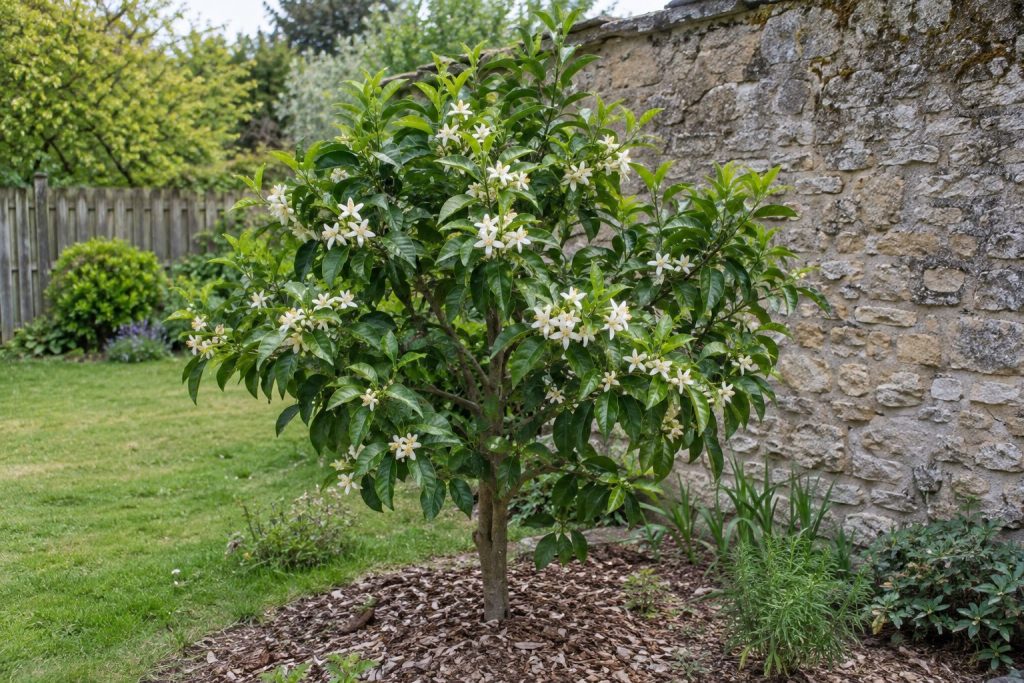
History & DescriptionOriginBouquetier de Nice sour orange is one of the most emblematic bitter orange cultivars of French Mediterranean heritage. Long cultivated in the Nice region and around Grasse, it is the central element of the Provençal perfume tradition, providing the precious neroli. Its genetic origin is part of the thousand-year history of Mediterranean citrus: Citrus aurantium is a natural hybrid between mandarin and pomelo, introduced to Europe by the Arabs. The Bouquetier de Nice variety is distinguished by a partial transformation of the stamens into extra petals, giving particularly spectacular double flowers. It has been listed in the horticultural registers of Nice since the 19th century.Tree descriptionThe tree is vigorous and slender, reaching 13 to 23 ft (4 to 7 m) in the ground, with an upright, thornless habit. Its large, glossy, dark green leaves with winged petioles are evergreen and decorative all year. In March to April, it covers itself in clusters of double white flowers with a bewitching fragrance.The fruitThe fruits are flattened and medium-sized, with bitter, not very juicy flesh rich in essential oils. Not eaten fresh, they are excellent in bitter marmalades and jams. The zest, very aromatic, is appreciated in Mediterranean cooking and pastry. The seeds are numerous.Flavor and ornamental interestBouquetier de Nice is above all a leading ornamental and perfumery tree. Its double flowers produce an exceptional neroli used in perfumery. The fruits provide an incomparable orange blossom water and a bitter marmalade of rare aromatic richness. Its hardiness of 18°F (−8°C) makes it a subject suited to in-ground growing in the south of France.
Back to the collection
Updated: