Juice

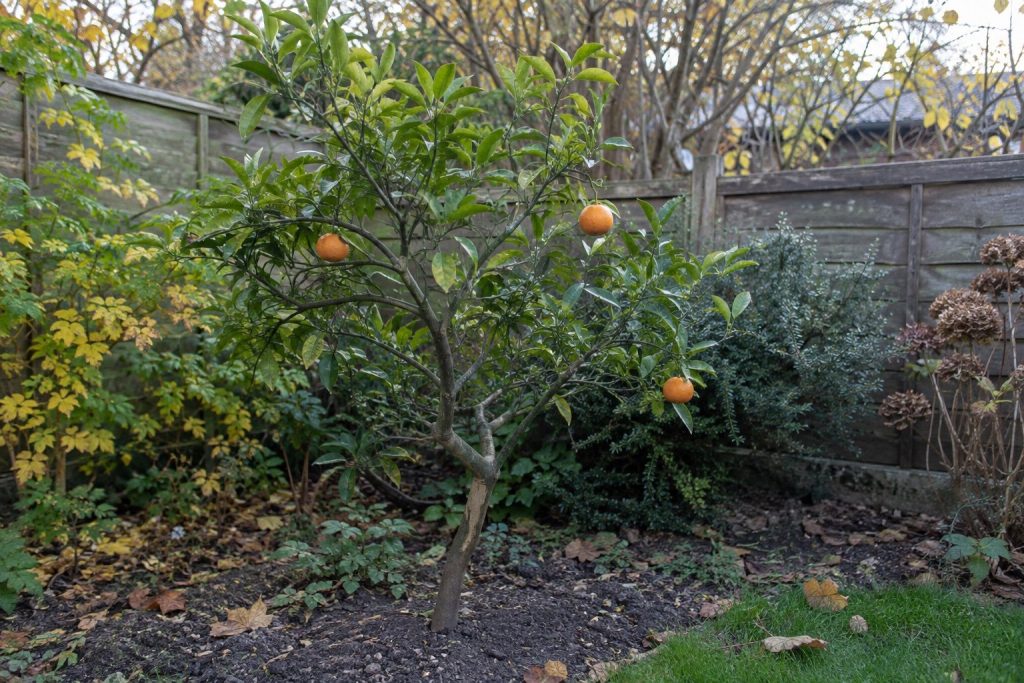
A small citrus tree bearing orange fruit beside garden beds

Prague Citsuma

Prague citsuma (Citrus unshiu + Poncirus) is an emblematic example of a Satsuma × Poncirus hybrid developed in Central Europe in the 20th century at the Prague institute. Its tree hardiness reaches 5°F (−15°C); Biggio and Londeix classify it in USDA zone 8a, and Anjou Citrus also considers growing it in zones 7 and 6, often with winter protection. The vigorous tree reaches 10 to 13 ft (3 to 4 m) with an upright, semi-thorny habit and foliage with double leaflets, sometimes twisted (a Poncirus inheritance), which makes it a remarkable landscape specimen, along with fragrant white spring flowers. Its small orange fruit, 2 to 3.5 oz (60 to 100 g), has skin that is easy to peel and ripens from December to February according to the Vessières catalog; the flesh is sweet and fragrant when cooked, less interesting raw because of residual bitter notes from the Poncirus. Excellent as compote, candied, or in marmalade. Graft onto Poncirus trifoliata, plant against a south-facing wall, in well-drained soil.
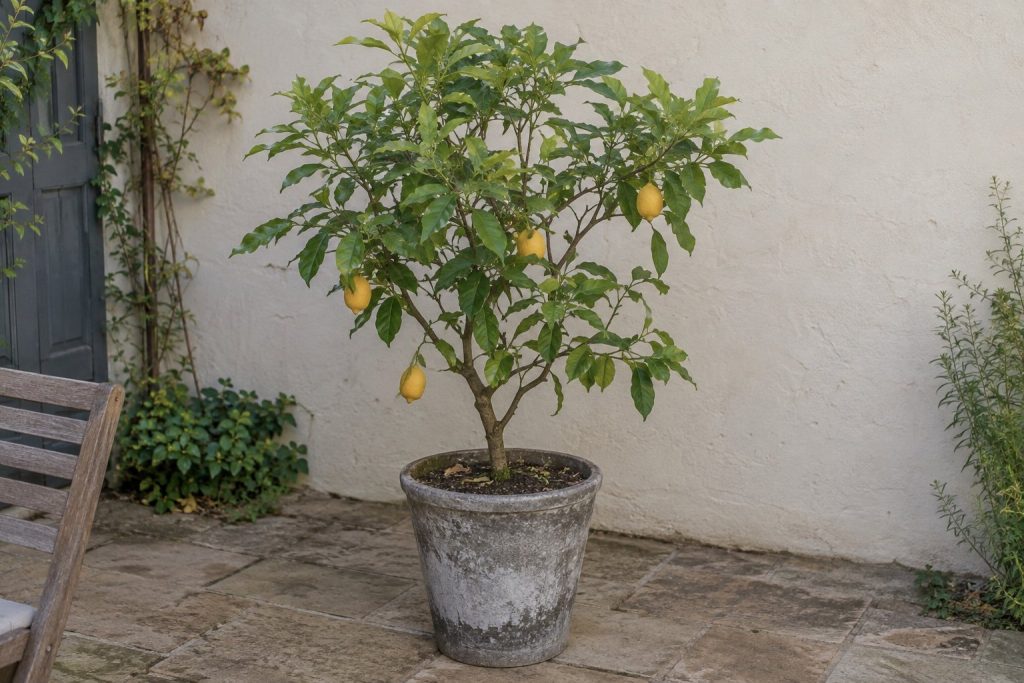
A potted citrus tree bearing yellow fruit beside a wall

Citrus Lemonade

Origin: Originating in New Zealand (discovered in the 1980s), Citrus Lemonade is a natural hybrid, probably a cross between a […]

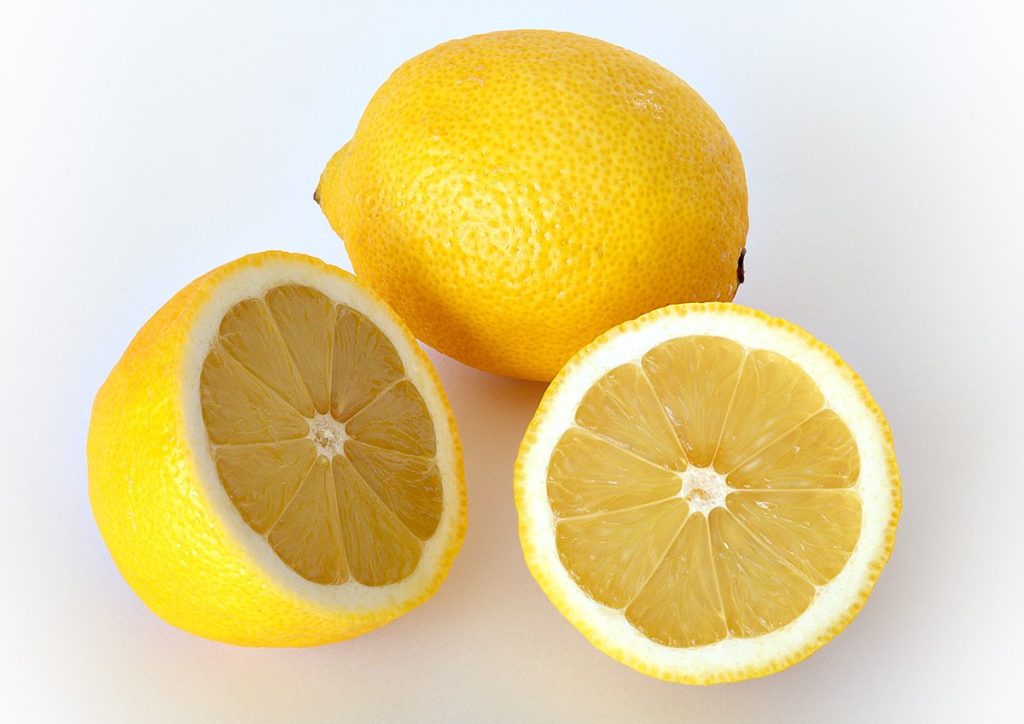
Whole and halved yellow citrus fruit on a pale background

Dioscuria Lemon

Origin: Dioscuria is a lemon cultivar offered by French specialist nurseries, which describe it as an original lemon halfway between […]

Whole and halved orange citrus fruit in a bowl on a garden table

Glen Citrange

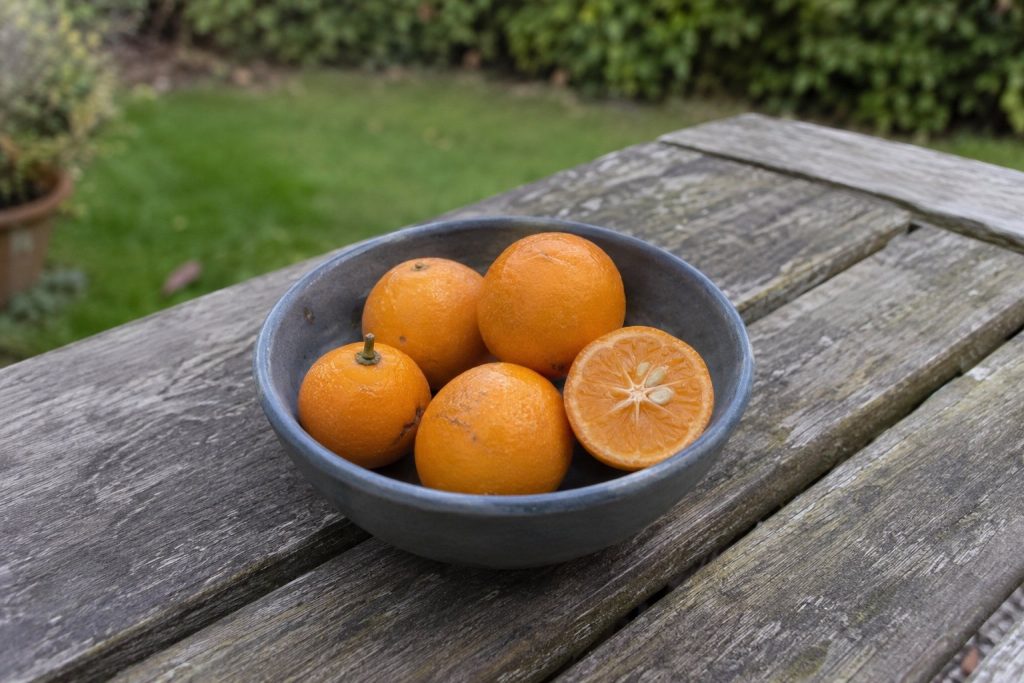
Glen citrange (Citrus sinensis × Poncirus) is one of the historic citranges of the American USDA program, a hybrid of sweet orange and Poncirus trifoliata. Its tree hardiness reaches 10°F (−12°C), making it suitable for in-ground growing in USDA zone 8a. The vigorous tree reaches 10 to 16 ft (3 to 5 m) with an upright, semi-thorny habit, semi-evergreen trifoliate foliage inherited from Poncirus, and white spring flowers. Its yellow-orange fruit, medium-sized at 3.5 to 7 oz (100 to 200 g) and thick-skinned, ripens in winter and yields a markedly sour juice with a sweet-orange fragrance, acceptable for juice, marmalade, or as a cocktail base. A few seeds. Glen belongs to the lineage of citranges used both as a supplementary citrus and as a rootstock in regions with continental winters. Graft onto pure Poncirus trifoliata.

Whole and halved dark red-fleshed citrus fruit on a kitchen board

Amoa 8

Origin: Amoa 8 is an exceptional Italian hybrid developed by the CRA-ACM research center in Acireale, Sicily. It comes from […]

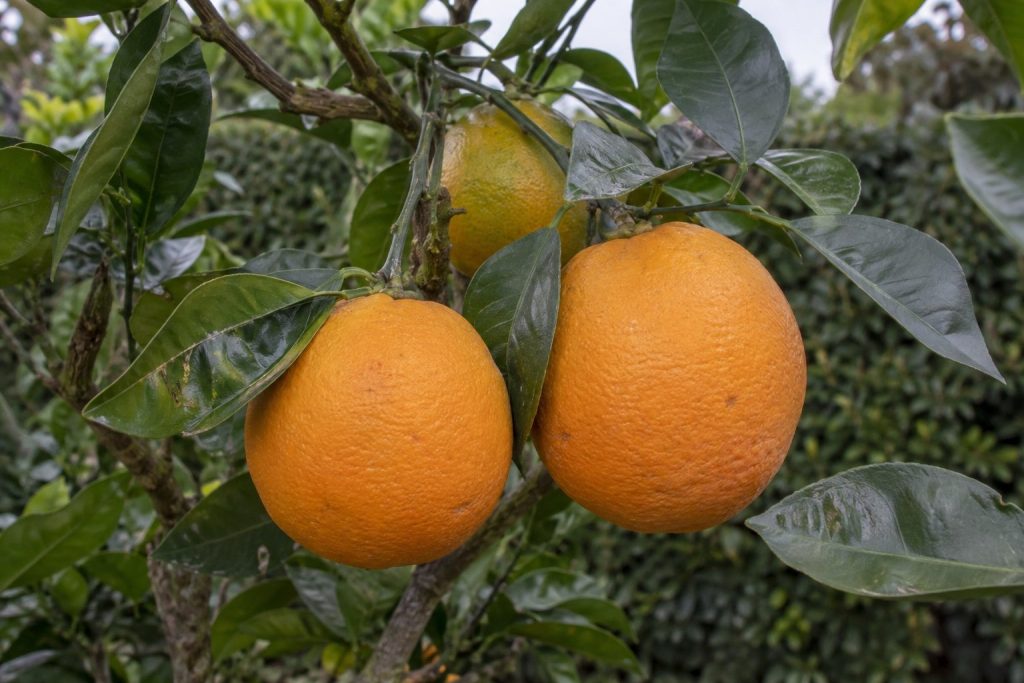
Orange citrus fruit hanging among green leaves

Amber Sweet

Origin: This citrus is the result of a complex hybridization carried out by the USDA in Florida (USA). It comes […]

A hand holding a pointed orange citrus fruit beside foliage

Dekopon (Shiranui)

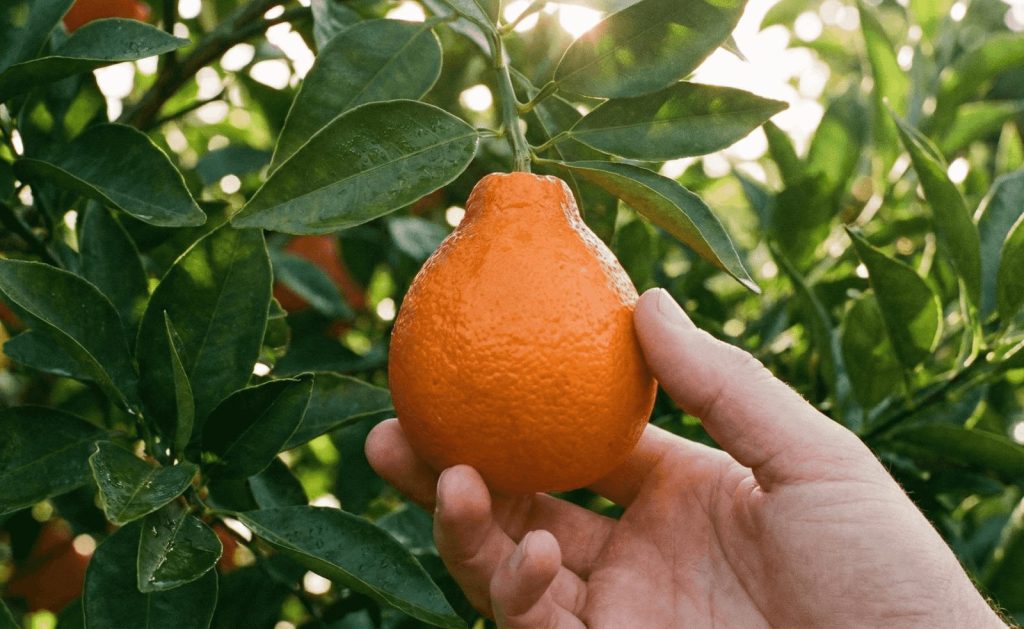
Dekopon Shiranui (Citrus × shiranui), also called Sumo Citrus, is a Japanese hybrid between a Kiyomi mandarin and a Ponkan mandarin, created in 1972 and popularized since for its large, sweet fruit. Its hardiness reaches 12°F (−11°C) on the tree, making it suitable for in-ground growing in USDA zones 8a and 8b. The vigorous tree reaches 10 to 13 ft (3 to 4 m) with an upright habit, evergreen foliage, and fragrant white flowers. Its very large, bright orange fruit, generally 7.1 to 10.6 oz (200 to 300 g), sometimes up to 14.1 oz (400 g), recognizable by their characteristic bump at the top (the ‘deko’), with thick, easy-to-peel skin, ripen from November to early spring depending on the climate and management, with typical maturity in February-March in Japan, and offer juicy, exceptionally sweet, low-acid, seedless flesh. A premium variety considered one of the best mandarins in the world. Graft onto Poncirus trifoliata, plant against a south wall, generous mulch in winter.

A citrus tree laden with orange fruit

Fukumoto Orange

Fukumoto orange (Citrus sinensis ‘Fukumoto’) is a Japanese mutation of Washington Navel selected for its earliness and particularly intense external color. Its hardiness reaches 18°F (−8°C) on the tree, making it suitable for in-ground growing in USDA zones 8b and 9a. The compact tree reaches 8 to 13 ft (2.5 to 4 m) with a rounded habit, evergreen foliage, and fragrant white flowers in spring. Its deep red-orange, medium-sized fruit, with thin, easy-to-peel skin, seedless, ripen very early (November-December) with juicy, sweet flesh and a fragrance balanced between sweetness and acidity. Ideal for anyone who wants a Christmas orange grown in the ground in France. Graft onto Poncirus trifoliata to gain hardiness, plant against a south-southwest-facing wall, in well-drained soil. Harvest before the first severe frosts, which destroy the pulp.
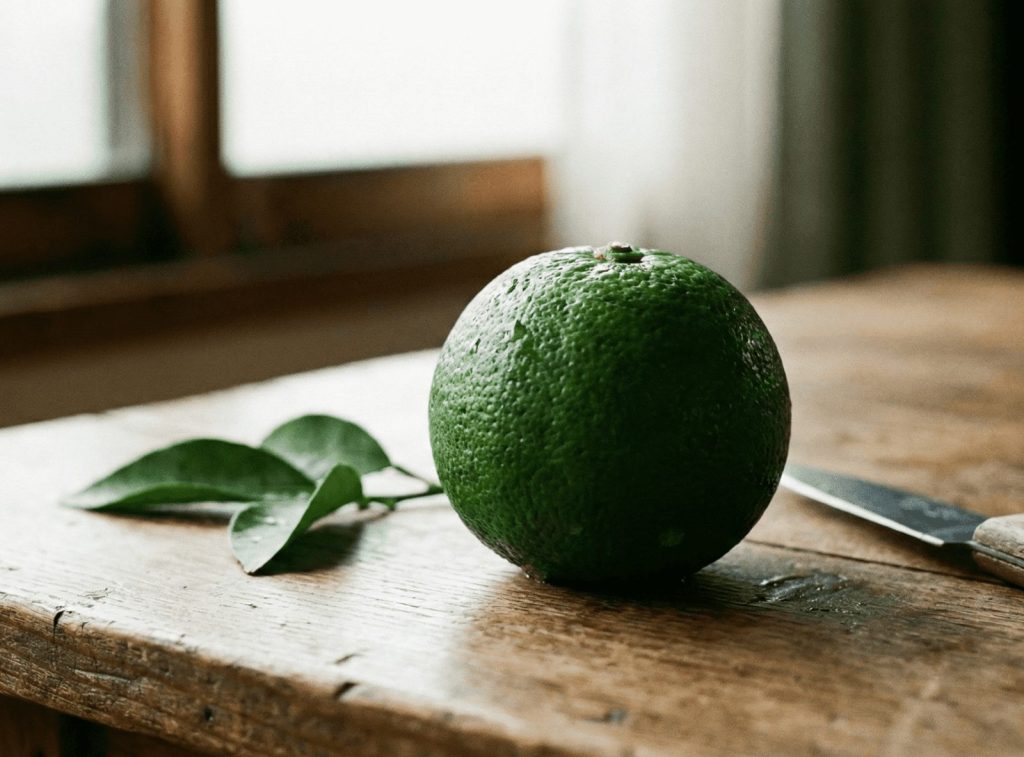
A dark green citrus fruit on a wooden table

Oishi Sudachi

Oishi sudachi (Citrus sudachi ‘Oishi’) is a hardy Japanese selection of sudachi, a traditional citrus of Tokushima Prefecture grown for more than a thousand years. Its hardiness reaches 10°F (−12°C) on the tree, making it suitable for in-ground growing in USDA zones 7b and 8a, among the hardiest edible Japanese citrus. The tree reaches 7 to 13 ft (2 to 4 m) with a rounded habit, aromatic evergreen foliage, and fragrant white flowers. Its flattened-round fruit, bright green (harvested green) or golden yellow (at full ripeness), small, 1.6 to 2 in (4 to 5 cm), with thin skin, are harvested from October to January according to the Vessières catalog, green or at the start of yellowing, and concentrate a very sour, fragrant juice with notes of lime and yuzu, without bitterness. Essential in Japanese cooking (fish, mushrooms, soba, sauces). A few seeds. Graft onto Poncirus trifoliata, plant against a south wall.

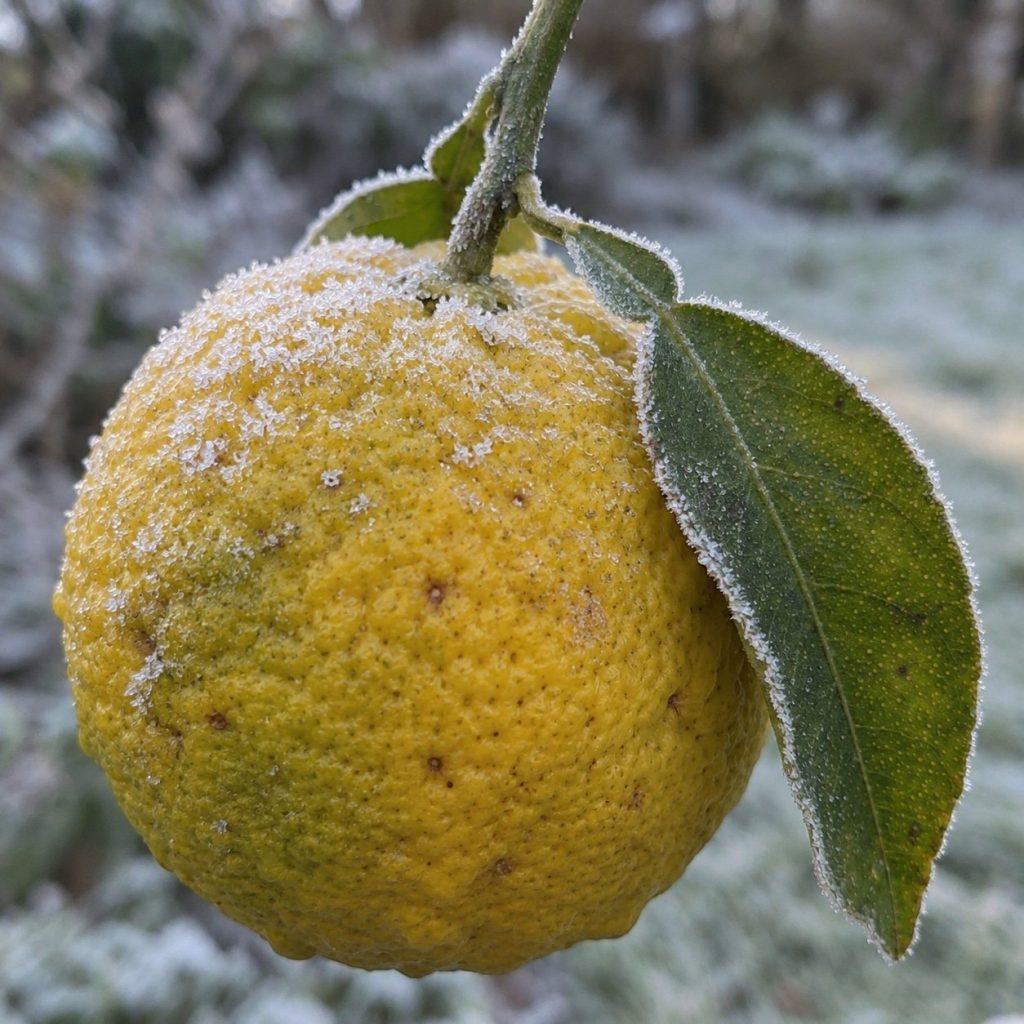
Frost crystals covering a yellow citrus fruit and leaves

Yuzu N3

Yuzu N3 (Citrus junos ‘N3’) is a vigorous seasoning citrus, sought after for its floral zest and very fragrant juice. To prepare for growing it, cautiously adopt a benchmark close to 5°F (−15°C) on a mature, well-established tree subjected to a brief frost, rather than a guarantee of survival at a precise temperature. The tree generally reaches 10 to 13 ft (3 to 4 m). Its very sour fruit, rich in seeds and relatively low in juice, are harvested from October to December and are used mainly for the zest, the juice, and preserves. Discover the classic yuzu and its characteristics. Yuzu growing guide.

Scroll to Top