Cold hardiness
16°F (−9°C)
Identity
OriginFlorida, United States
Genetic originHybrid of West Indian lime and oval kumquat, obtained by W. T. Swingle in 1909
USDA zone8b
Cold hardiness16°F (−9°C)
GrowthModerate
Height7 ft (2 m)
HarvestJanuary, February, March, April, May, June, July, August, September, October, November, December
SeedsFew
FlavorsSour, Highly aromatic
History & Description
Origin
Tavares belongs to the limequats obtained by W. T. Swingle in Florida in 1909, then named in 1913. The UCR notice describes a parentage between the West Indian lime and the oval kumquat, unlike Eustis and Lakeland, which are associated with the round kumquat. The USDA record identifies the current reference accession as CRC 4048 / PI 654837. An older accession, CRC 3172, had been misidentified and corresponds to a lemon hybrid: its characteristics are not imported here. This record therefore distinguishes a precise fruiting cultivar among the limequats.Tree description
Vessières gives a small evergreen tree of 7 ft (2 m) and moderate growth, suited to garden or container growing. Development depends on rootstock and pruning. The threshold of 16°F (−9°C) comes from the French announcements of Vessières and Agrumes de Provence, with no published experimental protocol. The UCR says only that limequats resist better than the lime and less well than kumquats. A young specimen or a potted rootball may require earlier protection. USDA zone 8b is an equivalence calculated from the reference of 16°F (−9°C) announced by the nurserymen, in the band 15 to 20°F (−9.4 to −6.7°C): no source classifies Tavares itself, and it is not a guarantee of in-ground growing without protection.Fruit quality
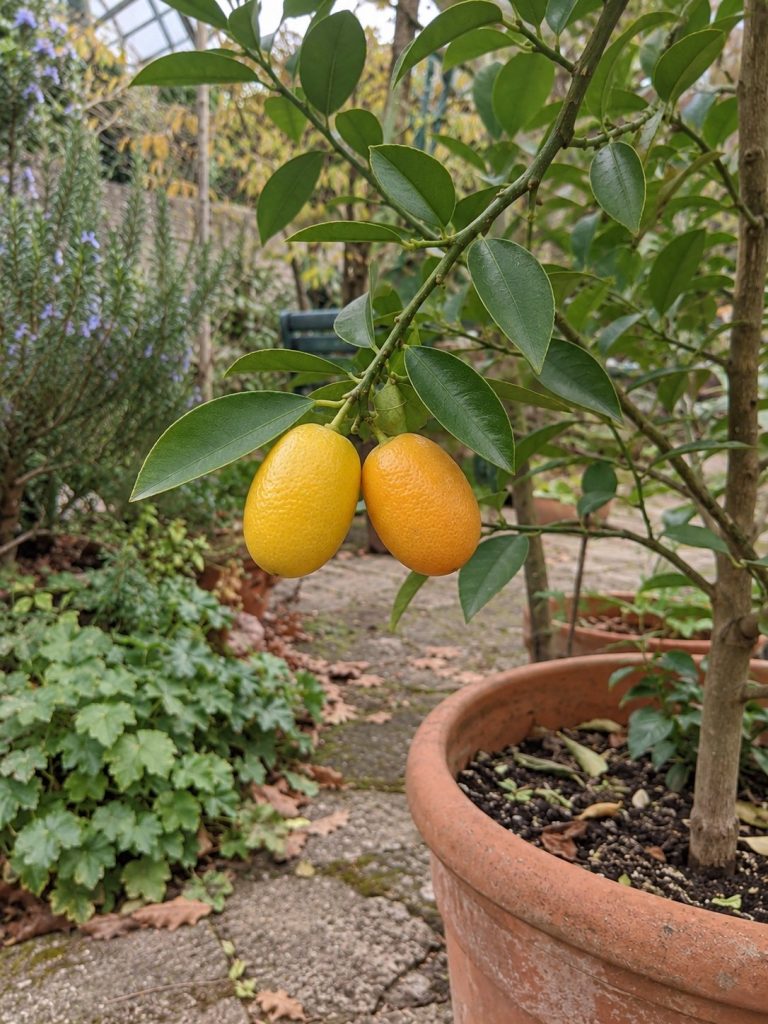
The fruit is small, elongated, and oval, with thin yellow to yellow-orange skin at maturity. Tavares keeps a sour, aromatic juice usable in place of lime, but with a kumquat influence. The skin is enjoyed along with the fruit and the French grower indicates few seeds. Ripening can be spread over the year depending on conditions; this does not guarantee a harvest every month in every French garden. The resistance of the fruits to freezing is unknown.Flavor and ornamental interest
Tavares brings a lime and kumquat flavor to sauces, marinades, desserts, and drinks. The fruits can also be candied; their small size suits whole use in the kitchen. Its modest habit is interesting when space is limited. Vessières also notes uses in cocktails, in jams, and in lacto-fermentation. The USDA zone 8b reference remains an order of magnitude: see the reservation on the calculated equivalence above.
Back to the collection
Updated: