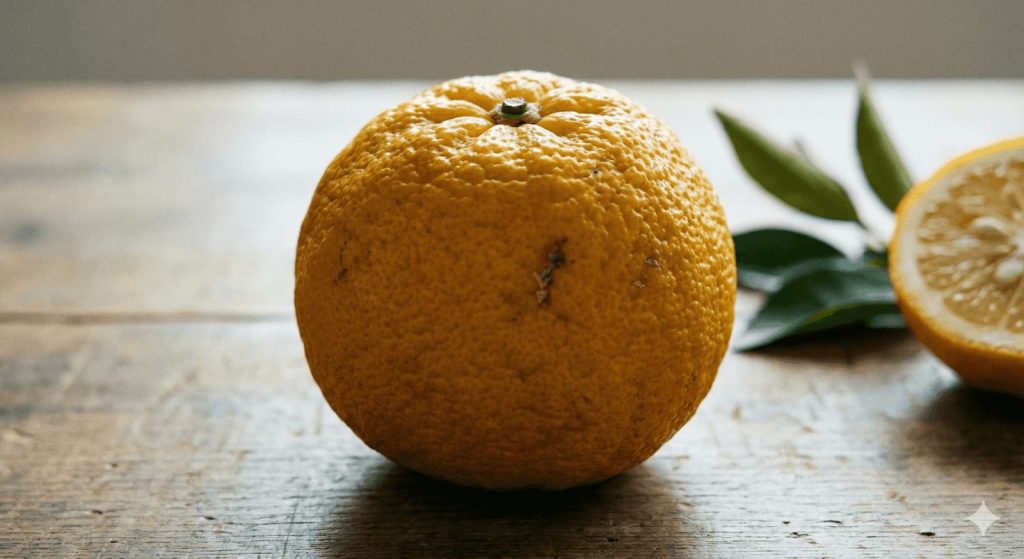
Identity
History & Description
Origin
Yuko is a very localized traditional Japanese citrus, native to Nagasaki and Saga prefectures. Its exact origin is mysterious, but genetic analyses suggest an ancient natural hybridization between Yuzu and Citrus kinokuni (a mandarin). It was long preserved in private gardens in these regions before being rediscovered by modern gastronomy.Tree description
It is a vigorous tree, markedly less thorny than Yuzu, with good cold resistance, down to 14°F (−10°C), making it possible to grow in many regions.Fruit quality
The fruit is yellow at maturity, with a thick, fragrant rind. Its flesh is much juicier and sweeter than that of Yuzu, while retaining a fine acidity.Flavor and ornamental interest
It offers a balanced, complex flavor. The rind (and especially the white albedo) is edible and delicious. It is highly prized in fine Japanese cuisine (Kaiseki) for its subtlety.Updated:
What matters when choosing
Key points about Yuko Lemon
Yuko is a traditional acidic citrus from Nagasaki, harvested green for its juice and then yellow for its milder fragrance. It is best suited as a condiment and as a heritage conservation fruit, not as a direct substitute for a very acidic lemon.
Why choose it
- Fragrant juice with very little bitterness at maturity.
- Mild zest reminiscent of yuzu and pummelo.
- A long period of use, from green to yellow fruit.
Its limits
- Rare variety, difficult to obtain under a reliable identity.
- Very limited independent cold-hardiness data.
- Condiment fruit less acidic than a typical lemon.
Practical notes
- Origin
- Nagasaki Prefecture, Japan
- Local season
- September through March
- Uses
- Juice, seasoning, zest
Cold-hardiness reference: about 14°F (−10°C)
The references describe its origin and uses but offer few freezing measurements; the selected threshold remains cautious and calls for a sheltered situation.
Sources and method
The temperatures given are reference points for a mature tree with hardened wood. The table and callout repeat the same value as the profile. They guarantee neither freedom from damage nor a harvest after a freezing event.
Data reviewed on September 21, 2026.
- Slow Food Foundation for Biodiversity — Origin, conservation, and culinary use
- Slow Food Nippon — Season, fragrance, juice, and culinary uses
- PLOS ONE — hybrid origins of Japanese citrus — Genetic context and parentage of Yuko