Identity
History & Description
Origin
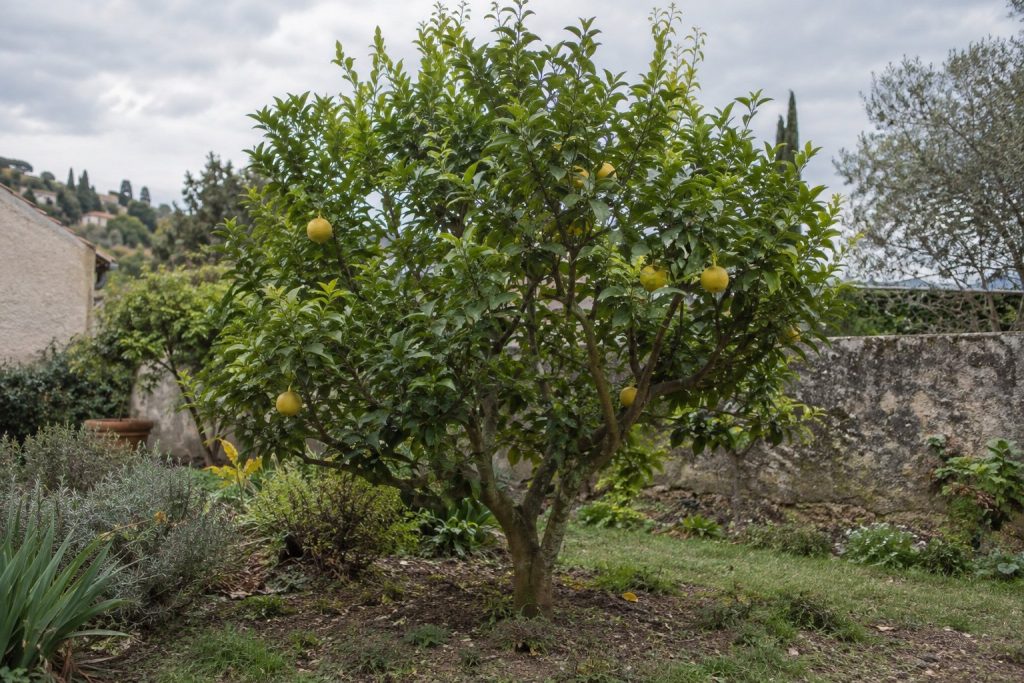
The Pursha lime, also called Rome sweet lime or Pursha limetta, is an old Italian variety born near Rome from a natural cross between the Rangpur lime (the sour Indian parent) and the Shekwasha mandarin (the Japanese parent). Its name Pursha is a contraction of the two parents (Pur + Sha) that gave birth to a very particular citrus, neither truly a lime nor truly a limetta, but rather an aromatic sweet lemon. Grown for several centuries on the Italian peninsula, it long remained a little-known local specialty before being rediscovered by specialized French nurseries over the past few decades. The Pépinière du Bosc presents it as one of the most interesting hardy citrus for amateur gardeners living outside the Mediterranean zone, able to withstand 16°F (−9°C) in a sheltered position. Its rarity and uniqueness make it a coveted collector's piece for fans of uncommon citrus.Tree description
The Pursha lime forms a compact but vigorous tree reaching 7 to 10 ft (2 to 3 m) in height at maturity, with a rounded habit and soft green evergreen foliage. Its leaves are characteristic of limetta types, thinner and more pointed than those of classic lemons. Its bloom is particularly abundant, white and delicately fragrant, and can occur in several waves during the year, giving staggered fruiting. Its hardiness of 16°F (−9°C) makes it a viable variety in the ground across the whole southern half of France and the Atlantic coast on Poncirus trifoliata rootstock.Fruit quality
The fruit of the Pursha lime is round, yellow at maturity, medium-sized, weighing 2.1 to 3.5 oz (60 to 100 g), with thin skin and very aromatic zest. Its green-yellow pulp is very juicy and rich in citric acid, minerals, and vitamins C, A, and B. The taste is paradoxical: very mild and sweet despite the look of a lime, with unique fragrant notes recalling mandarin, lemon, and honey at once. A few seeds per fruit, without bitterness.Flavor and ornamental interest
In the kitchen, the Pursha excels in fresh juice (appreciated for its natural sweetness), in pastry (tarts, sorbets), in a light marinade for fish, and as an accompaniment to delicate savory dishes. Its zest is used like a sweeter yuzu. The abundant, fragrant bloom also makes it a remarkable ornamental. The harvest is mostly autumn to spring: from October to May in the Todolí collection, with repeat crops in May-June indicated by some French catalogs depending on growing conditions.Updated:
What matters when choosing
Key points about Pursha Lime
Pursha lime is a small, bittersweet, low-acid citrus valued for its fragrance, repeated flowering, and ornamental appeal. Its parentage remains debated, and it should not be presented as a very cold-hardy lime or an exact replacement for a conventional lime.
Why choose it
- Distinctive bittersweet, low-acid fragrance.
- Potentially repeated flowering and fruiting.
- Compact habit, attractive in a pot.
Its limits
- Uncertain botanical parentage.
- Seeds are present.
- Low tolerance of severe freezes.
Practical notes
- Identity
- A horticultural hybrid with debated parentage
- Harvest
- Fall through spring
- Uses
- Seasoning, drinks, ornament
Cold-hardiness reference: about 16°F (−9°C)
Lower figures come mainly from catalogs; without a comparable independent trial, protection against moderate freezes remains the cautious approach.
Sources and method
The temperatures given are reference points for a mature tree with hardened wood. The table and callout repeat the same value as the profile. They guarantee neither freedom from damage nor a harvest after a freezing event.
Data reviewed on September 21, 2026.
- Todolí Citrus Fundació — Uncertain parentage, season, flavor, and seeds
- Sicilia Verde — Habit, flowering, and horticultural characteristics
- Giardini Caneva — Fruit description and ornamental use