Cold hardiness
14°F (−10°C)
Identity
OriginUnited States
Genetic originHybrid of sweet orange (Citrus sinensis 'Hartley') x oval kumquat (Fortunella margarita), created by W.T. Swingle in 1920
USDA zone8a
Cold hardiness14°F (−10°C)
Fruit cold hardiness25°F (−4°C)
GrowthSlow
Height10 ft (3 m)
HarvestJanuary, November, December
SeedsFew
FlavorsTart, Sweet, Highly aromatic
History & Description
Origin
Orangequat is a rare interspecific hybrid from a cross between the sweet orange (Citrus sinensis, Hartley variety) and the oval kumquat (Fortunella margarita), created by the American botanist and breeder Walter T. Swingle around 1920, as part of his programs to develop cold-hardy citrus. Swingle, who worked at the USDA throughout his career, sought to combine the sweet, aromatic flavor of the orange with the cold tolerance and sweet edible skin of the kumquat. The result is a small, compact citrus with fruit that is entirely edible, skin included, with soft, sweet skin like that of a kumquat and slightly tart flesh reminiscent of the orange. The 14°F (−10°C) reference is advertised notably by Ripaud and the Arche du Livradois; these catalogs are not a hardiness trial carried out at the altitude of the nursery.Tree description
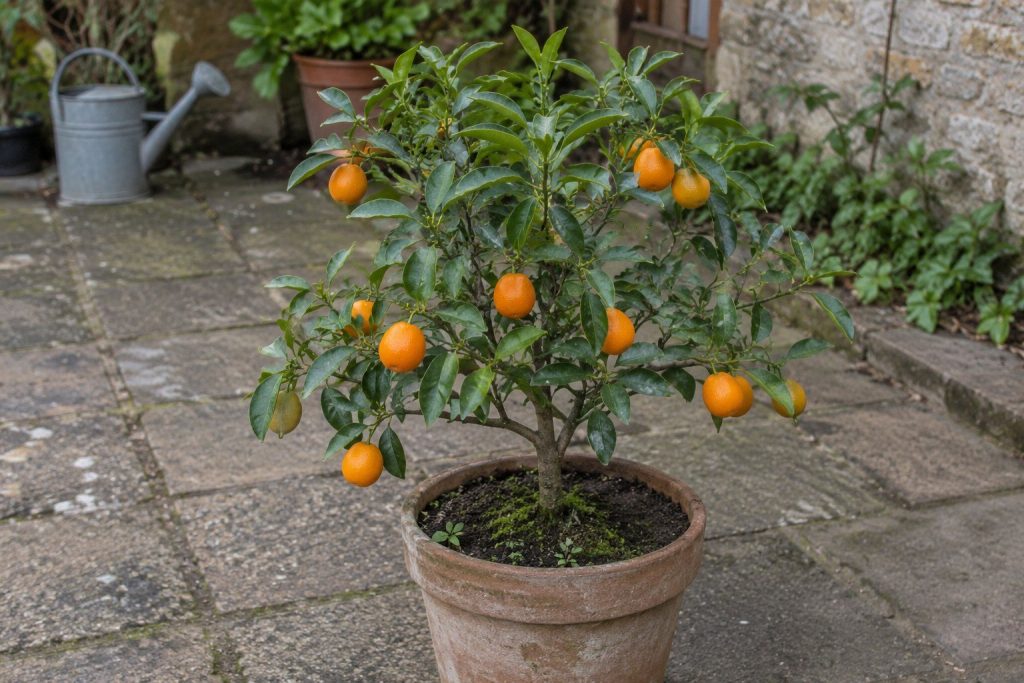
Compact, slow-growing tree, reaching 5 to 8 ft (1.5 to 2.5 m) in the ground, ideal for small gardens and pot culture. Dense, dark green, glossy evergreen foliage, very decorative in every season. Fragrant white bloom in spring. Naturally rounded, harmonious habit that needs no pruning.Fruit quality
Small round to oval fruit, bright orange at maturity, intermediate in size between an orange and a kumquat. The skin is thin, soft, and sweet, very fragrant like that of a kumquat, and is eaten whole with the fruit. The flesh is slightly tart and juicy, reminiscent of a sweet orange. Few seeds. The harvest takes place from November to January.Flavor and ornamental interest
Orangequat is eaten whole like a kumquat, with the sweetness and aroma of an orange. The sweet skin and tart flesh create a unique and very pleasant balance of flavors. Excellent in jam, as candied fruit, or as a culinary garnish. Its compact habit and highly decorative evergreen foliage make it an excellent subject for citrus collectors, in a pot on a terrace or in the ground in zones 8a-8b.Hardiness — October 8, 2026 review: The reference is kept at 14°F (−10°C) according to Ripaud and the Arche du Livradois; Ripaud specifies grafting onto Poncirus. Aux Soleils de Manan advertises 18°F (−8°C). These are growing claims, not proof of survival without damage in every garden. These temperatures apply to a mature, established, acclimated tree during a one-off frost; they guarantee neither the absence of damage nor a harvest. Wind, freeze duration, humidity, and pot culture change the risk.
Fruit resistance: The fruit reference already entered remains indicative: this review did not establish a new experimental threshold for this material. It is not deduced from the tree's temperature.
Hardiness references: Ripaud — Orangequat sur Poncirus; Arche du Livradois — Orangequat; Aux Soleils de Manan — Kumquats et hybrides (accessed October 8, 2026).
Back to the collection
Updated: