
Cold hardiness
10°F (−12°C)
Identity
OriginChina, naturalized in Japan
Genetic originPure species
USDA zone8a
Cold hardiness10°F (−12°C)
Fruit cold hardiness27°F (−3°C)
GrowthSlow
Height10 ft (3 m)
HarvestJanuary, November, December
SeedsFew
FlavorsTart, Slightly acidic, Highly aromatic, Sour then sweet
History & Description
Marumi kumquat (Citrus crassifolia 'Marumi', formerly Fortunella crassifolia) is among the cold-tolerant kumquats, with a reference of 10°F (−12°C) for the adult acclimated tree, in a well-drained, sheltered situation. Native to southern China before being naturalized in Japan, where it has been grown for several centuries, its name means "round shape" in Japanese, as opposed to the oval Nagami. The cultivation of Marumi is deeply rooted in the Japanese horticultural tradition: it symbolizes prosperity and good fortune, and is traditionally still given at New Year celebrations. Introduced to Europe in the late 19th century, it remains less widespread than Nagami despite taste qualities often judged superior by connoisseurs.
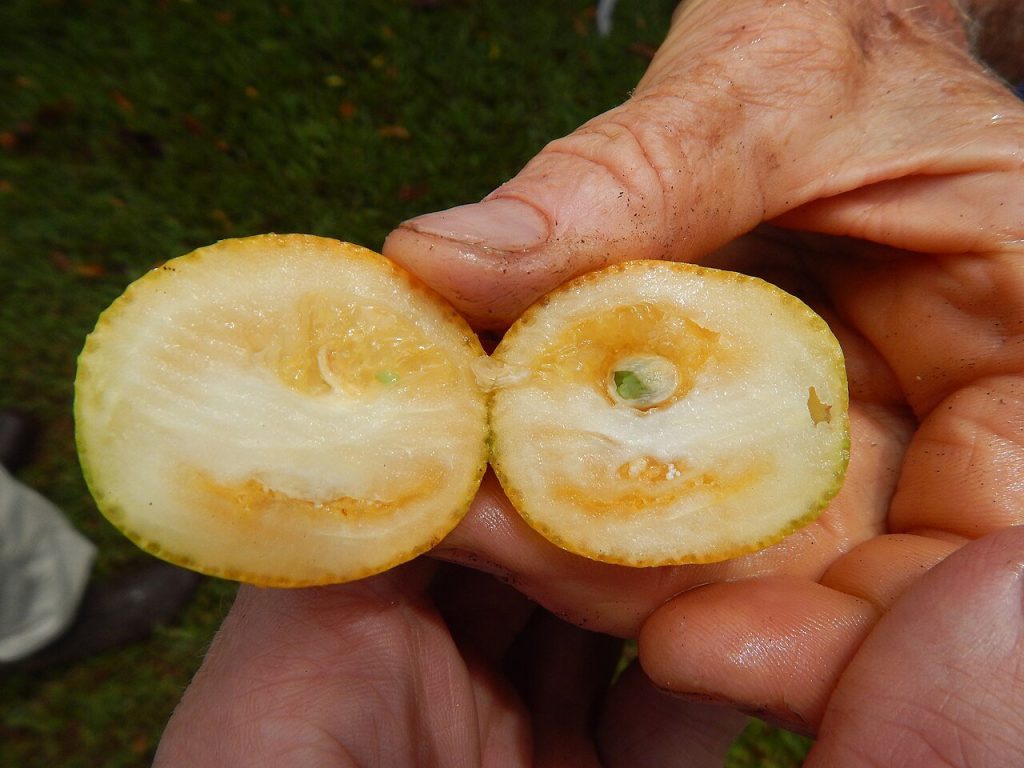
The tree is more compact than Nagami, reaching 7 to 10 ft (2 to 3 m) at maturity with a naturally spherical, very elegant silhouette. Its evergreen, dark green, glossy foliage has leaves slightly more rounded than those of Nagami. The spring flowering, white and delicately fragrant, can occur in two waves, producing two partial fruiting cycles in the year. The spherical fruits, slightly flattened at the poles, measure 0.8 to 1.2 in (2 to 3 cm) in diameter and reach a luminous orange at maturity in November to December. Their skin, thinner than that of Nagami, is mild and sweet — this is the signature of Marumi: it is bitten into whole, skin included, in a unique contrast of flavors between the sweet rind and the slightly tart flesh.
In the kitchen, Marumi is appreciated for confectionery (candied kumquats, chocolate-coated fruits), liqueur, jam, or simply as a fresh fruit eaten whole. It is perfectly suited to growing in the ground throughout the southern half of France and the Atlantic coast (USDA zones 8a to 9b) on Poncirus trifoliata or Flying Dragon rootstock, ideally against a south-southwest-facing wall. Its natural compactness also makes it excellent in a large container on a terrace or unheated veranda, which allows its cultivation as far as zone 7b with indoor overwintering.
Hardiness — October 8, 2026 review: Retained reference of 10°F (−12°C), announced for Marumi by Agrumes de Provence. This is not enough to rank it as the hardiest of all kumquats: the claims and measurement conditions are not directly comparable. These temperatures concern an adult, established, acclimated tree during an isolated freeze; they guarantee neither the absence of damage nor the harvest. Wind, freeze duration, humidity, and pot culture change the risk.
Fruit resistance: The fruit reference already recorded remains indicative: this review did not establish a new experimental threshold specific to this material. It is not deduced from the tree's temperature.
Hardiness references: Agrumes de Provence — Marumi; UF/IFAS — Kumquat (accessed October 8, 2026).
Back to the collection
Updated: