Identity
History & Description
Origin
Indio mandarinquat is an interspecific hybrid conserved by the USDA (United States Department of Agriculture): scions were received at the Indio station in California in 1972, and the name "Indio" was then proposed in 1989 according to UCR archives; these dates do not date the creation of the seedling. It results from crossing a common mandarin (Citrus reticulata) with the Nagami kumquat (Fortunella margarita), with the aim of combining the sweetness and easy peeling of the mandarin with the hardiness and intense aromas of the kumquat. This variety represents one of the notable successes of 20th-century American citrus breeding programs, combining the taste qualities of both parents in an accessible, versatile fruit. It remains relatively little known in Europe but is gaining popularity among enthusiasts of hardy citrus.Tree description
Indio mandarinquat has a habit intermediate between its two parents: more vigorous than a pure kumquat, it reaches 7 to 10 ft (2 to 3 m) with moderate growth. Its evergreen, glossy, medium-green foliage has leaves slightly broader than those of a kumquat. The tree is productive from its third year, with fragrant white flowers in spring. Its hardiness reference is about 18°F (−8°C), to be considered with the growing conditions and the limits specified below.Fruit quality
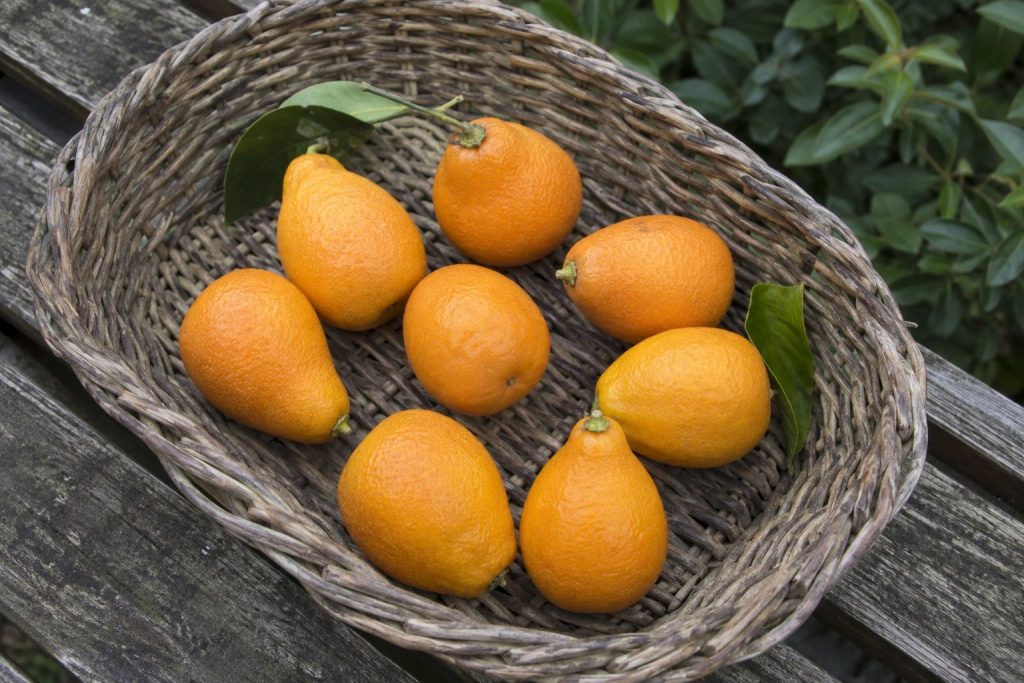
The Indio fruit is elongated and slightly conical, measuring 1.6 to 2 in (4 to 5 cm), with thin skin that is easy to remove by hand, a quality inherited from the mandarin parent. Its bright orange color at maturity is very attractive. The flesh is mild and sweet, with intense aromatic notes recalling kumquat, without the pronounced acidity of the latter. The skin remains edible and fragrant, allowing the whole fruit to be enjoyed. There are few seeds, generally fewer than 5 per fruit.Flavor and ornamental interest
Indio is the perfect citrus for introducing palates unaccustomed to the acidity of classic kumquats: its relative sweetness and easy peeling make it a very accessible fruit. In the kitchen, it is used whole as decoration, in mild jam, as candied fruit, or simply enjoyed fresh. Its elegant habit and generous fruiting also make it an attractive ornamental shrub for southern gardens and sheltered terraces in zone 8b.Hardiness — October 8, 2026 review: Reference kept at about 18°F (−8°C), announced by Evergreen Botany. This seller also advises protecting before reaching this minimum: the survival of the tree and the protection of the foliage or the harvest are different objectives. These temperatures concern an adult, established, acclimated tree during an isolated freeze; they guarantee neither the absence of damage nor the harvest. Wind, freeze duration, humidity, and pot culture change the risk.
Fruit resistance: The fruit reference already recorded remains indicative: this review did not establish a new experimental threshold specific to this material. It is not deduced from the tree's temperature.
Hardiness references: Evergreen Botany — Indio (accessed October 8, 2026).
Updated:
What matters when choosing
Key points about Indio Mandarinquat
Indio is a mandarinquat derived from an open-pollinated Nagami kumquat seedling, originally selected as an ornamental citrus. Its small, elongated fruit can be cooked whole or made into marmalade, combining aromatic peel with more acidic pulp; its pollen parent remains unknown.
Why choose it
- Aromatic fruit that can be used whole.
- Extended flowering and fruiting in mild climates.
- Decorative habit suited to containers.
Its limits
- Noticeably acidic pulp.
- Seeds are frequently present.
- Pollen parent and exact cold hardiness are unknown.
Practical notes
- Origin
- Open-pollinated Nagami kumquat seedling
- Selection
- Indio, California
- Uses
- Marmalade, whole fruit, ornament
Cold-hardiness reference: about 18°F (−8°C)
Reference kept at about 18°F (−8°C), as reported by Evergreen Botany. That seller also advises protecting before this minimum is reached: tree survival and protection of the foliage or the crop are different goals.
Sources and method
The temperatures given are reference points for a mature tree with hardened wood. The table and callout repeat the same value as the profile. They guarantee neither freedom from damage nor a harvest after a freezing event.
Data reviewed on October 8, 2026.
- Givaudan Citrus Variety Collection — UCR — Origin, uncertain parentage, season, and ornamental selection
- California Citrus Nursery Board — Varietal framework and certified material in California
- UF/IFAS — Kumquat — Whole-fruit use and relative cold tolerance of kumquats
- Evergreen Botany — Indio — A claim of about 18°F (−8°C), but protection advised from 26°F; thresholds with different goals.