Cold hardiness
18°F (−8°C)
Identity
OriginChina
Genetic originLarge-fruited selection of Fortunella margarita
USDA zone8a
Cold hardiness18°F (−8°C)
Fruit cold hardiness23°F (−5°C)
GrowthVigorous
Height13 ft (4 m)
HarvestFebruary, March
SeedsFew
FlavorsTart, Highly aromatic
History & Description
Origin
The Giganteum kumquat is a selection of Fortunella margarita (Nagami kumquat) obtained for its particularly generous fruiting of large fruit. Native to the Far East, like all kumquats, this little citrus was introduced to Europe by the Scottish botanist Robert Fortune in the nineteenth century after his explorations in China. The Giganteum selection designates clones characterized by fruit clearly larger than the standard Nagami form, reaching up to 2.5 oz (70 g), two to three times the size of a classic kumquat. This variety is now grown in the mild Mediterranean and Atlantic regions of France, appreciated as much for its ornamental value as for the remarkable quality of its oversized fruit.Tree description
The tree is vigorous, evergreen, and very productive, reaching 10 to 13 ft (3 to 4 m) in the ground in mild temperate regions. Its habit is compact to slightly spreading, with dense, glossy, dark green foliage that is very ornamental. The white, highly fragrant flowering generally occurs in spring. Its growth vigor lets it quickly reach a fine productive framework.Fruit quality
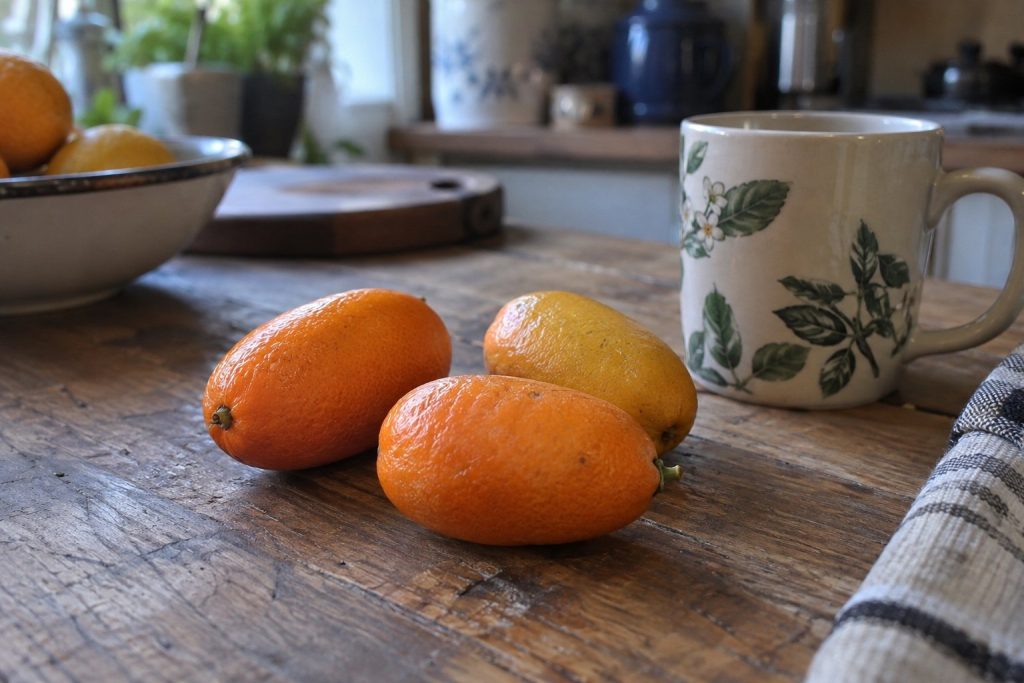
The fruit are large, oval-elongated kumquats, a bright orange at full maturity, weighing up to 2.5 oz (70 g). The rind is sweet, thin, lightly sugary, and aromatic, and can be crunched whole without displeasure. In cross-section the flesh shows 4 perfect lobes and is slightly tart. Full maturity, reached in late winter (February to March), reveals a very balanced tart-aromatic flavor with few seeds.Flavor and ornamental interest
The Giganteum kumquat is enjoyed plain, crunching the whole fruit, skin included. Its generous size makes it particularly attractive for jam, candied fruit, or buffet decoration. The tree is very ornamental in winter when its many large orange fruit light up the garden. It is a choice subject in a pot on terraces and a productive windbreak hedge for southern gardens.Hardiness — October 8, 2026 review: Reference retained at 18°F (−8°C), the figure from the Vessières listing and PDF, also shown by L’Agrumier. Vessières’ long description keeps 14 to 10°F (−10 to −12°C); Agrumes de Provence advertises 14°F (−10°C) for Big Kumquat. These discrepancies and the commercial identity of the plants justify not retaining the maximum. These temperatures apply to a mature, established, acclimated tree during a one-off frost; they guarantee neither the absence of damage nor a harvest. Wind, freeze duration, humidity, and pot culture change the risk.
Fruit resistance: The fruit reference of 23°F (−5°C) is kept, based on the Vessières listing; it remains distinct from the tree’s hardiness.
Hardiness references: Agrumerie Vessières — Giganteum; L’Agrumier — Big (Giganteum); Agrumes de Provence — Big Kumquat (accessed October 8, 2026).
Back to the collection
Updated: