Cold hardiness
12°F (−11°C)
Identity
OriginJapan (Okinawa), Taiwan
Genetic originBotanical species Citrus depressa
USDA zone8a
Cold hardiness12°F (−11°C)
Fruit cold hardiness27°F (−3°C)
GrowthVigorous
Height13 ft (4 m)
HarvestOctober, November, December
SeedsMany
UsesFresh eating, Juice, Preserves, Savory cooking
FlavorsSour, Tart, Highly aromatic
History & Description
Origin
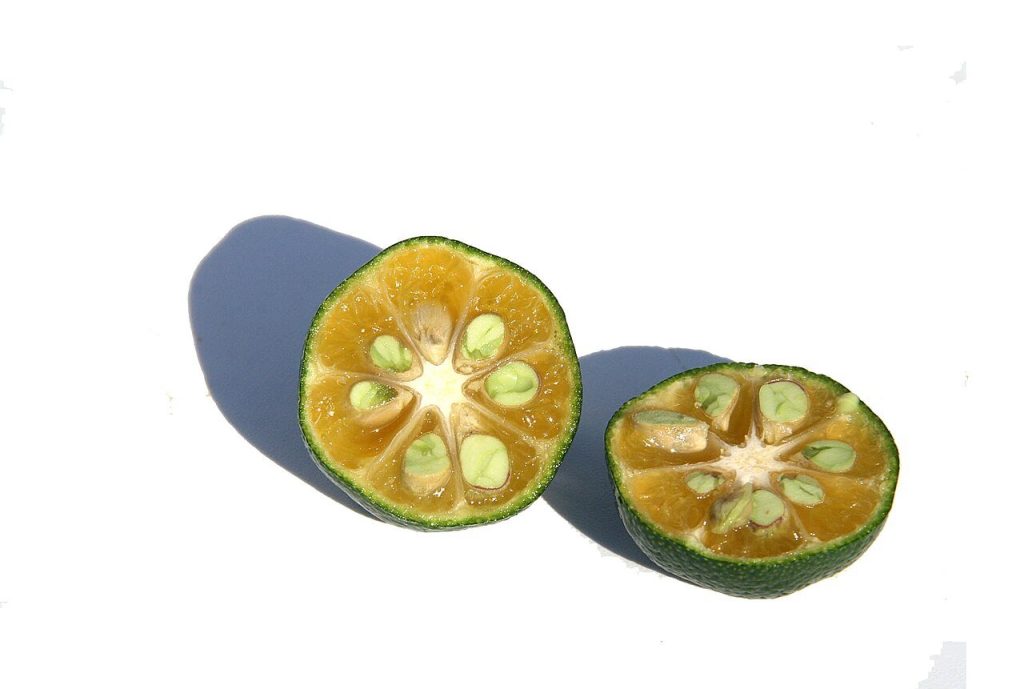
The Shekwasha, or 'Hirami Lemon', is an emblematic citrus of the Okinawa archipelago and Taiwan. It is revered for its health virtues and its longevity, being a pillar of the diet of Okinawa’s centenarians.Tree description
It is a vigorous, bushy tree, very floriferous. It adapts well to various soils and shows good resistance to disease and to cold once established.Fruit quality
The fruit is small and flattened, going from dark green to yellow-orange. It can be harvested green (for acidity) or ripe (for sweetness). It contains a very high concentration of nobiletin, a potent flavonoid.Flavor and ornamental interest
Green, it replaces lemon or calamansi with a sharp, aromatic acidity, ideal for fish and sauces (ponzu). Ripe, it becomes a small, tart-sweet, very refreshing mandarin.
Back to the collection
Updated: