Cold hardiness
16°F (−9°C)
Identity
OriginUnited States (USDA; hybrid documented in 1926)
Genetic originTriploid trigeneric hybrid: Eustis limequat (lime × Marumi kumquat) × Hong Kong kumquat (Fortunella hindsii), created by Eugene May
USDA zone8b
Cold hardiness16°F (−9°C)
Fruit cold hardiness27°F (−3°C)
GrowthSlow
Height7 ft (2 m)
HarvestJanuary, October, November, December
SeedsModerate
UsesCandied fruit, Fresh eating, Liqueur
FlavorsSharp acidity, Slight bitterness, Exotic
History & Description
Origin
Procimequat is an extremely rare citrus hybrid, the result of an experimental program led by Eugene May within the American USDA before 1926, the year Longley documented its triploidy, as part of research aimed at combining the extreme hardiness of the wild Hong Kong kumquat with the flavor versatility of the limequat. It is a trigeneric triple hybrid: a limequat was first produced by crossing the Mexican lime (Citrus aurantifolia) with the Marumi kumquat (Fortunella japonica), and this limequat was then backcrossed with the Hong Kong kumquat (Fortunella hindsii), a primitive, extremely cold-hardy citrus native to the subtropical forests of China. The result is a compact, almost dwarf triploid plant that still bears fruit thanks to nucellar embryony, which guarantees offspring genetically identical to the mother plant. Procimequat remains extremely obscure, available from a handful of nurseries specializing in hardy citrus in the United States and Europe, and it is one of the most original hybrid citrus of the kumquat family.Tree description
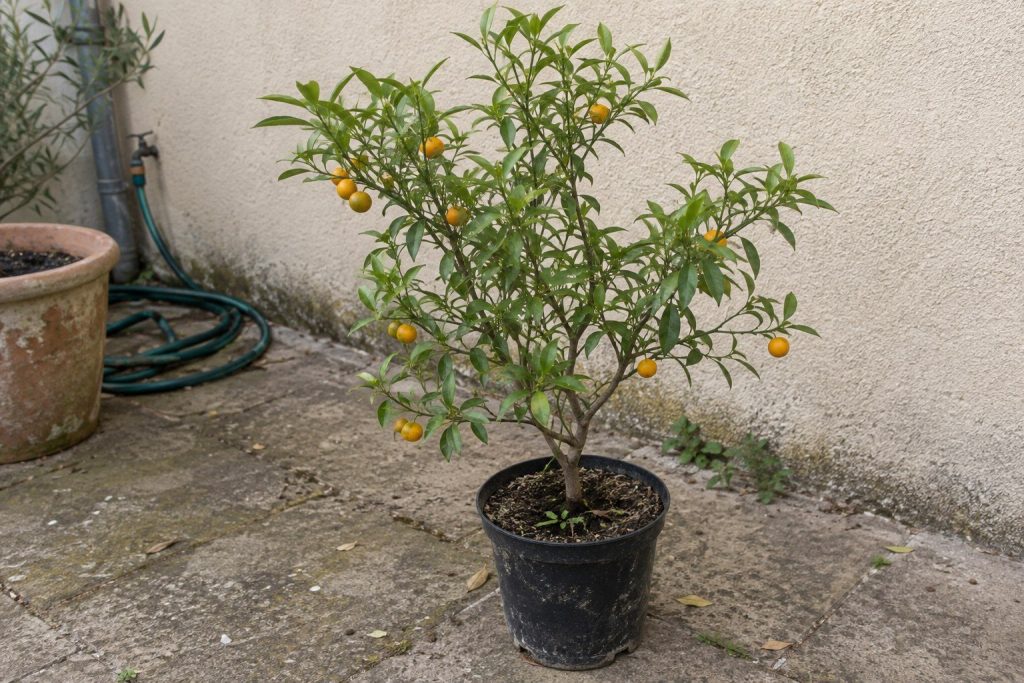
Procimequat forms a naturally dwarf shrub, reaching only 3 to 7 ft (1 to 2 m) at maturity in the ground, with a compact, dense habit perfectly suited to container growing or a small garden. Its evergreen foliage is particularly fine and glossy green, and its twigs carry small, short thorns. The very fragrant white blossom is spread over several months, and the tree comes into production quickly, sometimes in the first or second year. The 16°F (−9°C) benchmark is kept provisionally; it is not a confirmed experimental threshold or an automatic USDA zone assignment.Fruit quality
The tiny fruits (the size of a large marble), bright orange at full maturity, are eaten whole like a classic kumquat, skin included. Their flavor is particularly complex and exotic: it combines the sharp acidity of the lime, the sweetness of the orange, and a slightly herbal note reminiscent of celery, a trait inherited from the Hong Kong kumquat. The bitterness stays discreet, and seeds are present in moderate numbers.Flavor and ornamental interest
Procimequat is above all a tasting fruit for knowledgeable enthusiasts, enjoyed crunched whole at the end of a meal or alongside a cheese board. Its thin skin and intense fragrance also make it an excellent candidate for artisanal liqueurs, candied fruit, and high-end confections. As an ornamental, its naturally dwarf habit, long flowering, and abundant marble-sized fruit make it an exceptional subject for pot culture or a Mediterranean rock garden, where it adds a touch of botanical curiosity that few collectors can claim to grow.Hardiness — October 8, 2026 review: Previous benchmark of 16°F (−9°C) kept provisionally: the review does not find a comparable trial that would allow raising it. The UCR botanical page confirms the identity, without validating this figure. Do not infer the hardiness of this hybrid from that of its parents. These temperatures apply to a mature, established, acclimated tree during a one-off frost; they guarantee neither the absence of damage nor a harvest. Wind, freeze duration, humidity, and pot culture change the risk.
Fruit resistance: The fruit benchmark already on record remains indicative: this review did not establish a new experimental threshold specific to this material. It is not deduced from the tree temperature.
Hardiness references: UCR — Procimequat (accessed October 8, 2026).
Back to the collection
Updated: