Cold hardiness
10°F (−12°C)
Identity
OriginJapan
Genetic originSelected cultivar of Citrus junos
USDA zone8a
Cold hardiness10°F (−12°C)
Fruit cold hardiness27°F (−3°C)
GrowthVigorous
Height16 ft (5 m)
HarvestNovember, December
SeedsModerate
UsesJuice, Savory cooking, Sweet cooking
FlavorsSour, Highly aromatic, Sour then sweet
History & Description
Origin
Oni Yuzu is a selected cultivar of the classic Yuzu (Citrus junos), native to Japan, where it is grown in mountain regions for its fruit, slightly larger than the standard Yuzu. The term “Oni” means “giant” or “demon” in Japanese, referring to the greater size of its fruit compared with ordinary Yuzus. Like all Yuzus, it descends from a natural hybrid between the Ichang papeda and the mandarin, an origin that gives it its exceptional hardiness of 10°F (−12°C). Its distinct aromatic feature, notes of heather honey at full maturity, makes it a cultivar sought after by enthusiasts of aromatic nuance in this already highly fragrant family of citrus. Its presence in specialized European collections remains little known, which makes it a rarity in its own right.Tree description
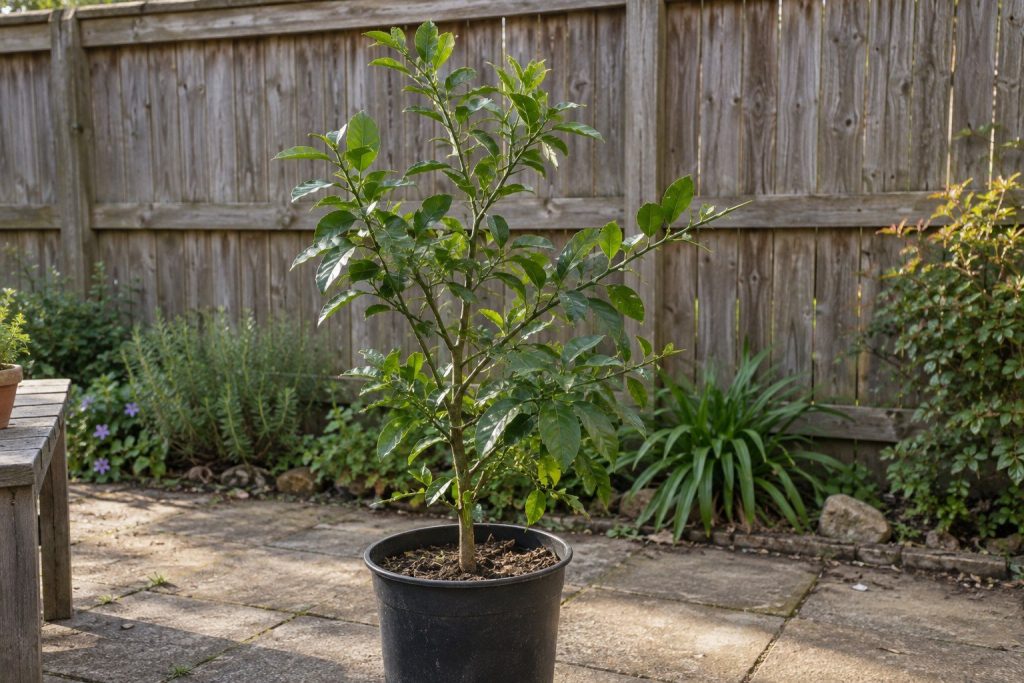
Oni Yuzu is a large, vigorous, productive tree, reaching 13 to 16 ft (4 to 5 m) at maturity, with the naturally bushy, thorny habit typical of Yuzus. Its evergreen foliage, bifoliate with a characteristic winged petiole, is very decorative. The tree is prone to alternate bearing (heavy production every other year), but its harvests are generous in good years. Spring flowering produces large, very fragrant white flowers, among the most fragrant of all hardy citrus.Fruit quality
Oni Yuzu produces fruit slightly larger than a standard Yuzu, with a characteristic bumpy skin that turns yellow in fall. Its juice is abundant for a Yuzu (a valuable quality, since classic Yuzu is often stingy with juice) and at full maturity develops very distinctive heather-honey aromatic notes that clearly set it apart from other Yuzu cultivars. Seeds are present, but the juice-to-seed ratio remains favorable. Its aromatic profile evolves gracefully with the stage of ripeness.Flavor and ornamental interest
Oni Yuzu is used like traditional Yuzus across the full range of Japanese cooking and modern gastronomy: ponzu, seasonings, desserts, cocktails. Its heather-honey notes at maturity open additional aromatic possibilities compared with the standard Yuzu, especially for sweet preparations, where its aromatic complexity is particularly appreciated. Its more generous juice production than ordinary Yuzu makes it a practical choice for intensive culinary use. Its hardiness of 10°F (−12°C) suits it to zone 8a gardens, where it ideally keeps company with Satsumas and Ichanglemons.
Back to the collection
Updated: