Cold hardiness
14°F (−10°C)
Identity
OriginFlorida, United States (species native to southern China)
Genetic originSeedless mutation of the Nagami kumquat (Fortunella margarita)
USDA zone8a
Cold hardiness14°F (−10°C)
Fruit cold hardiness25°F (−4°C)
GrowthSlow
Height10 ft (3 m)
HarvestJanuary, November, December
SeedsSeedless
UsesFresh eating, Preserves
FlavorsTart, Highly aromatic, Sweet
History & Description
Origin
The Nordmann kumquat is a seedless selection of the Nagami kumquat (Fortunella margarita), a species native to southern China. It was found by nurseryman George Otto Nordmann on a Nagami seedling tree planted in 1965 in DeLand, Florida, and its seedless character, particularly sought after for eating out of hand, made it popular with home gardeners. Kumquats have been known since antiquity in the Far East, where they symbolized prosperity and longevity, before being introduced to Europe in the nineteenth century by the Scottish botanist Robert Fortune. The Nordmann selection is marketed notably in British Columbia (Canada) and in the Mediterranean regions of France. Its complete absence of seeds sets it clearly apart from all other oval kumquat varieties, making it more approachable for children and for seed-free culinary preparations.Tree description
A compact, slow-growing tree reaching 6.5 to 10 ft (2 to 3 m) in the ground on well-drained soil. The evergreen foliage is dense, a glossy dark green that is very ornamental. White, highly fragrant flowering in summer, from May to September in Riverside. A naturally harmonious rounded habit that needs no particular pruning to keep a fine silhouette.Fruit quality
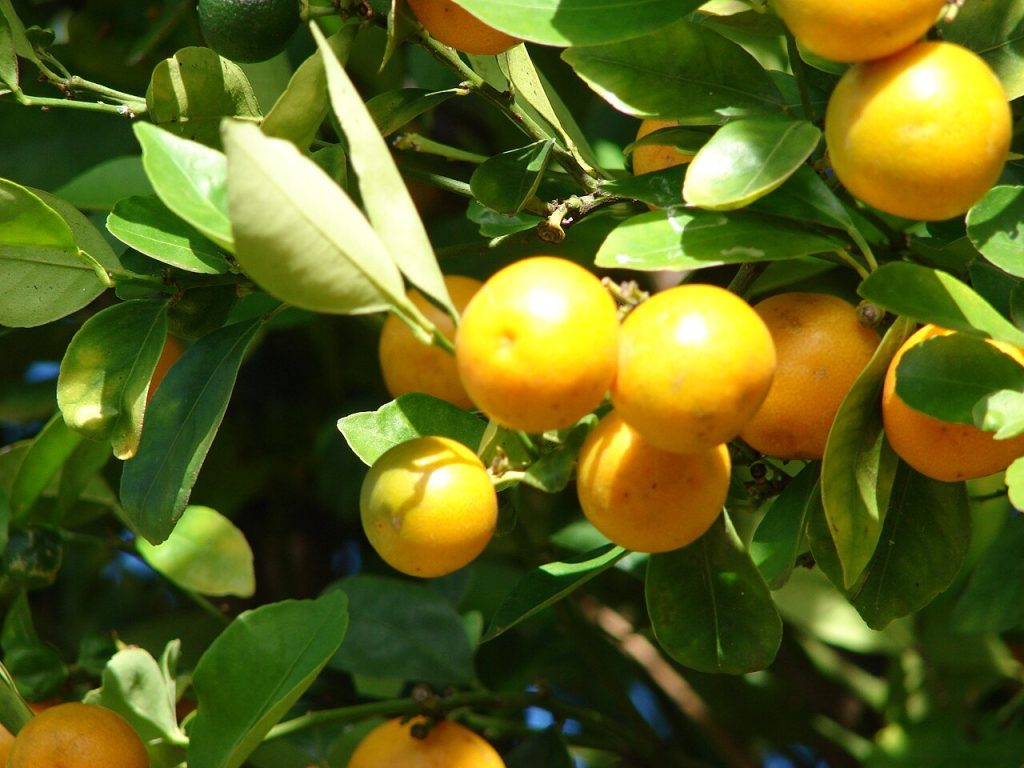
Standard-size oval fruit, a lovely yellow-orange at full maturity in fall and early winter. Main feature: totally seedless (apyrenic), which greatly eases eating. The rind is sweet, sugary, and very aromatic; the flesh is slightly tart. The fruit is eaten whole, skin included, without any bother from seeds.Flavor and ornamental interest
The absence of seeds makes the Nordmann the ideal kumquat for eating out of hand, fruit skewers, cocktails, and culinary preparations where the fruit is used whole. The tree is very ornamental in fall, with its load of small, luminous orange fruit that persists for several months. Its slow growth and compact habit make it an excellent subject for pot or container growing on a terrace or balcony.Hardiness — October 8, 2026 review: Earlier reference of 14°F (−10°C) kept as an indication. UCR describes Nordmann Seedless as relatively cold tolerant thanks to its semi-dormancy, but without a numerical threshold. The kinship with Nagami is not enough to automatically give it the same limit. These temperatures apply to a mature, established, acclimated tree during a one-off frost; they guarantee neither the absence of damage nor a harvest. Wind, freeze duration, humidity, and pot culture change the risk.
Fruit resistance: The fruit reference already on record remains indicative: this review did not establish a new experimental threshold specific to this material. It is not deduced from the tree temperature.
Hardiness references: UCR — Nordmann Seedless (accessed October 8, 2026).
Back to the collection
Updated: