Identity
History & Description
Origin
Meyer is named for Frank N. Meyer, an agricultural explorer for the United States Department of Agriculture (USDA), who discovered it near Beijing in 1908. It is an ancient natural hybrid, probably from a cross between a lemon tree and an orange or a mandarin, cultivated for centuries in China as an ornamental plant before revolutionizing Western kitchens.Tree description
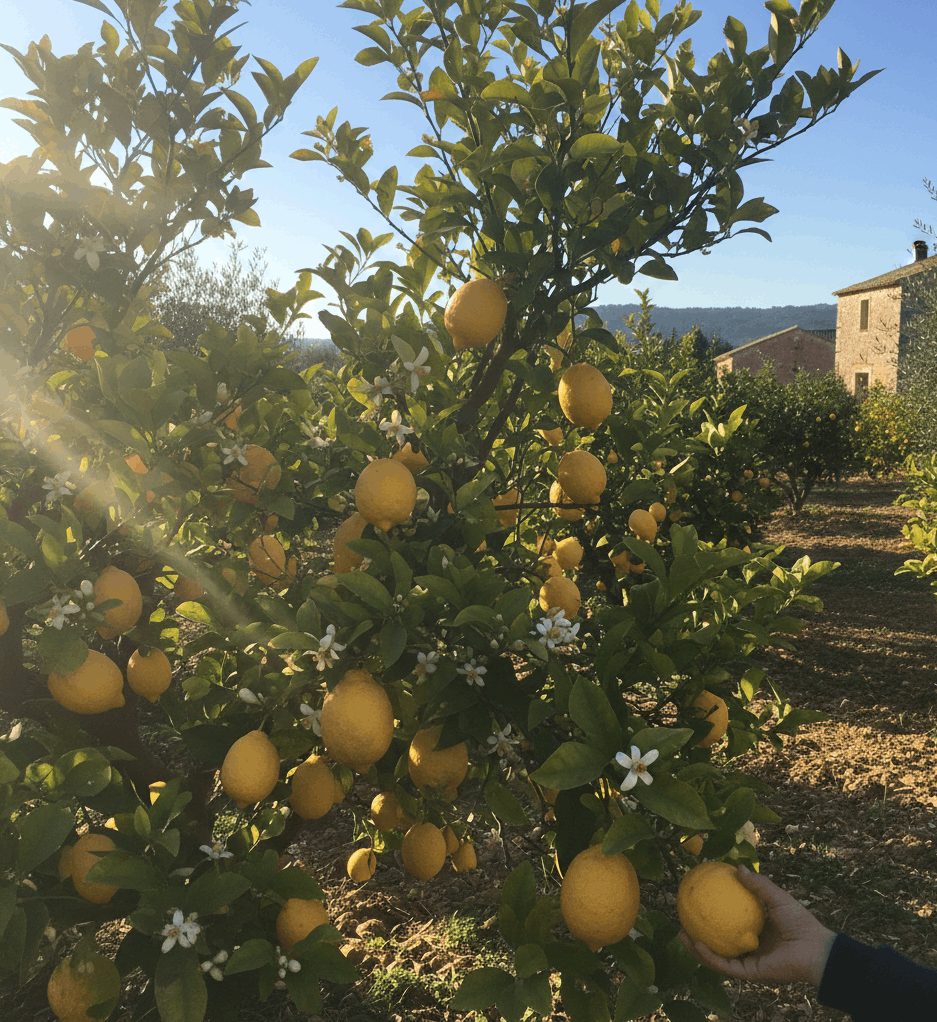
It is a vigorous shrub that nevertheless stays compact, famous for being extremely productive and reblooming (it flowers several times a year). It is hardy down to about 19°F (−7°C).Fruit quality
It produces a lemon with smooth, very thin skin that turns yellow-orange at maturity. It is much juicier and markedly less acidic than a standard yellow lemon of the Eureka type.Flavor and ornamental interest
Its unique floral fragrance and sweetness allow the whole fruit to be eaten, including the rind, in thin slices. Very decorative, it often bears flowers and fruit at the same time.Updated:
What matters when choosing
Key points about Meyer Lemon
Meyer lemon produces very juicy fruit, rounder and less acidic than a typical lemon, on a naturally compact tree. It tolerates cold a little better than true lemons, but it is still a citrus to protect at the first moderate frosts.
Why choose it
- Abundant juice and milder acidity than a typical lemon.
- Compact tree, well suited to container growing.
- Winter production and sometimes repeated flowering.
Its limits
- Still low hardiness in the ground.
- Fruit often seedier than a commercial lemon.
- Thin peel and ripe fruit less suited to long storage.
Practical notes
- Type
- An old hybrid of lemon and orange or mandarin
- Harvest
- Mainly in winter
- Uses
- Juice, baking, cooking
Cold-hardiness reference: about 19°F (−7°C)
Meyer’s relatively better cold tolerance should not be confused with true hardiness: foliage, young shoots, and fruit may suffer before the mature wood does.
Sources and method
The temperatures given are reference points for a mature tree with hardened wood. The table and callout repeat the same value as the profile. They guarantee neither freedom from damage nor a harvest after a freezing event.
Data reviewed on September 21, 2026.
- Givaudan Citrus Variety Collection — UCR — Probable origin, fruit, season, and tree behavior
- UC Agriculture and Natural Resources — Compact habit, milder acidity, and cultivation
- Clemson Cooperative Extension — Relative cold tolerance and growing precautions