Cold hardiness
0°F (−18°C)
Identity
USDA zone7b
Cold hardiness0°F (−18°C)
HarvestOctober, November, December
UsesJuice, Liqueur, Preserves, Savory cooking
History & Description
Origin
The yuzu is native to central China, the result of a natural hybridization between the Ichang papeda and a Chinese sour mandarin. Introduced to Japan and Korea during the Tang dynasty, this citrus earned its reputation over more than 1,000 years of Asian cultivation. Recognizable by its extraordinary fragrance and characteristic acidity, the yuzu has gradually won over kitchens around the world, from medieval Japan to the fine tables of the twenty-first century. The N1 cultivar was selected by INRA to combine the yuzu’s maximum hardiness with better productivity, maintaining the species’ remarkable cold resistance while improving yields.Tree description
Grafted onto Poncirus trifoliata, Yuzu N1 reaches 10 to 13 ft (3 to 4 m) in height at adulthood. A tree of moderate growth, it bears the evergreen foliage typical of citrus, with delicately fragrant white flowers in spring. The tree is thorny, vigorous, and dense, productive from 2 to 3 years of cultivation. It shows excellent adaptation to cold conditions thanks to its hardy rootstock and its papeda genetic heritage.Fruit quality
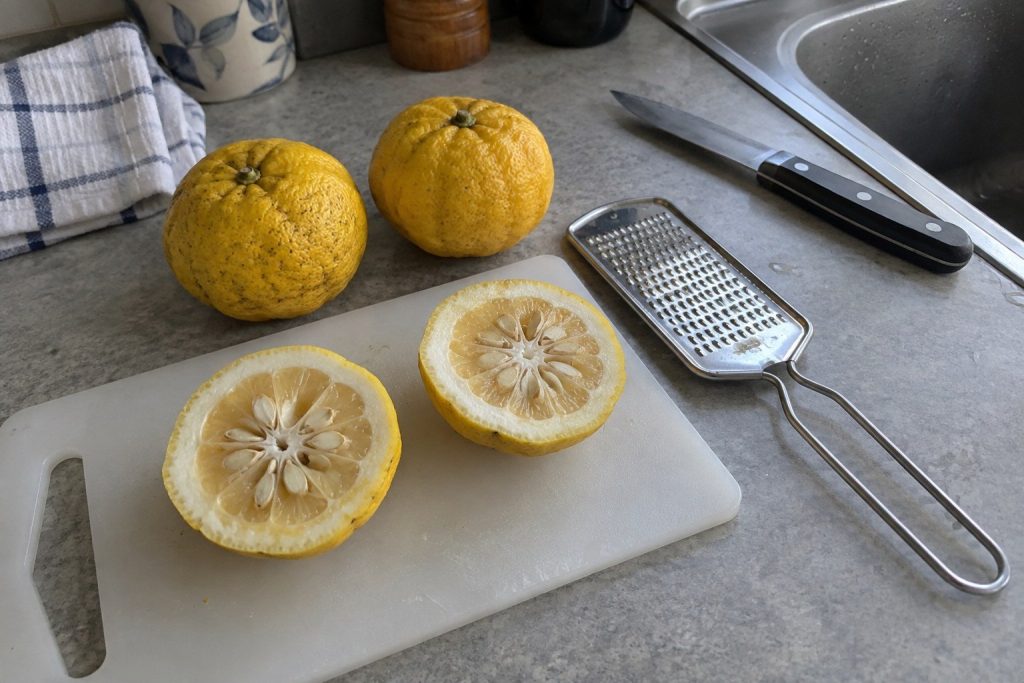
The fruit is small and bumpy, flattened to spherical in shape, a pale yellow at maturity in fall. The flesh is sparse, with very little juice but many seeds. The flavor is intensely acidic and very fragrant, with complex notes recalling citron, grapefruit, and mandarin. The exceptional aroma contained in the zest oil is the major asset of this fruit, recognized around the world.Flavor and ornamental interest
Yuzu N1 is used above all for its grated or candied zest and its juice, going into sauces, infusions, liqueurs, and candied preparations. In Japanese cooking, it is indispensable in nabemono and yakitori, and forms the base of the famous yuzu kosho. Yuzushu, the traditional Japanese liqueur, is made by macerating zest and juice in alcohol. Its compact, thorny habit, highly fragrant white flowers, and small golden fruit offer marked ornamental interest in the garden, particularly in fall.
Back to the collection
Updated: