Identity
History & Description
Origin
Sambokan (or Sanbokan), botanically Citrus sulcata, is a Japanese citrus originating from Wakayama Prefecture. It has been grown since the Edo period and is often nicknamed the "sweet lemon of Wakayama".Tree description
The tree is vigorous, with an upright habit and thick leaves. It is moderately hardy, comparable to an orange tree, and produces late in the season.Fruit quality
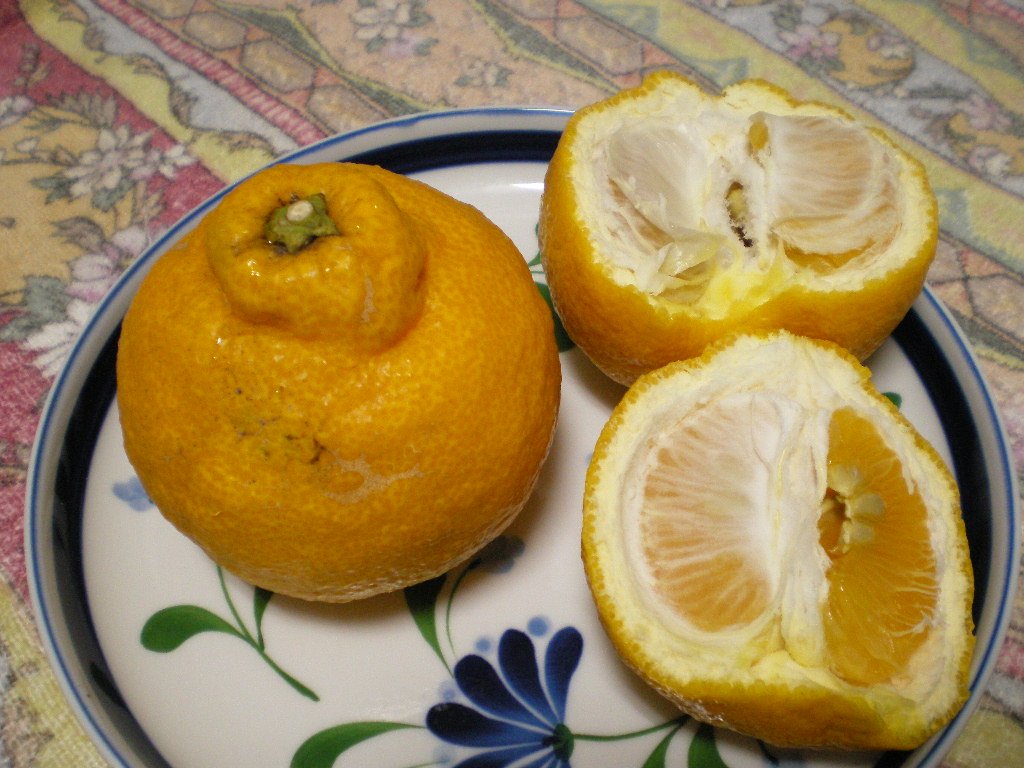
The fruit is very distinctive: it is the size of a small orange, with a somewhat pear-like (pyriform) shape with a neck, and thick, bumpy lemon-yellow skin, but very easy to peel.Flavor and ornamental interest
It is a unique tasting experience. The flesh is firm and crisp, with a "sweet lemonade" flavor: refreshing like a lemon but mild like an orange, without harsh acidity.Updated:
What matters when choosing
Key points about Sambokan
Sambokan, or Sanbokan, is an old Japanese citrus from Wakayama recognizable by its pronounced neck. Its large yellow, juicy, sweet-tart fruit is distinctive, but has many seeds and remains rare in cultivation.
Why choose it
- Juicy fruit with sweet-tart flavor.
- Distinctive shape with a pronounced neck.
- Old Japanese variety with considerable heritage interest.
Its limits
- Fruit generally has many seeds.
- Rare variety with little documentation in the French climate.
- Late maturity in regions with short summers.
Practical notes
- Synonym
- Sanbokan
- Origin
- Wakayama, Japan
- Botanical name
- Citrus sulcata
Cold-hardiness reference: about 16°F (−9°C)
It is described as resistant among Japanese citrus, without a sufficient series of quantified trials to support a lower threshold.
Sources and method
The temperatures given are reference points for a mature tree with hardened wood. The table and callout repeat the same value as the profile. They guarantee neither freedom from damage nor a harvest after a freezing event.
Data reviewed on September 21, 2026.
- Citrus ID — Sanbokan — Synonyms, origin, fruit, seeds, and relative cold hardiness
- JA Wakayama — Regional connection and fruit presentation in Japan
- USDA GRIN — Citrus sulcata — Taxonomy, common name, and cultivated range