Identity
History & Description
Origin
Kiyomi (清見) is the very first modern tangor developed in Japan, the result of long selection work by Dr. Nishiura's team at the Okitsu experimental station in Shizuoka Prefecture, officially registered in 1979. It comes from a cross between the Miyagawa satsuma (Citrus unshiu), renowned for its sweetness and lack of seeds, and the Trovita orange (Citrus sinensis), a California-origin variety known for its deep orange flesh and abundant juice. Its name, which means "pure view" or "clear vision" in Japanese, evokes the sea at Okitsu, visible from the research station where it was selected. Kiyomi profoundly shaped Japanese variety selection by becoming the founding parent of an entire generation of prestigious citrus, including Shiranui (Dekopon), Harumi, Setoka, and Haruka, and by itself accounts for a major part of modern Japanese citrus heritage. Its hardiness, inherited from the satsuma line, now allows it to be acclimated in zone 8a, on suitable rootstocks such as FA5 or Poncirus trifoliata.Tree description
Kiyomi forms a compact tree of 8 to 10 ft (2.5 to 3 m) at maturity, with a rounded habit and evergreen foliage of a deep, slightly glossy green. Its growth is moderate and steady, with fine branching that gives it an elegant silhouette recalling that of its satsuma parent. The very fragrant white blossom appears in spring, and the tree comes into production quickly, from the third or fourth year after grafting. Its documented hardiness of 14 to 10°F (−10 to −12°C) on a hardy rootstock places it among the Japanese tangors best suited to the temperate climates of western Europe.Fruit quality
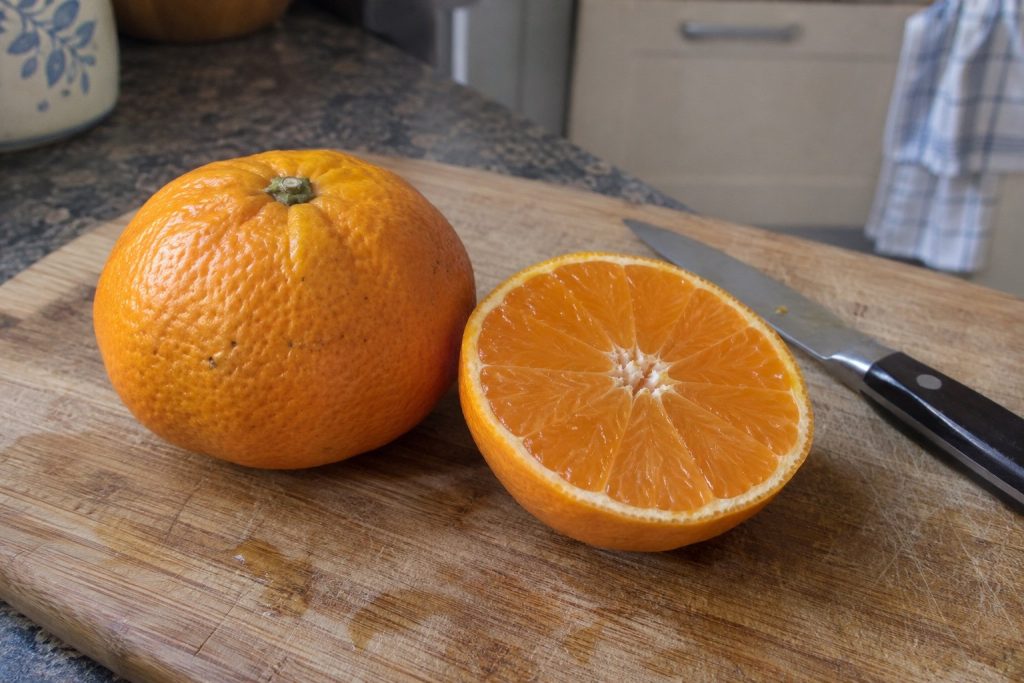
The fruits, shaped like a slightly flattened orange about 4 in (10 cm) across and weighing 7 to 9 oz (200 to 250 g), have thin yellow-orange skin that is relatively adherent, a typical trait of tangors. The bright orange flesh is particularly tender, melting, and very juicy, offering a remarkable balance of sugar and acidity, with no bitterness. When the tree is isolated from other pollinating citrus, the fruits are completely seedless, which makes it one of the most appreciated tangors in Japan for eating fresh.Flavor and ornamental interest
Harvested between December and February, Kiyomi is ideally enjoyed fresh, cut into segments, to appreciate its exceptionally juicy flesh and delicate fragrance with notes of sweet orange and mandarin. Its low-acid, very aromatic juice lends itself admirably to refined cocktails and traditional Japanese desserts such as daifuku or konnyaku jellies. As an ornamental, its dense foliage and yellow-orange fruits that persist through winter make it a collector's subject appreciated by lovers of Japanese citrus, a living symbol of the golden age of Japanese variety selection.Updated:
What matters when choosing
Key points about Kiyomi Tangor
Kiyomi is the first tangor developed in Japan: it combines the juicy flesh of a satsuma with an orange fragrance. The fruit is generally seedless and of good quality, but it ripens late and its peel clings more than that of an easy-peeling mandarin.
Why choose it
- Very juicy flesh with an orange fragrance.
- Generally seedless fruit.
- Recognized eating quality and a parent of many Japanese hybrids.
Its limits
- Late marketing season in Japan, mainly March through May.
- Peel can be difficult to remove by hand.
- Needs a long, mild season to reach its best quality.
Practical notes
- Parentage
- Miyagawa Wase satsuma × orange
- Type
- Japanese tangor
- Marketing season in Japan
- March through May
Cold-hardiness reference: about 14°F (−10°C)
Satsuma ancestry alone does not make it a very cold-hardy variety; in a cold climate, late maturity is the main obstacle.
Sources and method
The temperatures given are reference points for a mature tree with hardened wood. The table and callout repeat the same value as the profile. They guarantee neither freedom from damage nor a harvest after a freezing event.
Data reviewed on October 7, 2026.
- Ehime Citrus Club — Season, fragrance, juice, peel, and usual seedlessness
- Todolí Citrus Fundació — Parentage and flavor profile
- Horticulturae — Japanese citrus breeding — Origin, registration date, maturity, and genetic role