Cold hardiness
16°F (−9°C)
Identity
OriginMiyazaki, Kyushu Island, Japan
Genetic originChance seedling; Tachibana-B proposed as pollen parent, maternal parent unknown
USDA zone8b
Cold hardiness16°F (−9°C)
GrowthVigorous
Height10 ft (3 m)
HarvestJanuary, February, March, April, May
SeedsMany
UsesFresh eating, Juice, Sweet cooking
FlavorsTart, Sweet
History & Description
Origin
Hyuganatsu (Citrus tamurana hort. ex Tanaka) is a Japanese citrus from a chance seedling discovered around 1820 in Miyazaki, on the island of Kyushu. Miyazaki is a prefecture; Kyushu is the island that houses it. It is also known as Konatsu, Tosa Konatsu, or New Summer Orange depending on the growing region. Its full parentage remains unknown: the genetic marker analysis published by Shimizu and colleagues in 2016 proposes Tachibana-B as the pollen parent, without identifying the maternal parent. The 2025 scientific synthesis repeats this hypothesis. Presenting it as a proven cross between yuzu and pummelo would therefore be too assertive.Tree description
This small evergreen tree can reach about 10 ft (3 m) in cultivation, with a compact habit and vigorous growth; its development depends on the rootstock and training. The white bloom comes in spring and the branches may bear thorns. The classic type is strongly self-incompatible: plan on a compatible pollinizer citrus blooming at the same time, to be chosen with the nurseryman, rather than counting on a lone tree. Greffeur d'agrumes reports an indicative hardiness of 16°F (−9°C) for an adult, acclimated tree during a one-off freeze, a value also given by Pépins Perdus; the zone 8b classification is a theoretical reference, with no guarantee of survival or harvest, and prolonged freezes as well as young plants call for more caution.Fruit quality
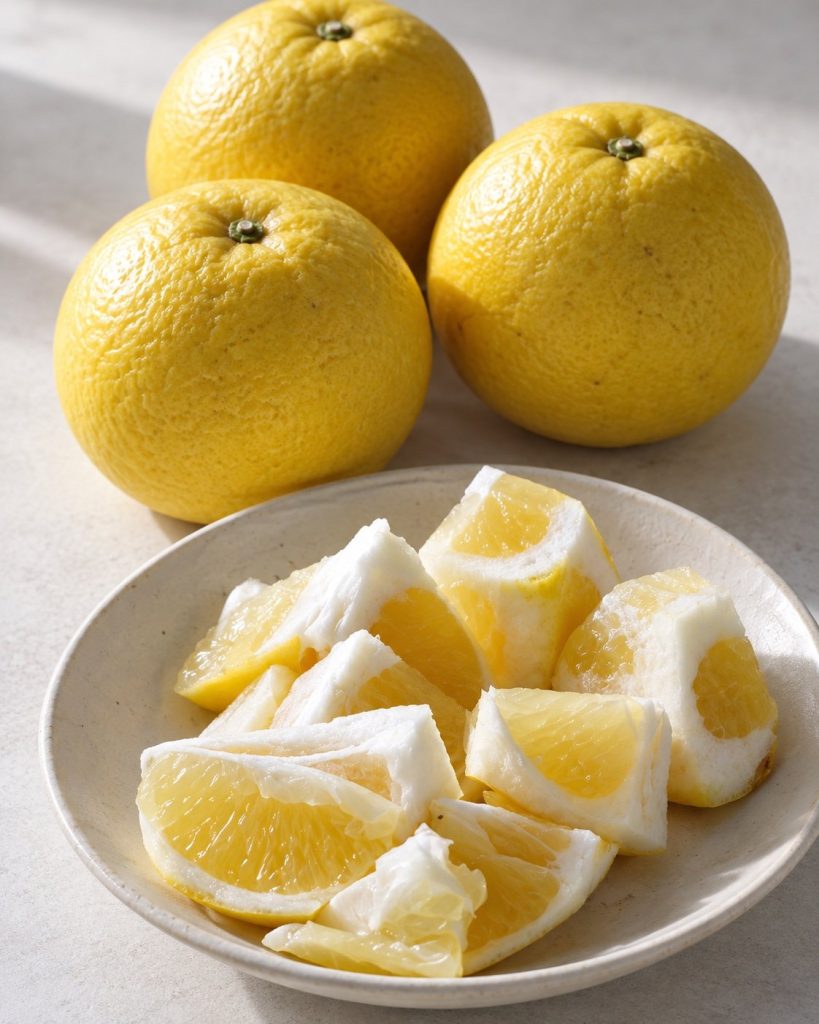
The medium-sized fruits, round to slightly elongated, turn light yellow at maturity. The flesh is juicy and tart, while the albedo, the white layer under the rind, brings a sweetness that balances the eating experience. To eat it, remove only the yellow layer with a knife and keep the white with the pulp. The classic type can contain many seeds after pollination; selections such as Nishiuchi Konatsu have different characteristics and should not be confused with it. The harvest runs from late winter to spring: January is observed at Greffeur d'agrumes, March-April at Pépins Perdus, and January to May at Riverside; the French calendar depends on the climate and the specimen grown.Flavor and ornamental interest
Hyuganatsu deserves to be discovered first as a fresh-eating fruit, in segments with its albedo. Its juice and pulp also lend themselves to drinks, desserts, and culinary preparations. The yellow fruits and evergreen foliage add interest to a sheltered garden or a potted collection. In France, favor a bright exposure protected from wind and a well-draining soil, with a rootstock suited to the terrain; in cold climates, pot culture with overwintering sheltered from frost remains the prudent choice. No reliable fruit-specific temperature limit was established in the sources consulted: the winter harvest should therefore be protected without attributing to it the hardiness reported for the tree.
Back to the collection
Updated: