Identity
History & Description
Origin
The Honghe Papeda is a rare and spectacular citrus, a natural hybrid discovered in Honghe Autonomous Prefecture, in southern Yunnan, China, a region of subtropical mountains crossed by the river of the same name (Honghe literally means "red river" in Chinese). Genetic analyses have shown that it is a natural cross between the Ichang Lemon (Citrus ichangensis), an ancestral citrus from central China among the hardiest known, and a local pummelo (Citrus maxima), a cross that must have happened spontaneously in the orchards or farm gardens of the Yunnan valleys. This genetic combination gives it a unique characteristic: the exceptional hardiness inherited from the Ichang Papeda combined with the remarkable fruit size inherited from the pummelo, producing one of the largest hardy citrus in the world. Recently introduced to France by Pépinière du Bosc after identification by Sébastien B. during a botanical survey, it is now one of the most sought-after citrus curiosities among collectors.Tree description
The Honghe Papeda forms a large, vigorous tree reaching 16 to 20 ft (5 to 6 m) at maturity, with a majestic upright habit and evergreen foliage of a deep green, with broad leaves with a fleshy blade recalling both the pummelo and the papeda. Its growth is particularly fast and sustained, a trait inherited from its two equally vigorous parents, and the tree proves extremely productive once established. The fragrant white blossom appears in spring. Its hardiness reaches 10°F (−12°C) for a well-acclimated adult tree on FA5 or Poncirus rootstock, which places it among the hardiest papedas that can be grown in France.Fruit quality
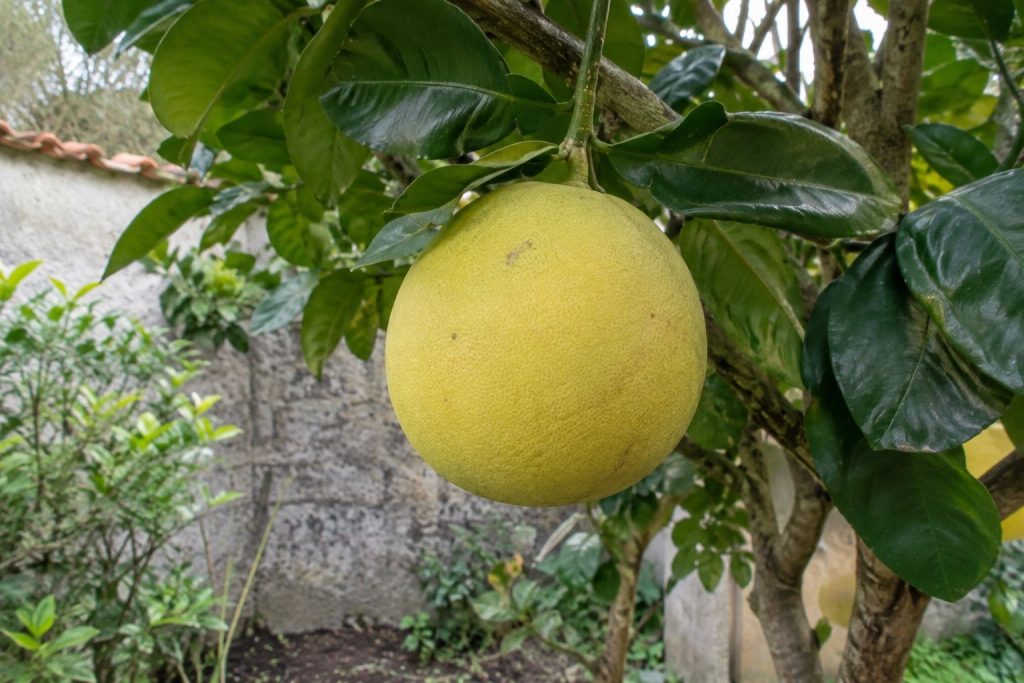
The fruits, exceptionally large (1.3 to 2.2 lb, or 600 g to 1 kg), have smooth yellow skin with delicately fragrant zest, and remarkably juicy pale flesh. Their most striking feature is the extraordinary size of their juice vesicles, which can reach 0.4 in (1 cm) in diameter individually, a visually spectacular structure unique in the citrus world, giving the cut fruit the look of a jewel. The flavor combines measured acidity and complex floral aromas with a remarkable roundness in the mouth.Flavor and ornamental interest
Harvested between December and March, the Honghe Papeda offers a unique tasting experience, often described as one of the most refreshing and surprising citrus at the tastings organized by Pépinière du Bosc. Its large-vesicle pulp suits gourmet salads, frozen desserts, and ceviches admirably, where it brings an unprecedented texture and visual effect. Its fragrant juice lends itself to refined cocktails. As an ornamental, the imposing stature of the tree, its dense evergreen foliage, and the presence of these giant golden fruits all winter make it a spectacular landscape subject, worthy of a central place in a hardy citrus garden.Updated:
What matters when choosing
Key points about Honghe Papeda
The Honghe Papeda described by Pépinière du Bosc is a rare citrus with very large fruit weighing 1.3 to 2.2 lb (600 g to 1 kg). Its fragrant zest and large juice vesicles are used in cooking; the grower describes mildly acidic, balanced flesh that is pleasant to eat. The characteristics of this commercial plant material should not be confused with those of every botanical accession bearing the same name.
Why choose it
- Very fragrant zest typical of papedas.
- Spectacularly large fruit.
- Interest for cooking, collecting, and hybridization.
Its limits
- Flavor to be judged according to the ripeness stage and the plant material grown.
- Seeds are present; their number remains to be confirmed for the commercial material.
- Very little independent horticultural information.
Practical notes
- Botanical name
- Citrus hongheensis
- Size
- Often 1.3 to 2.2 lb (600 g to 1 kg)
- Uses
- Zest and processing
Cold-hardiness reference: about 10°F (−12°C)
The reference is reported by nurseries; the lack of published experience justifies protecting young trees and considering freeze duration.
Sources and method
The temperatures given are reference points for a mature tree with hardened wood. The table and callout repeat the same value as the profile. They guarantee neither freedom from damage nor a harvest after a freezing event.
Data reviewed on October 7, 2026.
- Givaudan Citrus Variety Collection — UCR — Accession identity and conservation
- Pépins Perdus — Proposed parentage, fruit, and horticultural reference
- Pépinière du Bosc — Fruit size, zest, and characteristics