Cold hardiness
12°F (−11°C)
Identity
OriginJapan (Innoshima, Hiroshima Prefecture)
Genetic originHybrid pummelo (Citrus maxima) × Kunenbo mandarin (Citrus nobilis)
USDA zone8a
Cold hardiness12°F (−11°C)
Fruit cold hardiness25°F (−4°C)
GrowthVigorous
Height13 ft (4 m)
HarvestFebruary, March, April
SeedsModerate
UsesCandied fruit, Fresh eating, Juice, Liqueur
FlavorsTart, Slight bitterness, Balanced
History & Description
Origin
Hassaku is an old Japanese citrus discovered in 1860 on Innoshima Island, in Hiroshima Prefecture, where a monk of the Jōdo temple is said to have spotted a spontaneous seedling producing fruit of remarkable quality. Modern genetic analyses have shown it to be a natural hybrid between a pummelo (Citrus maxima) and the old Japanese Kunenbo mandarin (Citrus nobilis), a cross that gives it a unique balance between the vigor of the pummelo and the aromatic finesse of Japanese mandarins. Long grown discreetly in the archipelago, it became from the 1950s one of the most widely eaten winter citrus in Japan, notably in Wakayama and Hiroshima Prefectures, which today provide most of the production. Its Japanese name, written 八朔 (Hassaku), refers to the eighth day of the eighth month of the lunar calendar, a date on which, according to tradition, the first fruit could be harvested, although actual maturity comes several months later. Its hardiness, inherited from the Kunenbo line, makes it one of the hardiest pummelo-type citrus known, which motivated its recent introduction into European hardy citrus collections.Tree description
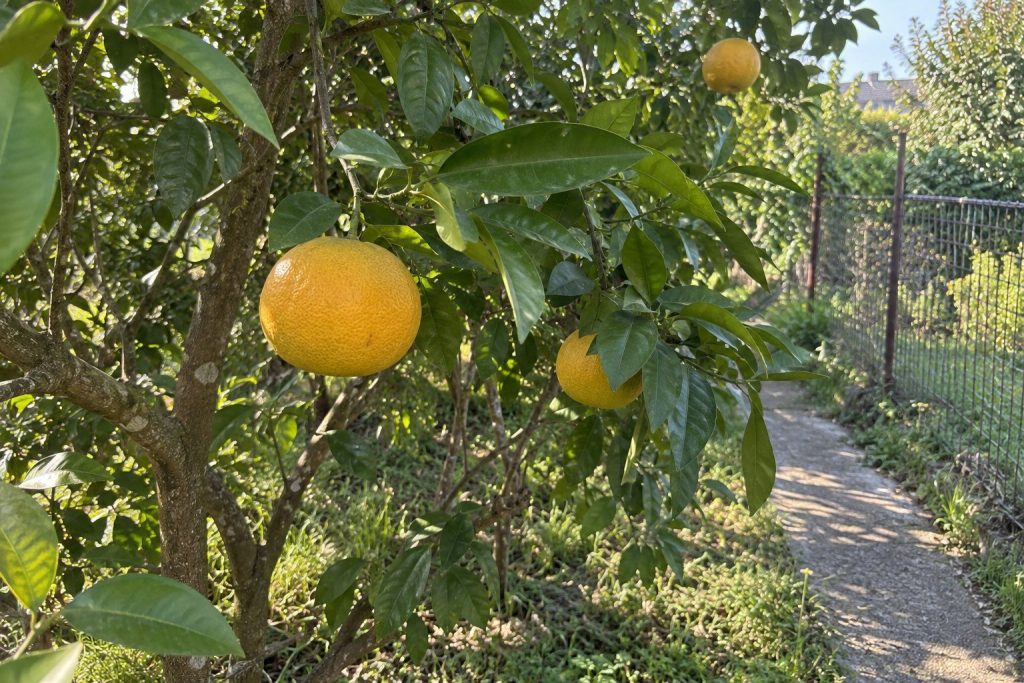
Hassaku forms a vigorous tree of 10 to 13 ft (3 to 4 m) at maturity, with a slender, slightly spreading habit, bearing dense, glossy green evergreen foliage. Its growth is fast for a pummelo-type tree, and the tree is productive from its fifth year after grafting onto Poncirus trifoliata or FA5. The white, fragrant bloom comes late in spring, which protects the flowers from the last frosts. Its remarkable hardiness, attested down to 14 to 10°F (−10 to −12°C) for a mature, well-established tree, makes it the pummelo-type citrus of choice for USDA zone 8a.Fruit quality
The fruit, medium-sized at 3.1 to 3.5 in (8 to 9 cm) in diameter and 7.1 to 8.8 oz (200 to 250 g), has thick yellow-orange skin and pale yellow flesh arranged in easily separated segments. The texture, not very juicy but distinctly crisp, is characteristic: each segment bursts in the mouth with a sensation close to pomegranate. The taste combines a measured acidity, a discreet sweetness, and the fine bitterness typical of pummelos, inherited from the albedo and the membranes. Seeds are present in moderate numbers (about ten per fruit on average).Flavor and ornamental interest
Eaten fresh from February until April, Hassaku gains in aroma when stored for a few weeks after harvest, a traditional practice in Japan. Its very aromatic zest lends itself remarkably to candied peel, marmalades with a controlled bitterness, and liqueurs in the style of limoncello. Dense foliage and generous fruiting also make it an interesting ornamental subject in a hardy garden, where it brings the silhouette of a true pummelo tree without requiring the winter protection needed by the classic commercial varieties.
Back to the collection
Updated: