Cold hardiness
10°F (−12°C)
Identity
OriginFrance (selection by Sébastien B., Pépinière du Bosc, Japanese parent)
Genetic originOpen-pollinated seedling of Hassaku (pummelo × Kunenbo) selected in France for its sweetness and cold hardiness
USDA zone8a
Cold hardiness10°F (−12°C)
Fruit cold hardiness25°F (−4°C)
GrowthVigorous
Height13 ft (4 m)
HarvestNovember, December
SeedsFew
UsesFresh eating, Juice, Sweet cooking
FlavorsSweet, Balanced, Acidless
History & Description
Origin
The Hassaku Pento is a recent French selection made by Sébastien B. at the Pépinière du Bosc, from an open-pollinated seedling of the classic Japanese Hassaku (Citrus × hassaku, a natural pummelo × Kunenbo mandarin hybrid discovered in 1860 on Innoshima Island in Hiroshima). This method of open-pollinated seedling selection consists of collecting the seeds of a quality mother tree, sowing them in large numbers, then evaluating the offspring one by one to select those with improved characteristics, here a superior sweetness and the near-total absence of the residual bitterness that sometimes characterizes the classic Hassaku. The result is a new variety, named "Pento" in reference to Sébastien B., combining the best of the Hassaku line (exceptional hardiness, generous fruit size, productivity) with a significant improvement in taste: a truly sweet pulp, without bitterness, ideal for eating as dessert. This little-known selection, distributed only through the Pépinière du Bosc, is a remarkable example of contemporary French varietal selection on an ancestral Japanese line.Tree description
The tree forms a vigorous, productive specimen 10 to 13 ft (3 to 4 m) tall at maturity, with an upright habit and dense, bright green evergreen foliage, the leaves broad as is characteristic of pummelo-mandarin hybrids. Its growth is fast and steady, a trait inherited from the Hassaku parent, and the tree is productive from its fifth year on FA5 or Poncirus trifoliata rootstock. The abundant white spring bloom is highly fragrant. Its hardiness, documented at 10°F (−12°C) for an adult tree, makes it one of the most cold-hardy Japanese pummelo-mandarins sold in France, even superior to the classic Hassaku previously published in the inventory as #355, at 12°F (−11°C).Fruit quality
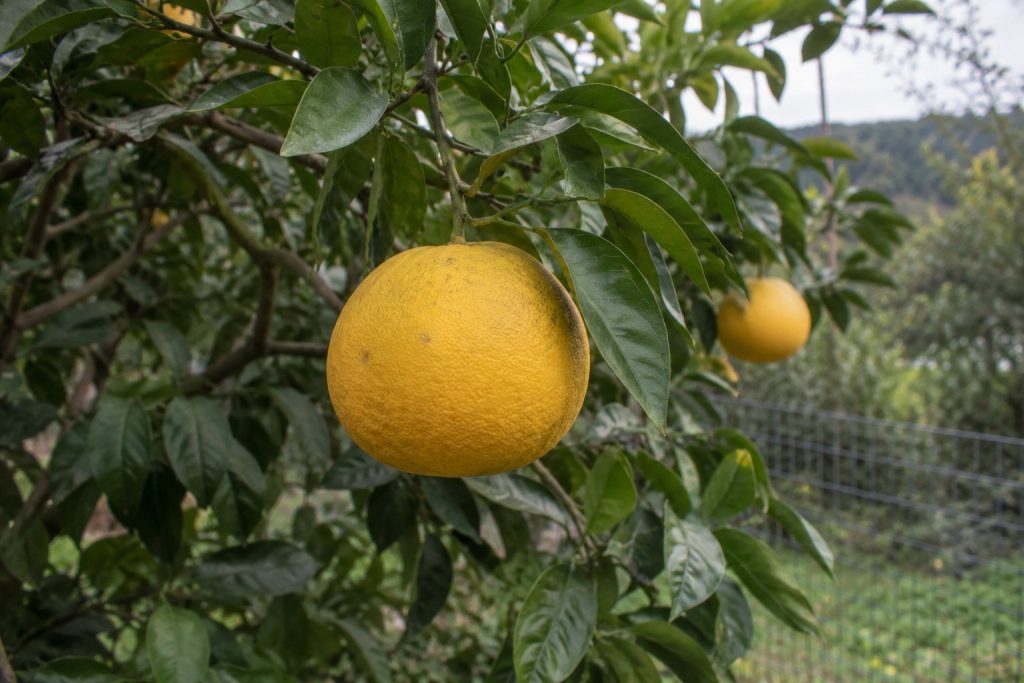
The fruits are large, with thick yellow-orange skin at maturity and tender flesh arranged in segments that separate easily. The flavor differs radically from the classic Hassaku: completely free of the residual bitterness characteristic of the original line, it offers a frankly sweet, balanced and delicately fragrant pulp, comparable to that of the best modern Japanese tangors. Seeds are present in moderate quantity, a legacy of the Kunenbo parent.Flavor and ornamental interest
Harvested in November and December, the Hassaku Pento is meant for eating fresh, unlike the classic Hassaku, often reserved for marmalades, liqueurs or candied fruit because of its bitterness. Its sweet, juicy flesh lends itself beautifully to indulgent fruit salads, artisanal sorbets and fine pastries. As an ornamental, its elegant stature and the imposing size of its yellow-orange fruits hanging in early winter make it a remarkable landscape specimen, whose heritage value is reinforced by its status as a contemporary French selection on an ancestral Japanese citrus line.
Back to the collection
Updated: