
Cold hardiness
16°F (−9°C)
Identity
OriginUnited States (Texas)
Genetic originMutation induced by gamma irradiation of the Hudson variety (Citrus paradisi)
USDA zone8b
Cold hardiness16°F (−9°C)
Fruit cold hardiness28°F (−2°C)
GrowthVigorous
Height20 ft (6 m)
HarvestJanuary, February, March, October, November, December
SeedsSeedless
UsesFresh eating, Juice
FlavorsSlightly acidic, Sweet, Red fruit notes
History & Description
Origin
Star Ruby grapefruit is a red-fleshed grapefruit cultivar developed in the United States in the 1970s at the Texas A&M Citrus Center in Edinburg. It was obtained by gamma irradiation of seeds of the Hudson variety (Citrus paradisi) with the aim of intensifying the pigmentation of the flesh. Officially selected and released from 1970, it quickly earned the title of the most deeply colored red-fleshed grapefruit in the world, surpassing Rio Red and Ruby Red in intensity of pigmentation. Its name evokes the intense ruby color of its flesh, comparable to that of a precious stone. The variety is now grown in South Africa (introduced as early as 1972), in the United States, in Israel, and in the mildest Mediterranean regions of Europe. Its near absence of seeds, very rare among grapefruits, makes it an exceptional variety.Tree description
Star Ruby is a large, vigorous tree able to reach 16 to 20 ft (5 to 6 m) in the ground, with a branching, spreading habit. Its dark green evergreen foliage is made up of large, broad, aromatic leaves characteristic of grapefruits. The white, very fragrant bloom comes in spring. Grafted onto Poncirus trifoliata or FA5 in a very sheltered position, it can be grown up to zone 8b.Fruit quality
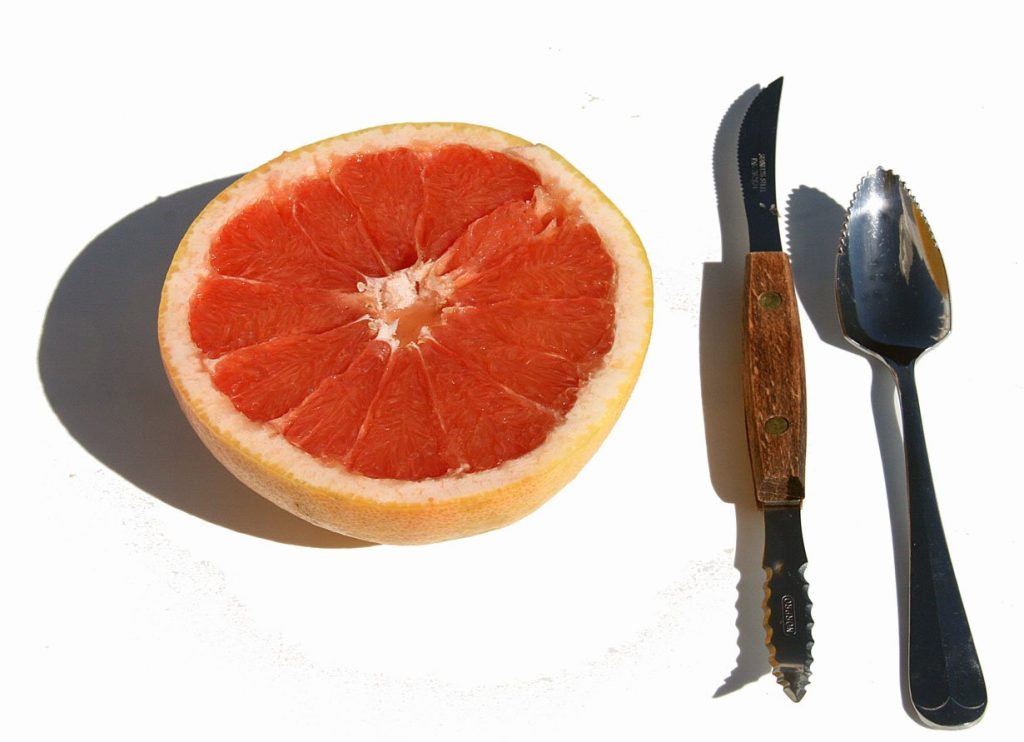
The fruit is globular, slightly flattened, 3.1 to 3.9 in (8 to 10 cm) in diameter. The thick skin is yellow-orange with a slight pinkish tinge at maturity. The flesh is an intense, deep pink-ruby color, characteristic of Star Ruby. The pulp is juicy, firm, with a good balance of sugar and acidity, with the slight bitterness typical of grapefruits but less pronounced than in the classic varieties. The fruit is almost seedless, which is exceptional in this family.Flavor and ornamental interest
The bright red flesh of Star Ruby gives it a visual appeal unique among grapefruits: cut in half, it reveals a color reminiscent of pomegranate. Its balanced flavor, less bitter than traditional grapefruits, makes it accessible to a wider range of palates. Its high lycopene content makes it a very nutritious, antioxidant fruit. The tree is very decorative with its large golden fruit that stay on the branches for a long time in winter.
Back to the collection
Updated: