Identity
History & Description
Origin
The Owari Frost Satsuma Mandarin is a distinguished clonal line of the famous Owari Satsuma, selected and cleaned of disease by Dr. Howard B. Frost, an American pioneer of citrus breeding at the University of California Citrus Experiment Station (now UCR) in the first half of the 20th century. The parent variety Owari, introduced to the United States from Japan in the late 19th century, itself comes from the Unshiu Mikan group grown at Satsuma (Kagoshima) since the 16th century. Dr. Frost carried out a major nucellar program, producing seedlings from plants free of latent viruses, then selecting the best specimens to stabilize a line named "Owari Frost" in his honor. This cleaned line shows slightly higher hardiness and productivity than the standard Owari, as well as better fruit quality. Propagated in Europe by a few organic nurseries including La Maison du Bananier, it remains distinct from the classic Owari previously published in the inventory (#53), while sharing its founding Japanese ancestry.Tree description
The tree forms a compact, balanced specimen of 6.5 to 10 ft (2 to 3 m) at maturity, with the spreading habit characteristic of satsumas, thornless, with evergreen foliage of a medium green. Its growth is steady and the tree is very productive from the fourth year on FA5 or Poncirus trifoliata rootstock. Its hardiness, documented down to 10°F (−12°C) for a well-acclimated adult tree, makes it one of the most cold-resistant satsumas, suited to growing in zone 8a without systematic winter protection.Fruit quality
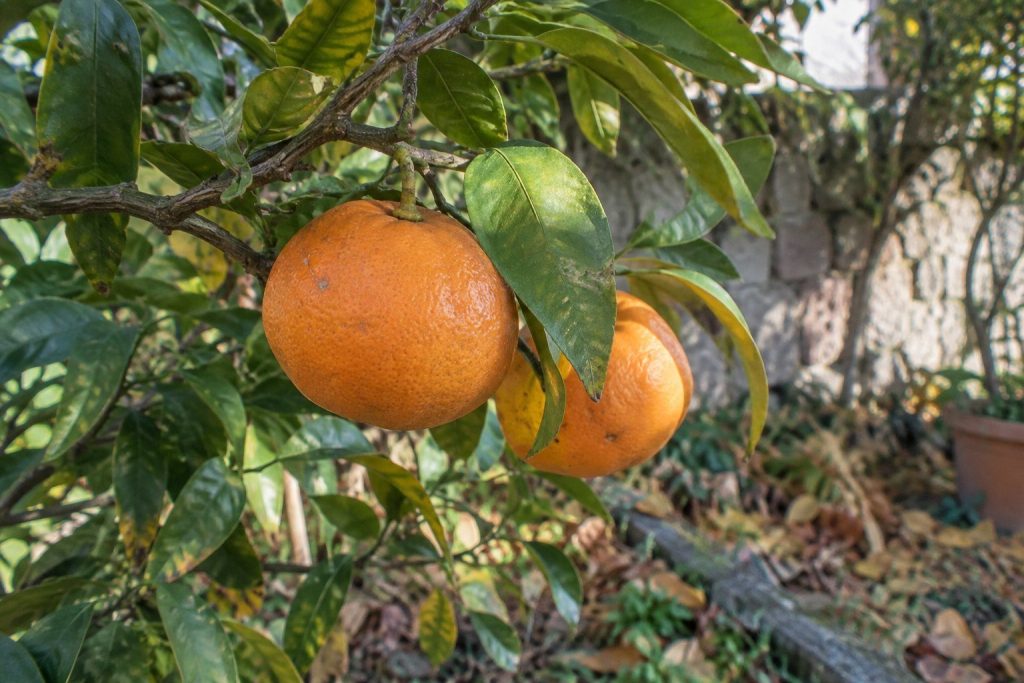
The fruits have thin skin that comes away from the flesh remarkably easily, a trait common to all satsumas. Maturity is early, from October, which allows a harvest before the first intense frosts. The bright orange flesh is extremely juicy, sweet (15 °Brix attainable), and completely seedless, with a particularly accomplished sugar-acid balance.Flavor and ornamental interest
Eaten fresh, the Owari Frost Satsuma is one of the best early mandarin choices for a hardy-citrus garden in France, offering a harvest from October before the heavy frosts and through December. Its abundant juice suits morning pressed juices or cocktails. As an ornamental, the compact, productive tree suits small gardens and container growing perfectly, and its fragrant spring blossom and bright orange fruiting make it a landscape subject of choice for Mediterranean terraces.Updated:
What matters when choosing
Key points about Owari Frost Satsuma Mandarin
Frost Owari is an American selection derived from Owari: a compact, productive, seedless satsuma with sweet fruit that is very easy to peel. It ranks among the more cold-tolerant mandarins, but ripe fruit holds poorly on the tree and should be picked promptly.
Why choose it
- Seedless, juicy, easy-to-peel fruit.
- Compact, productive tree with relatively good cold tolerance.
- Fall maturity, ahead of many citrus.
Its limits
- Fruit holds poorly on the tree after ripening.
- Sweet flavor may lack acidity if harvested late.
- The crop is vulnerable to the first hard freezes.
Practical notes
- Origin
- American nucellar seedling of Owari
- Harvest
- October through December, depending on climate
- Seeds
- Absent
Cold-hardiness reference: about 10°F (−12°C)
Mature satsumas sometimes survive lower temperatures, but that does not guarantee freedom from damage; the fruit freezes before the wood.
Sources and method
The temperatures given are reference points for a mature tree with hardened wood. The table and callout repeat the same value as the profile. They guarantee neither freedom from damage nor a harvest after a freezing event.
Data reviewed on September 21, 2026.
- Givaudan Citrus Variety Collection — UCR archive — Origin, fruit, habit, season, and fruit holding on the tree
- Citrograph — satsuma trials in California — Nucellar selection, quality, earliness, and behavior
- UF/IFAS — Cold Hardy Citrus — Relative cold tolerance of satsumas