Cold hardiness
12°F (−11°C)
Identity
OriginTexas, United States
Genetic originHybrid of Changsha × quality satsuma; exact satsuma clone not specified by Texas Superstar
USDA zone8b
Cold hardiness12°F (−11°C)
Height13 ft (4 m)
HarvestNovember, December
SeedsFew
UsesFresh eating, Juice
FlavorsSweet, Tart
History & Description
Origin
Arctic Frost is a hybrid created in Texas from Changsha and a quality satsuma, whose exact clone is not specified by Texas Superstar. Ying Doon Moy and Jerry Parsons led this work; the plants coming out of selection were then evaluated at several Texas sites. The variety received the Texas Superstar designation in 2015. This identity should not be confused with an ordinary satsuma that merely carries a name evoking cold.Tree description
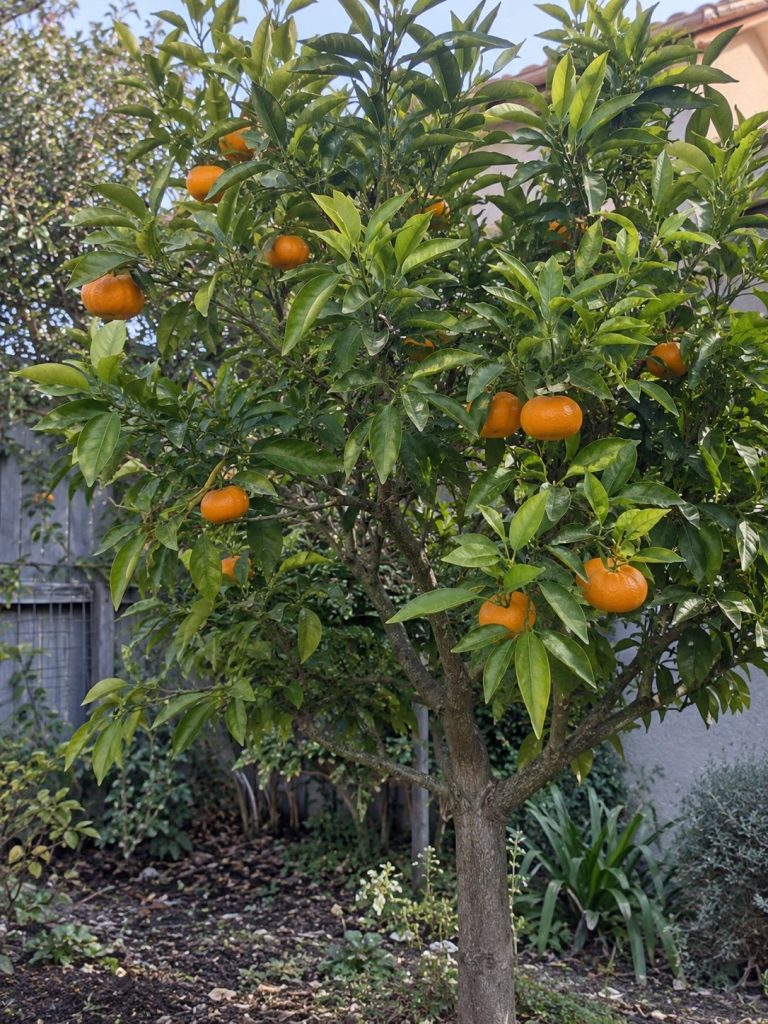
The tree keeps evergreen foliage and can be propagated on its own roots, a method used in the trials presented by Texas A&M. The announced height of 8 to 12 ft in the ground corresponds to an upper bound of about 12 ft (3.66 m), rounded to 13 ft (4 m) for the site's field; a potted specimen generally stays smaller. No precise growth rate is retained. At Overton, unprotected adult trees survived about 9°F (−12.8°C). This observation concerns survival, without defining a universal threshold or the duration of the cold. Talbott gives a more restrictive commercial reference of about 17°F (−8.3°C): the two sources do not evaluate the same event nor necessarily the same growing context. The reference of 12°F (−11°C) given by Gendep is kept with reservation. Texas A&M recommends protecting the first years and avoiding cold wind: rooting and acclimation matter.Fruit quality
The fruits have orange rind that is easy to remove and flesh whose taste combines sweetness and acidity. Texas Superstar indicates one or two seeds, which justifies "few" rather than an absolute absence of seeds. They suit fresh segments and juice. A harvest from late fall to early winter is reported in Texas; Gendep proposes November-December. This calendar remains indicative for France and should be adjusted by tasting the fruit. The hardiness of the tree does not demonstrate that of mandarins left on the branches.Flavor and ornamental interest
Arctic Frost combines a well-described horticultural identity, an edible fruit, and a freeze observation that is more solid than commercial claims alone. This makes it an interesting candidate to try in a drained, sheltered French location. Talbott explicitly places the cultivar in USDA zone 8b in the body of its listing, despite a contradictory title carrying 8a; the 8b reference is therefore attributed to this seller. This classification accompanies the choice of site without predicting each winter. The colorful fruits among the evergreen foliage add decorative interest, and picking before a freeze protects the harvest even when the tree can survive.
Back to the collection
Updated: